


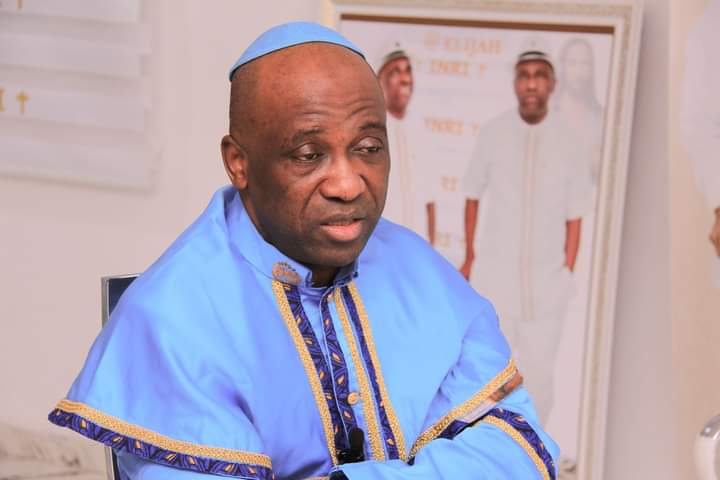
The leader of INRI Evangelical Spiritual Church, Primate Elijah Ayodele, has claimed that influential members of the international community may not support the re-election bid of President Bola Ahmed Tinubu ahead of the 2027 general elections.
In a statement released on Tuesday through his media aide, Osho Oluwatosin, the cleric stated that although Tinubu possessed the political strength and structure needed to secure another term, international forces could emerge as a major challenge to his ambitions.
According to Ayodele, some foreign powers, including the United States, United Kingdom and the European Union, may allegedly align with opposition parties in an attempt to unseat the current administration in 2027.
“The international communities will not support Tinubu’s re-election bid in 2027,” Ayodele claimed. “The president has all it takes to win the election, but the international community will be a major obstacle to his victory.”
The cleric further alleged that opposition parties seeking to challenge Tinubu would need to be strategic and united because the President was fully prepared for the political contest ahead.
“Tinubu is ready for anything to win the election,” he stated. “It will not be business as usual because he is ready to fight anyone or anything that wants to stop him from winning the election.”
Ayodele also reiterated his long-standing warning that opposition parties would struggle to defeat Tinubu if they remained divided. He stressed that only a united opposition coalition could stand a realistic chance against the ruling party during the next presidential election.
“If the opposition wants to go into the election divided, they should forget about winning the election,” he said. “A divided opposition stands no chance against Tinubu.”
Political analysts have continued to speculate about possible alliances among opposition parties ahead of 2027, especially amid growing conversations surrounding coalition talks involving key political figures across the country.
Ayodele’s comments come at a time when Nigeria’s political atmosphere is gradually beginning to shift towards preparations for the next electoral cycle, despite the 2027 elections still being several years away.
While the cleric’s remarks remain speculative and have not been officially confirmed by any international body or political organisation, they are expected to generate further debate within Nigeria’s political space regarding the role of foreign influence and opposition unity in future elections.

