


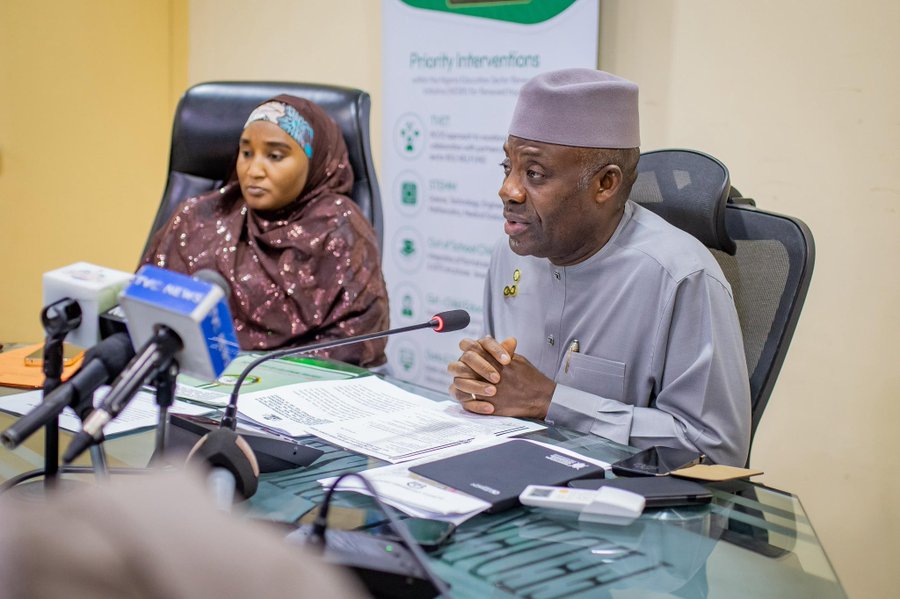
The Federal Government has moved to tighten the process for awarding honorary degrees in Nigerian universities, warning that institutions that violate the new directive will face sanctions.
Minister of Education, Tunji Alausa, announced the decision on Wednesday during a media briefing at the Presidential Villa, Abuja.
Alausa said the Federal Executive Council approved the move to end what he described as decades of indiscriminate conferment of honorary degrees for political patronage and financial gain.
Read related news:
FG approves N2bn take-off grants for new federal polytechnic in Abuja, Epe University
UK degrees no longer guarantee upward mobility
Medical doctor, PhD holder, Honorary doctorate awardee: Who deserves Dr title?
According to him, honorary degrees are meant to recognise people who have made outstanding contributions to society, education, public service, business, science, culture or national development. However, he said the process has increasingly been abused by some institutions.
“The recent trend we’ve seen with the award of honorary degrees has revealed a growing abuse and politicisation of this academic privilege,” Alausa said.
“We’ve seen awards being used for political patronage, for financial gain, as well as the conferral of awards on serving public officials, which, as part of the ethics of honorary degree awards, should not happen.”
The minister said the government is concerned that honorary degrees, which should carry academic prestige and public respect, are being weakened by questionable awards.
He said universities must now follow stricter procedures before conferring such honours. Going forward, institutions will be required to seek approval from the National Universities Commission before awarding honorary degrees.
Read more breaking stories from our latest nigeria news
Alausa added that vice-chancellors have been directed to streamline the process and ensure that honorary awards are not given casually or for personal, financial or political reasons.
The new directive is expected to affect how universities select nominees, review their contributions and justify their choices before the awards are approved.
The decision also puts fresh scrutiny on the practice of awarding honorary degrees to serving public officials. Such honours can raise conflict-of-interest concerns, especially when the universities involved depend on government support, accreditation, funding or regulatory approval.
By placing the process under closer scrutiny, the Federal Government says it wants to protect the credibility of Nigerian universities and restore public confidence in honorary degrees.
Although the minister did not give full details of the sanctions, he made it clear that universities that ignore the Federal Executive Council’s decision will be punished.
The move may also lead universities to review their internal rules for selecting recipients of honorary degrees. This could include stronger checks on nominees, clearer approval procedures and better justification for each award.
The government’s message is clear: honorary degrees must return to their original purpose. They should honour genuine service and achievement, not political influence or financial power.

