


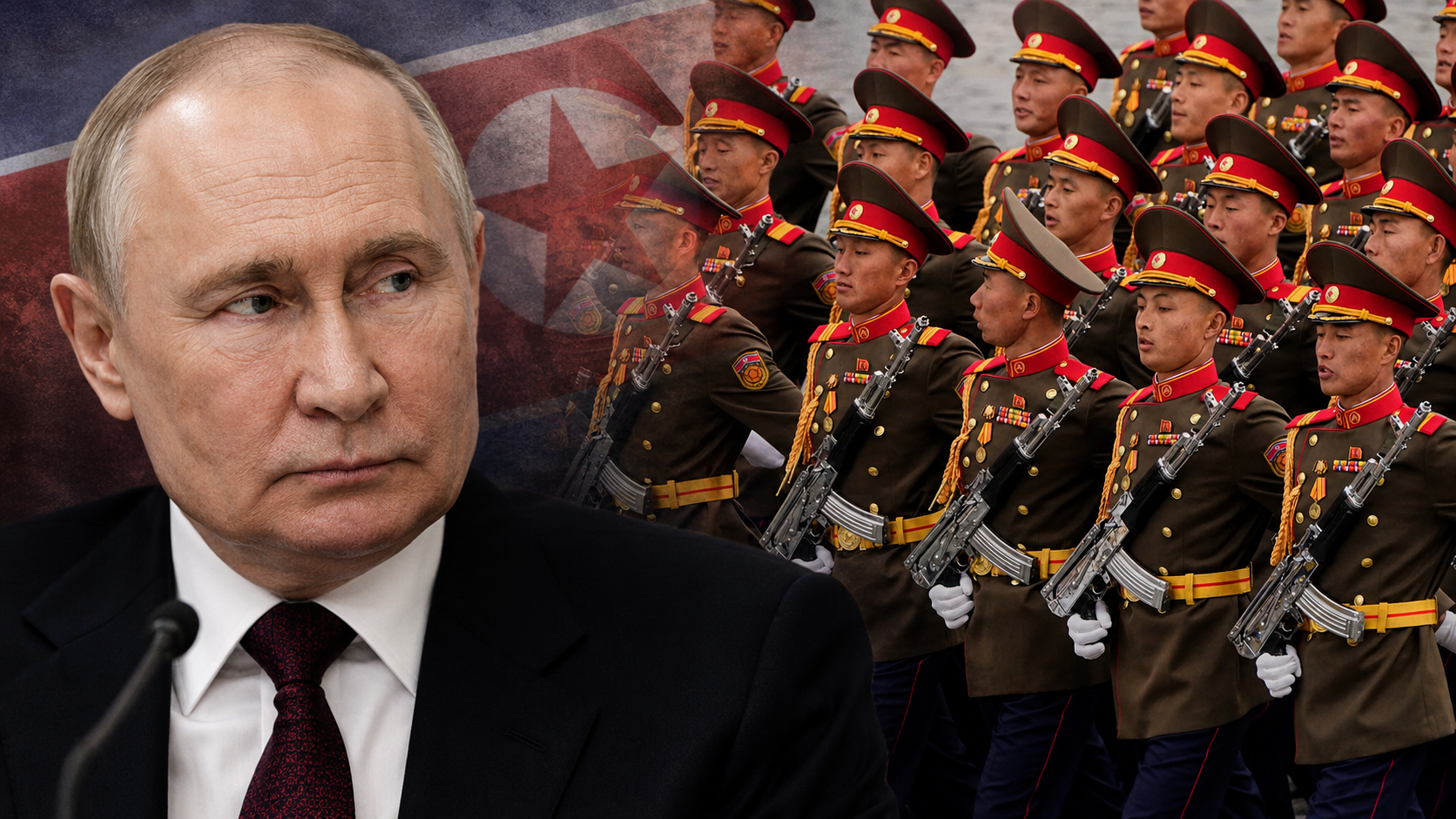
The parade was not just a military ceremony. It was a message that Russia and North Korea are no longer hiding the depth of their wartime partnership.
Read more breaking stories from our latest nigeria news
North Korean soldiers have marched through Moscow’s Red Square for the first time, giving Russia’s Victory Day parade a new political meaning far beyond the usual annual show of patriotism.
Read related news:
Kim Jong-un praises North Korean troops fighting in Ukraine as heroes
North Korean soldiers commit suicide to avoid capture in Ukraine
Kim Jong-un praises North Korean troops fighting in Ukraine as heroes
The appearance of the troops from Pyongyang was the clearest public sign yet of North Korea’s growing military alignment with Russia as the war in Ukraine continues.
Read related news:
Victory Day is one of Russia’s most important national events. It marks the Soviet Union’s defeat of Nazi Germany in the Second World War. In normal years, the parade is used by the Kremlin to display military strength, national pride and the image of Russia as a global power.
But this year’s event was more modest. It lasted about 45 minutes. President Vladimir Putin spoke for around 10 minutes. The parade also did not feature the heavy military hardware often seen in past years.
That made the presence of North Korean soldiers even more striking.
During the parade, the official announcer praised the troops for their “mass heroism, selflessness and courage”. The announcer also linked them to Russia’s war effort in Ukraine, saying they had helped expel what Moscow described as “neo-Nazi invaders”.
That language matters. Russia has repeatedly used the term “neo-Nazi” to justify its invasion of Ukraine, a claim rejected by Kyiv and its Western allies. By using the same language while honouring North Korean troops, Moscow was not only thanking Pyongyang. It was placing North Korea directly inside Russia’s war narrative.
Almost 14,000 North Korean servicemen have been sent to support Russian forces in the Kursk region. Around 6,000 are believed to have been killed. If those figures are correct, North Korea is not playing a symbolic role in the conflict. It is paying a heavy human price for its partnership with Moscow.
Kim Jong Un was not present at the parade. The leaders of China and Iran were also absent, despite their close ties with Russia. Their absence did not reduce the significance of the day. Instead, the North Korean troop display sent its own message: Russia is prepared to stand publicly with countries that are opposed to Western influence.
For Putin, the parade served two purposes.
First, it allowed him to present Russia as still strong and united, despite the long war in Ukraine. Second, it showed that Moscow is not isolated. Even if many Western countries have imposed sanctions and cut ties with Russia, the Kremlin is building support elsewhere.
For North Korea, the parade was also important. Its soldiers were not hidden in the background. They were honoured in the centre of Moscow, in front of Russian leaders and the world’s cameras. That gives Pyongyang status and recognition from one of the world’s major military powers.
The smaller scale of the parade also tells its own story. Russia’s Victory Day parade has often been a stage for tanks, missiles and military equipment. This year, the absence of major hardware may reflect security concerns, battlefield pressure or a decision by the Kremlin to manage the image of the event carefully.
Still, Putin used his speech to praise Russia’s performance in Ukraine and criticise Nato. He said victory was being forged “both on the battlefield and in the rear”, before adding: “Victory has always been and always will be ours.”
That statement was aimed at Russians at home, soldiers at the front and Moscow’s partners abroad.
The main message from Red Square was clear: the war in Ukraine is no longer only about Russia and Ukraine. It is now tied to a wider contest involving Russia’s allies, Western pressure, Nato’s role and countries such as North Korea that see Moscow as a useful partner against the West.
The presence of North Korean troops did not just add colour to the parade. It confirmed a deeper shift in global politics. Russia and North Korea are now willing to display their military relationship openly, and that could have consequences far beyond Ukraine.

