


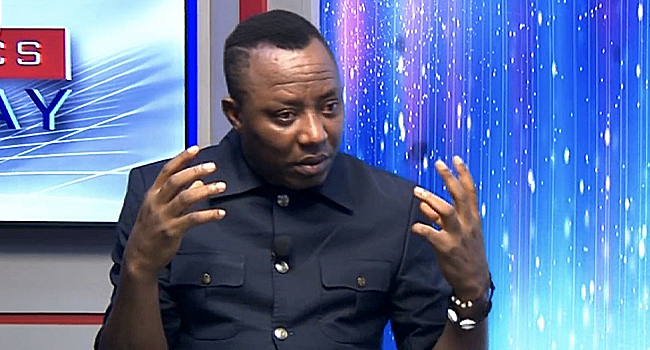
A vital moment is approaching in the trial of Omoyele Sowore as the Federal High Court prepares to rule on whether the case against him should continue or end.
Read Related Breaking Stories from Our Nigeria News
The court, presided over by Justice Mohammed Umar, has fixed 8 May, 2026, to decide on a “no-case submission” filed by the defence.
In simple terms, this is a request asking the court to stop the trial on the ground that the prosecution has not shown enough evidence.
Sowore is facing trial after the Department of State Services (DSS) accused him of cyberstalking over social media posts said to be defamatory against President Bola Tinubu. In one of such posts, he allegedly described the President as a “criminal.”
Sacrosanct to this matter is a legal question. Has the prosecution done enough to justify asking Sowore to defend himself.
Read More News Update
Court fixes May 8 ruling on Sowore’s no-case submission in cyberstalking trial
Sowore urges police to release detainees over alleged Elumelu defamation case
His lawyer, Marshall Abubakar, says the answer is no. He told the court that there is no solid link between Sowore and the alleged offence. According to him, the evidence presented so far is weak, and major witnesses were not called.
For the defence, this is not just a technical gap, it is a fatal flaw. They want the court to end the case now.

While on the other side, the prosecution insists it has done enough. Counsel to the DSS, Akinlolu Kehinde, argued that witnesses have testified and documents have been tendered.
In his view, the case has crossed the minimum legal threshold and should move to the next stage, where Sowore will be required to respond.
This is why the 8 May ruling matters.
If the court agrees with the defence, the case ends immediately. Sowore will be discharged without entering any defence.
But if the court sides with the prosecution, the trial will continue, and Sowore will have to open his defence and respond to the allegations in full.
Now, leaving the courtroom aside, the case itself touches on a wider issue, the limits of free speech in Nigeria’s digital space.
The charges were filed under the Cybercrimes Act, which has often been criticised for how it is applied in cases involving online expression.
For now, both sides have made their arguments and stepped back.
The next move belongs to the court. On 8 May, a single ruling will decide whether the trial stops in its tracks or moves into a more intense phase.

