


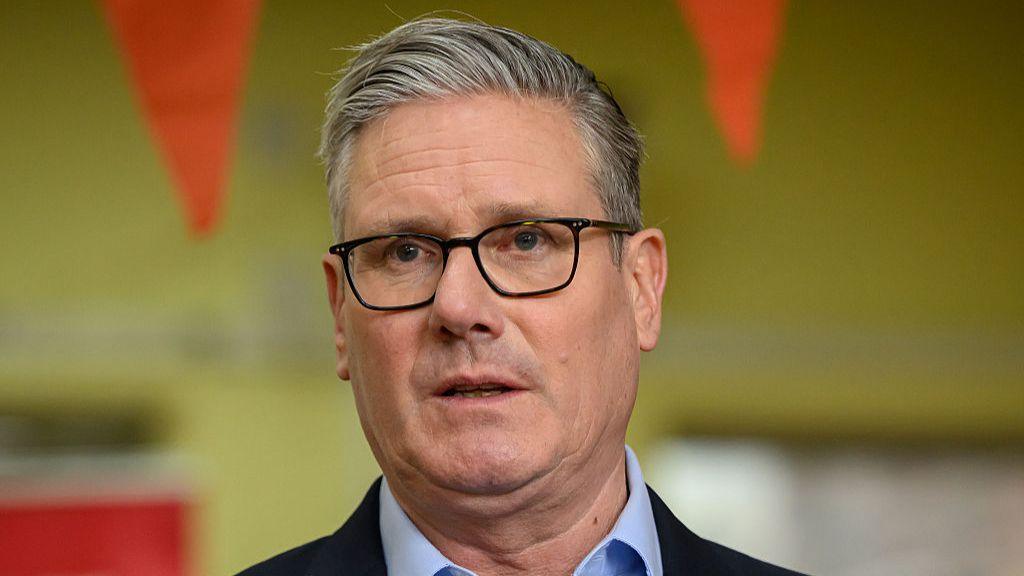
Sir Keir Starmer is facing the gravest crisis of his premiership after British media reports said senior Cabinet ministers had urged him to consider his position following Labour’s heavy election losses.
Read more breaking stories from our latest UK news
The Prime Minister had hoped a major speech on Monday would steady his leadership and calm anger inside the Labour Party. Instead, the intervention appeared to deepen the revolt, with more than 70 Labour MPs reportedly calling for him to resign or set out a timetable for leaving office.
British media reports said senior ministers, including Home Secretary Shabana Mahmood and Foreign Secretary Yvette Cooper, had told Starmer he should oversee an orderly transition of power. The Times also reported that at least three Cabinet ministers had told the Prime Minister to consider his position.
The rebellion followed a damaging set of local election results for Labour. Reform UK made major gains, while Labour suffered losses in areas it had long regarded as safe. The results have alarmed Labour MPs who fear the party is losing support in working-class areas and may struggle to recover before the next general election.
Read related news:
Starmer appoints Gordon Brown amid labour crisis
Starmer under pressure to resign as reform UK records massive election success
Starmer refuses to resign over Mandelson vetting scandal
In his reset speech, Starmer admitted that many MPs were frustrated with his leadership. He said he had learnt lessons from his first two years in office and accepted that “incremental change won’t cut it”. He also signalled plans to move faster on delivery, including action linked to British Steel and a closer relationship with the European Union.
But the speech failed to satisfy critics. Some Labour figures reportedly saw it as too little too late, while others said it did not answer the deeper question of whether Starmer could still lead the party into the next stage of government.
The revolt is particularly serious because it appears to have moved beyond Labour’s usual internal critics. British media reports said MPs from different wings of the party had joined the calls for change, including figures from the Labour left, Blue Labour and MPs linked to senior ministers.
Several parliamentary private secretaries, who serve as unpaid ministerial aides, were also reported to have resigned their government roles to support calls for Starmer to step down. That has increased comparisons with previous leadership crises, where the loss of support from ministers and aides quickly became difficult for a prime minister to survive.
Starmer has not resigned. He has said he will fight on and prove his critics wrong. His allies argue that changing leader now would create more instability at a time when the government is under pressure to deliver on the economy, public services and living standards.
The next Cabinet meeting is now expected to be a major test of his authority. If more ministers withdraw support, the pressure on Starmer could become harder to resist. If Cabinet members remain loyal, he may try to use the coming days to rebuild confidence among Labour MPs.
The rise of Reform UK has made the crisis more dangerous for Labour. Nigel Farage’s party has presented itself as an alternative to both Labour and the Conservatives, and its gains have raised fears that Labour is losing voters who helped deliver its general election victory.
Possible successors are already being discussed in Westminster. Wes Streeting has been mentioned because of his senior Cabinet role, while Andy Burnham remains popular with parts of the Labour movement. However, Burnham would need to return to Parliament before he could stand for the Labour leadership.
Starmer entered office promising stability after years of political turmoil. He now faces a test of authority from inside his own party. If the Cabinet moves against him, the question may no longer be whether he can reset his premiership, but whether he can save it.

