


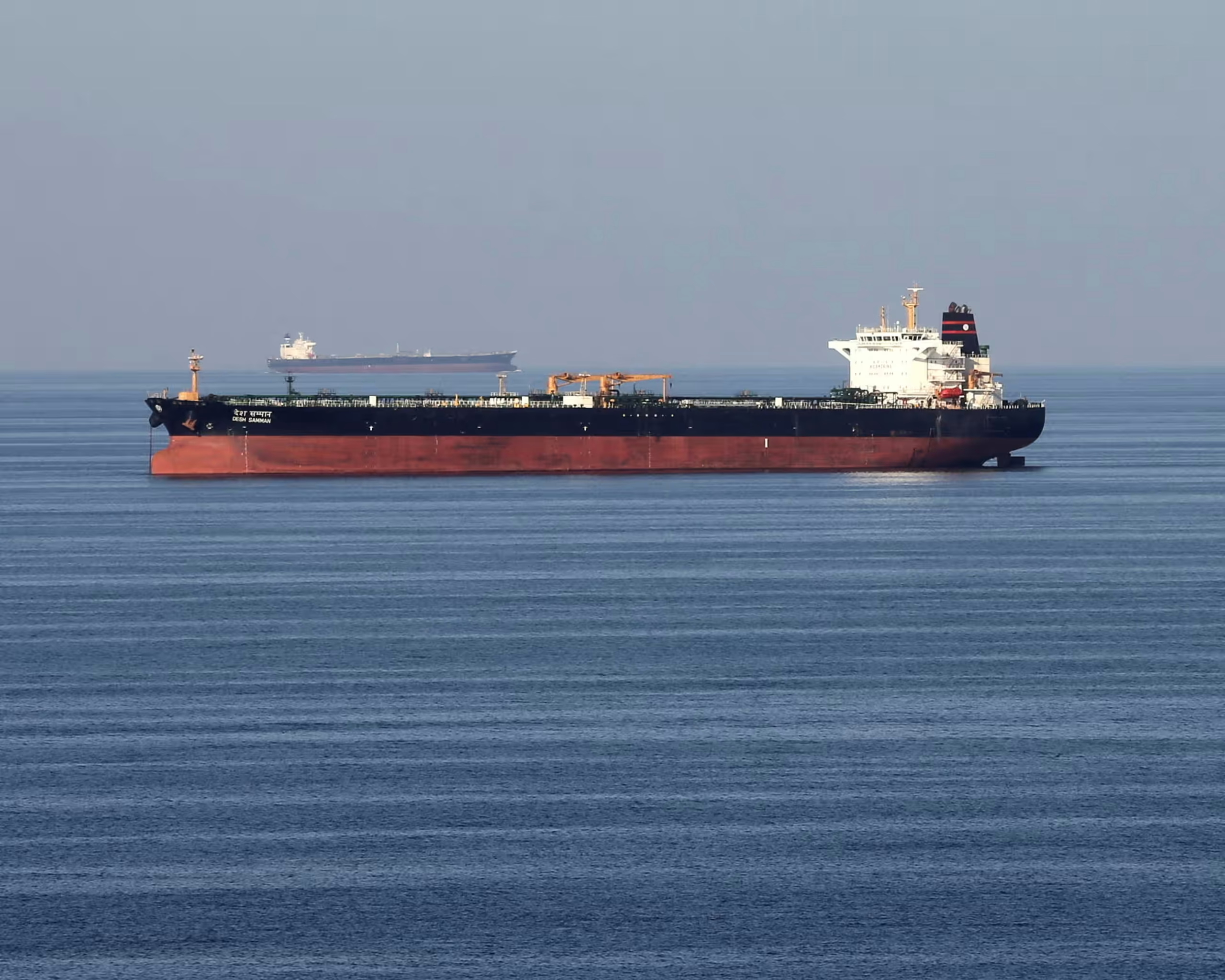
Iran’s military has once again declared the Strait of Hormuz closed, just hours after reopening it, triggering fresh uncertainty in global energy markets.
The announcement came on Saturday as several commercial vessels abandoned attempts to pass through the critical waterway, which handles a significant share of the world’s oil and gas shipments.
Speaking at a diplomatic forum in Turkey, Saeed Khatibzadeh said the United States could not impose its will on Iran through a blockade, amid escalating tensions over a naval siege.
In a written message, Mojtaba Khamenei said Iran’s navy “stands ready” to confront the United States, signalling a hardening stance despite ongoing diplomatic efforts.
Read related story:
Iran reopens Strait of Hormuz as oil prices drop amid ceasefire
Iran agrees to reopen Strait of Hormuz, halt operations under two-week ceasefire deal
Trump claims China has agreed not to supply weapons to Iran after Xi talks
The development comes with just days left before the expiration of a two-week ceasefire linked to the ongoing conflict involving the US and Israel.
Donald Trump had earlier expressed optimism about a potential agreement, describing negotiations as “very close” to completion, while praising mediation efforts led by Pakistan.
Pakistan’s army chief, Asim Munir, recently concluded a visit to Iran aimed at advancing peace talks, while Badr Abdelatty also indicated that a deal could be reached soon.
However, key issues remain unresolved, particularly Iran’s stockpile of highly enriched uranium and control over the Strait of Hormuz.
While Trump claimed Iran had agreed to hand over its enriched uranium, Iran’s foreign ministry spokesperson, Esmaeil Baqaei, rejected the assertion, stating that such a proposal had never been discussed.
“Iran’s enriched uranium is not going to be transferred anywhere,” Baqaei said.
The situation on the ground remains volatile. Maritime tracking data showed some tankers managing to pass through the strait, while others turned back amid uncertainty and security concerns.
Meanwhile, the United Kingdom Maritime Trade Operations reported that a tanker near Oman was approached and fired upon by vessels believed to be linked to Iran’s Revolutionary Guards.
Despite the tensions, Iran’s civil aviation authorities said the country’s airspace has reopened, allowing international flights to resume via designated routes.
The back-and-forth over the strait underscores the fragility of ongoing negotiations and raises fresh concerns about global oil supply and regional stability.

