


Nigel Farage’s Reform UK has delivered a major blow to Britain’s two main parties, making strong gains in England’s local elections and piling fresh pressure on Prime Minister Sir Keir Starmer after a difficult night for Labour.
The elections covered more than 5,000 council seats across England, as well as six local authority mayoral races. The results are being watched closely because they are the biggest test of public opinion since Labour entered government. The Electoral Commission said the polls included local elections across English authorities and six local authority mayoral contests.
Read related news:
Labour loses 200,000 members under Keir Starmer as party reports £3.8m deficit
Keir Starmer ready to send UK troops to Ukraine to protect peace
Starmer faces backlash over Mandelson vetting scandal
By the early results, Reform had become the main story of the election. The party gained more than 350 council seats in England, while Labour and the Conservatives both suffered losses. Reuters reported that Reform added 367 seats in early results, as Labour lost 254 and the Conservatives lost 146.
For Farage, the message was clear. Speaking after Reform took control of Havering, its first council victory in London, he said the result marked a “truly historic shift in British politics”. The party also made gains in areas that had long been seen as Labour or Conservative ground.
The victory in Havering was especially symbolic. Reform won 30 of the 43 seats there, giving the party control of a London borough for the first time. It also gained Newcastle-under-Lyme, another sign that the party is no longer only taking votes from the Conservatives but is also breaking into Labour-facing territory.
For Labour, the results were painful. The party lost control of key councils, including Tameside in Greater Manchester, where Reform took all 14 seats Labour was defending. In Wigan, a council Labour had controlled for more than 50 years, the party lost all 20 seats it was defending to Reform.
The losses have increased pressure on Starmer, who is now facing questions about whether voters have lost patience with his government. Some Labour figures have called for a rethink, while others want a clearer plan from Downing Street.
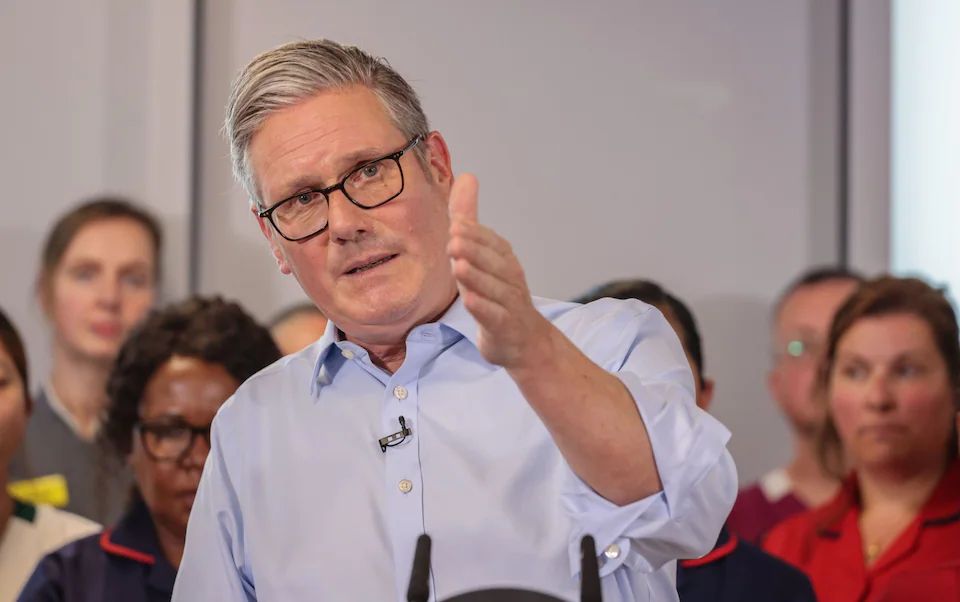
But the Prime Minister insisted he would not resign. Speaking in Ealing, where Labour retained control, Starmer said he was “not going to walk away” and argued that voters were frustrated by the pace of change rather than his leadership.
He admitted that Labour had been punished but said his government would continue with its work. The challenge for Starmer is that many voters appear unconvinced that life is improving quickly enough. Concerns about the cost of living, public services and trust in politics have helped Reform present itself as an alternative to the established parties.
The Conservatives also had a poor night. Reform’s rise has hurt them badly in areas where many voters once backed Boris Johnson’s Conservatives. The result suggests that the old Labour-Conservative battle is giving way to a more divided political map, with Reform, the Liberal Democrats and the Greens all taking votes from the main parties.
Farage said “the best is yet to come” as more results were expected. His task now is to prove that Reform can move beyond protest politics and run councils effectively. That will not be easy. Winning votes is one thing; delivering services, managing budgets and handling local problems is another.
For Starmer, the problem is more immediate. He must calm Labour MPs, reassure voters and show that his government still has a clear direction. If he fails, the pressure on his leadership will only grow.
The full results are still coming in, but the message is already hard to ignore. Reform has turned public anger into votes, Labour has been badly wounded, and Britain’s political landscape is shifting fast.

