


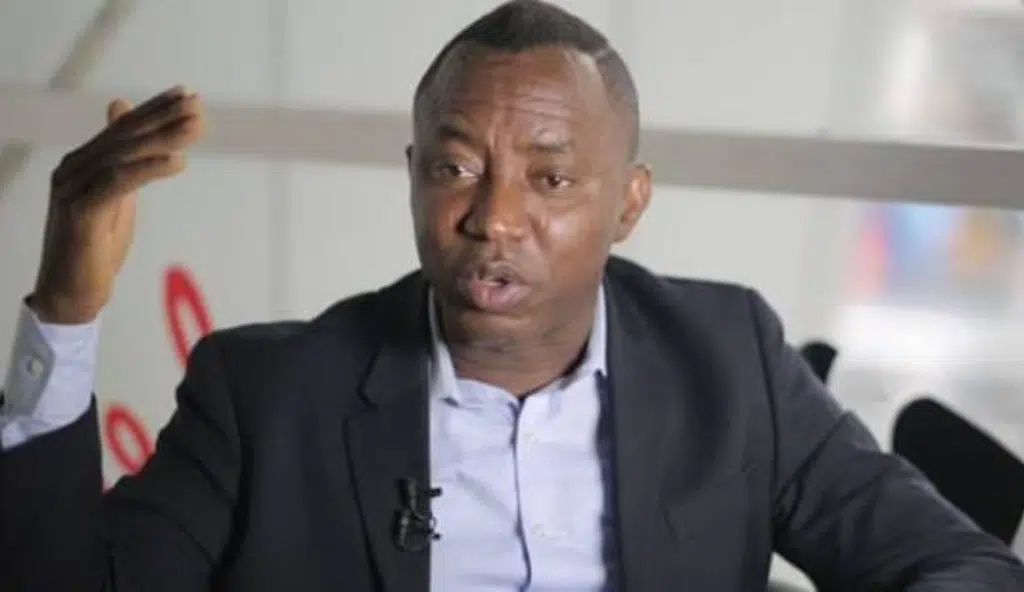
Activist and publisher Omoyele Sowore has criticised what he described as the selective application of freedom of expression in Nigeria, urging authorities to stop using the police, courts, and cybercrime laws to target ordinary citizens for social media commentary.
In a post made on his Facebook page on Sunday, Sowore referenced musician Adekunle Gold’s 2012 public criticism of the then-President Goodluck Jonathan, which was widely recognised as free speech. He argued that had Adekunle Gold been arrested at the time, public outrage would have demanded his immediate release.
Sowore contrasted that past tolerance with current enforcement patterns, suggestive of the fact that individuals who once benefited from freedom of expression are now complicit in using state power to criminalise online speech
READ RELATED NEWS UPDATES
Sowore dismisses opposition coalition ahead of 2027 elections
Sowore’s trial at a crossroads: What 8 May court ruling could decide
Sowore said, “You cannot enjoy free speech when you are powerless and criminalise it the moment you become influential.”
He stressed that freedom of expression should apply equally to all Nigerians, whether celebrities, politicians, activists, or ordinary young people expressing opinions online.
The activist specifically criticised the Nigeria Police Force (NPF) for acting as “a private army for the rich and famous” and called on the judiciary to reconsider severe penalties for internet speech.
He described current legal and law enforcement practices over online commentary as “outrageous,” and thus, warned that criminalising such speech undermines democratic principles.
Sowore’s statement comes during ongoing debates over the enforcement of Nigeria’s cybercrime laws, including provisions that have been used to target dissent and online criticism disproportionately. The activist argued that these laws, intended to protect citizens, should not be weaponised against ordinary social media users.
He urged authorities to ensure that legal protections for free expression are applied consistently and that citizens should not be punished for exercising rights that others have historically benefited from.
He said, “The Nigeria Police Force must stop acting as a private army for the rich and famous, while the judiciary must stop handing down outrageous punishments over internet speech that should never be criminal matters in the first place.”
The statement underscores growing concerns among civil society groups, digital rights advocates, and legal observers about the balance between regulating online activity and protecting constitutional freedoms in Nigeria.
Sowore concluded by calling for an end to selective enforcement which he framed as both a legal and moral obligation for Nigerian institutions. He asserted that only a fair and consistent application of freedom of expression can strengthen democratic governance and public trust in the justice system.
The activist’s comments reflect ongoing tensions in Nigeria between state authority, legal frameworks, and individual rights online. The outcome of these debates could shape the future of digital expression and civil liberties in the country.
By framing the issue around historical precedent and current enforcement practices, Sowore’s statement seeks to remind authorities and the public that democratic freedoms must be universal, not conditional on status, wealth, or political influence.
For More Details, Visit New Daily Prime

