


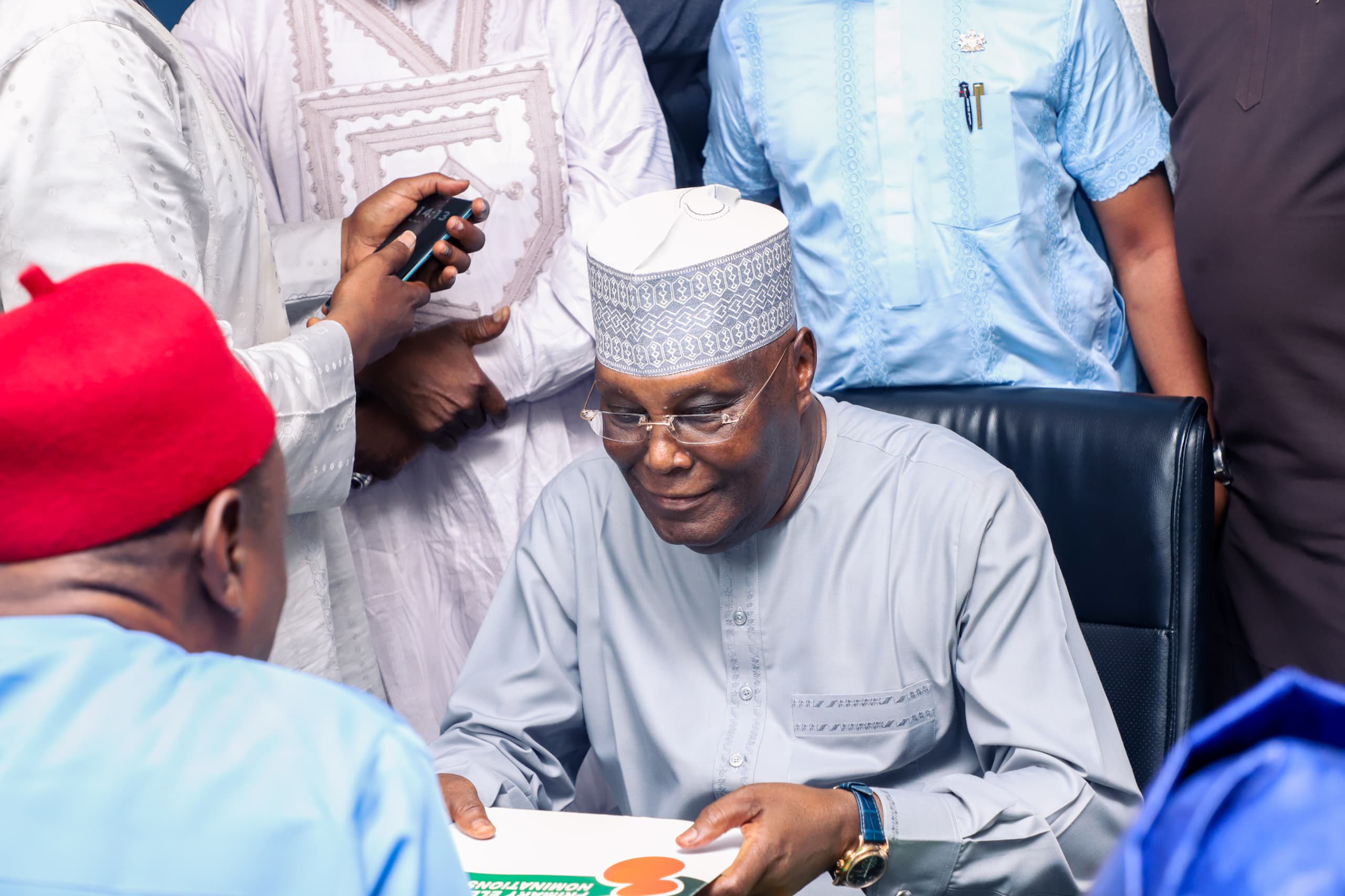
Atiku Abubakar remains one of Nigeria’s most influential politicians because he has something many politicians lose after defeat: relevance. He is not in government, but his name still carries weight in opposition politics, northern power calculations, elite negotiations and the build-up to 2027.
New Daily Prime estimates Atiku Abubakar’s weighted influence score at 90.0/100, placing him among Nigeria’s top public figures. At 90/100, Atiku ranks as one of Nigeria’s most influential political personalities, not because he controls the presidency or a state government, but because he has built power through political structure, national recognition, business reach, northern relevance, electoral resilience and decades of access to key decision-makers.
Weighted Influence Scorecard for Atiku Abubakar
| Indicator | Weight | Score | Points |
|---|---|---|---|
| Current Power & Institutional Control | 15% | 7.3/10 | 11 |
| Reach & Visibility | 15% | 10/10 | 15 |
| Impact & Tangible Results | 15% | 9.3/10 | 14 |
| Soft Power & Cultural Influence | 15% | 8/10 | 12 |
| Relevance to 2026 | 15% | 10/10 | 15 |
| Generational Influence | 15% | 8.7/10 | 13 |
| National & International Recognition | 10% | 10/10 | 10 |
| Total Weighted Influence Score | 100% | — | 90/100 |
New Daily Prime Key Influence Metrics for Atiku Abubakar
| Indicator | Reason |
|---|---|
| Current Power & Institutional Control | Atiku Abubakar does not currently hold public office, but he remains a major opposition figure with strong links across political parties, regional blocs and elite networks. |
| Reach & Visibility | He remains one of Nigeria’s most recognised politicians, with national media attention, repeated presidential campaigns and strong public name recognition across the country. |
| Impact & Tangible Results | His record as former Vice President, PDP presidential candidate and founder of the American University of Nigeria gives him influence in politics, education and public life. |
| Soft Power & Cultural Influence | Atiku’s influence is built on experience, political survival, elite access and his image as a long-standing national figure, though his appeal is weaker among some younger voters. |
| Relevance to 2026 | His role in opposition politics and possible involvement in the 2027 presidential race keep him central to Nigeria’s political calculations. |
| Generational Influence | He is well known across generations, but his strongest influence is among older voters, political elites and citizens who value experience over new political movements. |
| National & International Recognition | As a former Vice President, businessman, education investor and repeated presidential candidate, Atiku is widely recognised in Nigeria and beyond. |
Atiku’s first source of influence is experience. He served as Nigeria’s Vice President from 1999 to 2007 under President Olusegun Obasanjo, placing him at the centre of the country’s early democratic transition. That period gave him national name recognition and long-standing links with party leaders, donors, former office holders and regional power blocs.
His second source of influence is electoral strength. In the 2023 presidential election, Atiku was the Peoples Democratic Party candidate and came second with 6,984,520 votes. That result showed that, despite the rise of Peter Obi and the Labour Party, Atiku still had a large national support base.
Read related news: Linc Edochie warns northern youths over Iran protest
Linc Edochie warns northern youths over Iran protest
Atiku rallies Nigerians behind ADC-led political movement
Atiku also remains powerful because of his political machinery. His influence is not only public popularity. It is also built on relationships inside the PDP, northern political networks, campaign financiers, state-level actors and loyalists who still see him as a serious presidential force. This gives him bargaining power in party negotiations and opposition coalition talks.
His northern influence is another major factor. Atiku remains one of the most recognised northern presidential figures in Nigeria. In a country where regional voting blocs still affect national elections, his ability to appeal to northern elites and political structures keeps him relevant.
His relevance to 2026 is tied strongly to the 2027 race. Reuters reported in 2026 that Atiku had signalled his intention to run in the next presidential election. Reuters also reported that he was part of an opposition alliance involving Peter Obi, Rabiu Kwankwaso and other politicians before the coalition suffered setbacks.
Beyond politics, Atiku has built influence through education and business. The American University of Nigeria says it was founded by Atiku Abubakar in Yola, Adamawa State. This gives him a wider legacy beyond elections, especially in education and private-sector visibility.
His main weakness is not name recognition; it is generational trust. Many young Nigerians know him, but some see him as part of the political class they want to move beyond. That limits his emotional appeal among voters seeking a clear break from the old order.
His long career also carries political baggage. Critics point to his repeated presidential bids, party movements and close links to elite politics. These issues do not erase his influence, but they explain why his soft power score is lower than his visibility and recognition scores.
Atiku’s power is not fresh excitement. It is endurance. He has survived defeats, defections, internal party battles and changing voter moods, yet he remains central to Nigeria’s presidential conversation. That staying power is why he still ranks among Nigeria’s most influential political figures.

