


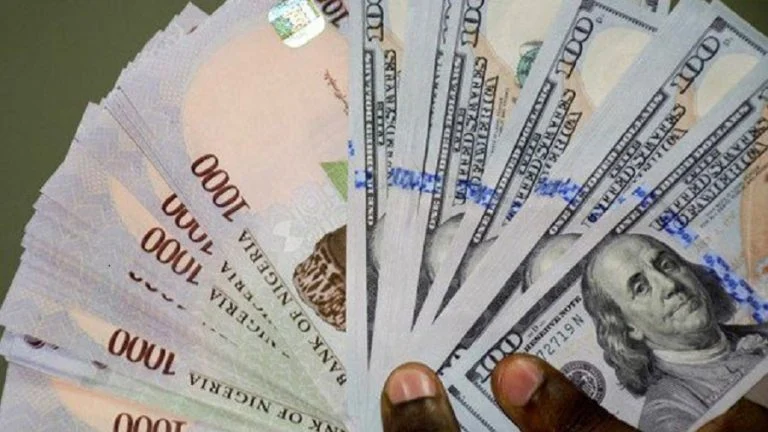
The Nigerian Naira is holding within a tight range against the United States Dollar across both official and parallel markets, reflecting sustained demand pressures and cautious sentiment among market participants.
At the Nigerian Foreign Exchange Market (NFEM) official trading window, the naira is currently trading between ₦1,350 and ₦1,355 per dollar, in line with recent sessions where it hovered around ₦1,351.59/$ and ₦1,350.74/$. The relative stability is linked to the managed float framework maintained by the Central Bank of Nigeria, alongside periodic interventions to stabilise liquidity.
In contrast, the parallel market continues to reflect stronger demand for foreign currency outside formal channels. Data from Bureau De Change operators shows the dollar being purchased at approximately ₦1,395 and sold within the ₦1,405 to ₦1,420 range. This keeps the spread between the official and informal markets at about ₦40 to over ₦60, depending on transaction size and location.
READ RELATED STORY
Naira slips slightly amid persistent dollar demand in FX markets
Naira firms against dollar amid improved FX supply, policy supportNaira dollar
Analysts say the pressure on the naira is being driven by persistent demand for foreign exchange to fund imports, travel, and offshore obligations, as well as fluctuations in oil earnings, which remain Nigeria’s primary source of FX inflows.
Despite occasional periods of stability, the currency is still exposed to both domestic liquidity constraints and external economic shocks. Overall, current trends highlight a familiar pattern—steady performance at the official window and continued premium pricing in the parallel market—pointing to underlying structural challenges in Nigeria’s foreign exchange system.
Yesterday, the naira weakened marginally against the US Dollar as pressure from mid-week demand continued to shape movements across both official and parallel foreign exchange markets.
At the NFEM, the local currency opened softer, with data from the FMDQ Securities Exchange indicating an average rate of 1,351.59 Naira to the dollar. This represents a slight drop compared to earlier in the week, when the currency traded closer to the 1,347 mark.
Activity at the official window remains closely watched by investors, particularly in light of the Central Bank of Nigeria’s managed float approach, which is designed to reduce volatility while ensuring priority sectors maintain access to foreign exchange.

