


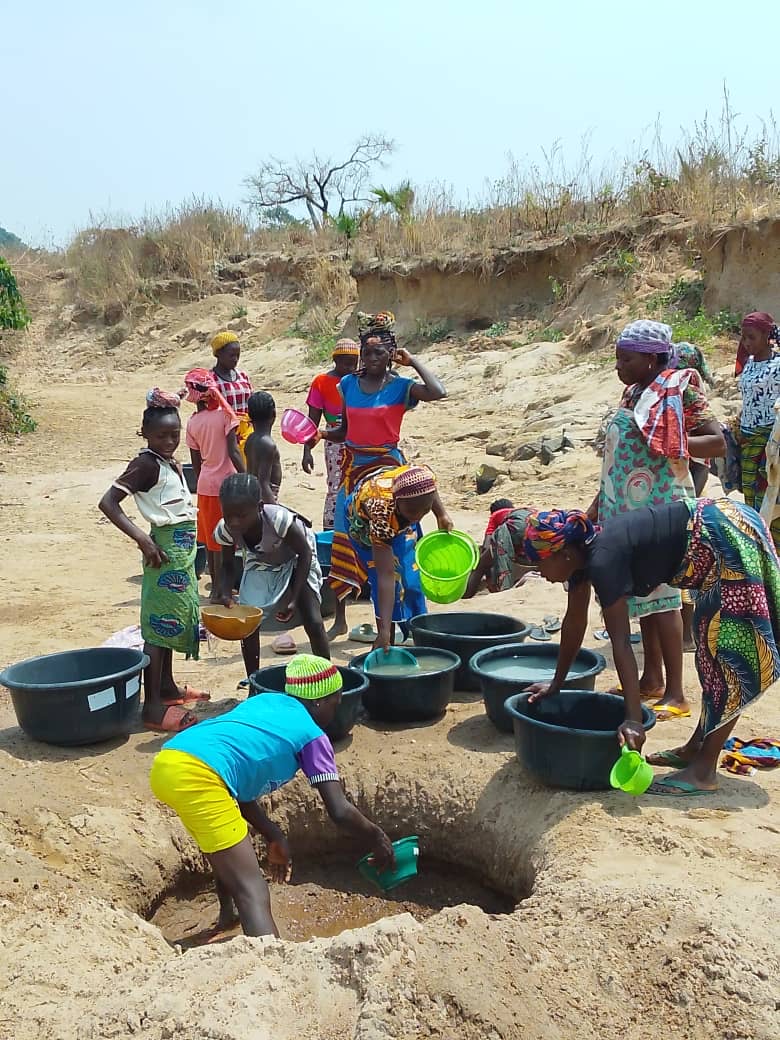
Residents in Niger State are digging the ground to survive, as a worsening water crisis forces families to rely on muddy, unsafe water for daily use. On 5th March 2026, under the scorching sun, Abigail Anthony, a 26-year old mother, struggled to scoop brownish water from makeshift ditches at her Jindau community in Niger state. Sweat streamed down her face as she carried her iron bucket, digging tirelessly to fetch water for her household.
“We suffer a lot. When there are plenty of people in ditches, I scoop one bucket a day. It is not all places dug that we get water,” the mother of one said.
Mrs Anthony told New Daily Prime that since marrying into Jindau village in Shiroro, Niger State, her household has faced persistent water shortages, which she attributes to gold mining activities in the community. The young mother, who got married three years ago, now struggles daily to fetch water, often returning home with only small amounts.
”Everyday we suffer from water scarcity, ditching ground to scoop little amounts of water. Where we often get clean water is far. Before we often got water but not now because artisanal miners started their mining, water shrinks in this community”, she told New Daily Prime, while struggling to scoop water from the ditch.
She further noted that the fetched water looks like a detergent colour whenever it is being used, adding that it causes illness such as diarrhea and vomiting to their children.
“As this year diseases become worse in the community. We were told in the hospital that the disease was caused by unclean water”, she added.
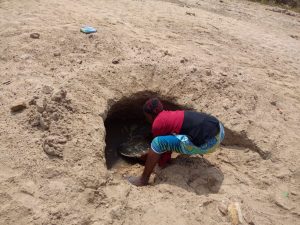
For many families in these communities, this daily routine has become the only way to access water for drinking, cooking, and other household needs. As water sources continue to dry up, residents attributed the water shortage to gold mining in their ancestral lands which has deepened an already severe water crisis.
Residents walk long distance to get water
For Auta Jetau, a 40-year-old housewife, the crisis is personal. She spoke of the acute water shortage in Jindau, where women bear the burden of trekking long distances for water. Now barely able to walk, she relies on children to fetch water for her household.
“We have been suffering from acute water scarcity for over many years, forcing residents to walk long distances to fetch polluted water from streams”, Jatau told New Daily Prime.
In Northern Nigeria, women bear the primary responsibility of providing water for their households. Everyday, the house-mothers wake before dawn and trek long miles to ditches to get water for domestic uses. There, they wait for hours as very small amounts of water seep through the soil then before scooping them into their container.
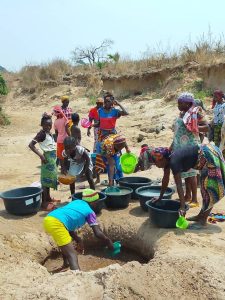
Now elderly, Jatau relies on others for her water needs. When no one is available to assist her, she is forced to make the long walk to the digging site herself. Often, she returns home empty-handed, especially when she finds no one there to help.
She said fetching water from long distances is a setback for them, often resulting in physical strain and wasted time, especially when arriving to find the source low or dry.
The aged-mother urges the government to come to their aid as potable water becomes extreme scarcity.
Water shortage traced to gold miners
As residents of Jindau and Gbase villages continue to grapple with water shortages, several community members, including elderly ones, told New Daily Prime that the crisis is linked to gold mining activities in the area.
Shuaibu Masu, a community leader in Jindau village sketched the long-aged water scarcity to artisanal miners, digging ground and shrinking water sources in the village.
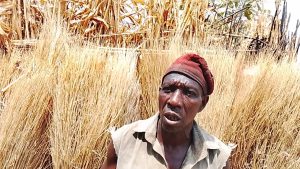
In his words, “It has been over 30 years that we have been struggling with water whenever rainfall reduces. Our problem begins when we get a small amount of water but now the water issue escalates as miners shrink water sources”.
According to the community leader, residents have faced severe water scarcity for years, despite making repeated appeals to authorities that have yielded no response.
“The place of getting water is very long as women get water 3 times in a day. We would be told that the water that we use is very bad for our health and it causes diarrhea. We urge the community to help us with drinkable water but our plea is not heard”, he added.
A visit by New Daily Prime to the gold-mining site revealed young children digging large pits and using substantial amounts of water during operations practices residents say are worsening the village’s water scarcity.
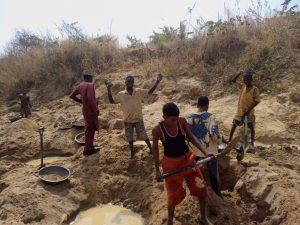
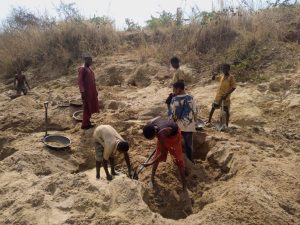
Like Masu, another resident, Samuel Bazakore, also shared similar stories about their community suffering from water due to gold miners. The middle-aged resident also traced water scarcity in their village to miners polluting the environment.
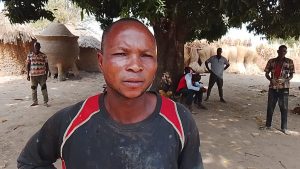
“The problem started when miners started polluting the water.There is no year that we don’t tell concerned authorities to help us”, he told New Daily Prime in his village.
“It has been over years that we suffer from water in this community because it is not today or yesterday. Even when there is rainfall, we suffer from water in this community”, the resident added.
Similarly, Bazakore noted that women in the village bear the burden of trekking long distances to dig for water for their households, often returning home with little or nothing to show for their efforts.
He further lamented that residents now resort to digging to fill their homes with water for domestic uses, explaining that the wives’ husbands also joined women to help them relieve stress of digging. But that is not all for residents, the water shrinks completely in harmattan seasons which forces many of them to scratch ditches like snakes.
Cholera disease rises as residents use polluted water
Dan Azumi Etsu, a 44-year-old resident, told New Daily Prime that the two neighbouring communities — Jindau and Gbese — have continued to experience outbreaks of waterborne diseases such as cholera.
He said his children have not been spared from the recurring illness. Other residents interviewed by this reporter shared similar accounts, linking the outbreaks to the consumption of polluted water in Jindau and surrounding communities in Shiroro.
“Polluted water has resulted in outbreaks of waterborne diseases like cholera”, Etsu said, noting that the water is unsafe for consumption. “The water from our stream is often polluted and not drinkable and could not be used for cooking. We have to apply alum to make the water clean”.
He further said how the government neglected them, particularly building boreholes is painful. “We have called on the state government to urgently intervene to save us from the constant typhoid fever, cholera and deaths occasioned by the water shortage in the communities”, he added.
According to a report, at least 13 people have died and 239 have been infected in a cholera outbreak spreading across six districts of Niger state in central Nigeria. The outbreak of the disease came after June 26 was declared a “national emergency” over cholera amid rising numbers of cases nationwide.
In Nigeria, the risks are worsened by limited access to clean water and insufficient medical response capacity.
For David Bake, a 45-year-old farmer in Jindau, the rainy season offers brief relief from the community’s water crisis. But his joy is often short-lived as the harmattan season sets in. Like many others, he joins women in searching for water for their households.
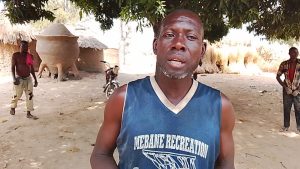
“We have been suffering from water for over 27 years. As soon as rain stops dropping, we face water challenges, the rainy season brings a temporary sigh of relief, often washing away dust and filling local streams”, Bake told New Daily Prime.
“For our community, this joy is short-lived. The moment the rain stops, a familiar, harsh reality sets in: a severe water problem”, he added.
The farmer urges the government to quickly intervene to address severe water scarcity as residents are often forced to drink contaminated water.
When contacted, Hon. Abubakar Musa, the commissioner for environment and climate change in the state, was not available for comment. SMS sent to him remained unanswered as of press time

