


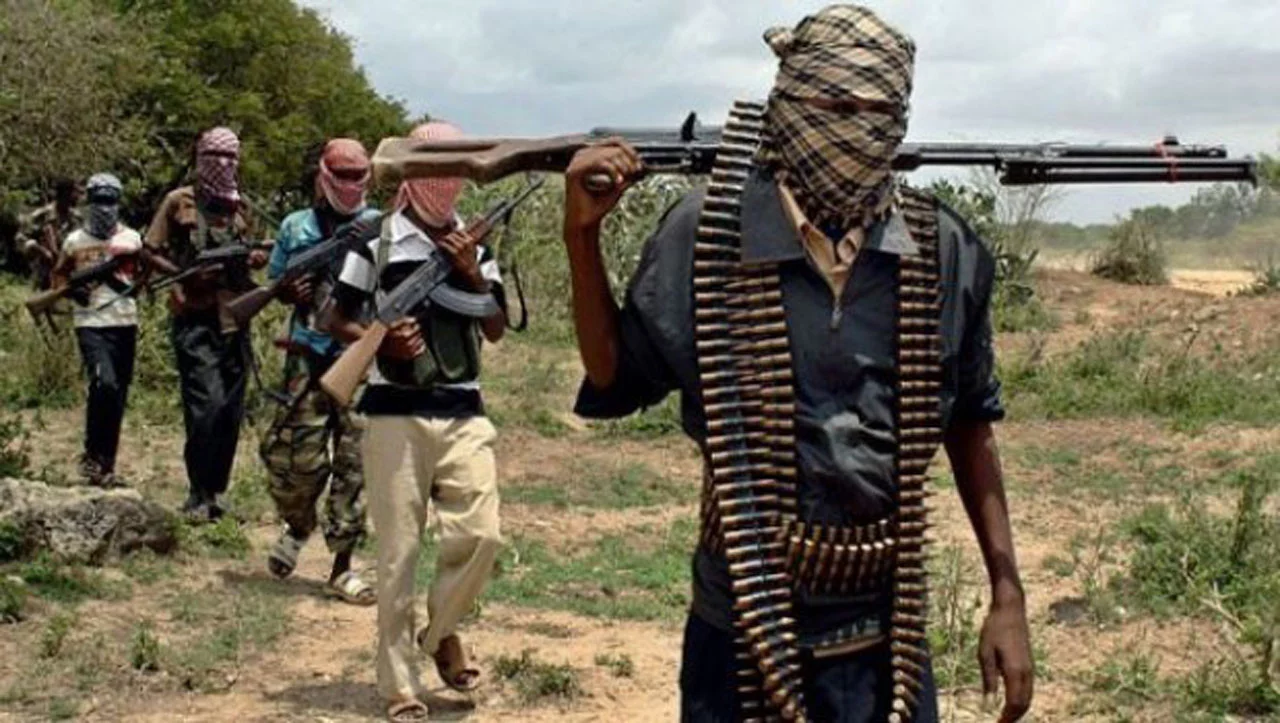
The release of 46 students and teachers abducted from schools in Oriire Local Government Area of Oyo State has been stalled by a fresh demand from their captors (Ansaru), New Daily Prime has learnt.
Security sources told New Daily Prime that the attackers are members of Ansaru, an al-Qaeda-linked militant group that broke away from Boko Haram and has carried out deadly operations in parts of Nigeria.
The terrorists are said to be demanding the release of some of their jailed leaders before freeing the victims, most of whom are children.
The abductees, made up of 39 students and seven teachers, were taken on Friday, May 15, after armed men attacked schools in Ahoro-Esinle community in Oriire Local Government Area.
Read related news:
Security tightened in Abuja, Niger over alleged terror plot on airport, prisons
Outrage as bandits kill Zamfara councillor, LG Director in APC-Governed State
Troops raid bandit camps, capture families in Bauchi forest
A security source familiar with the matter said the kidnappers had refused to limit talks to the families of the victims because their demand was not only about money.
“The reason why the terrorists are insisting on negotiating with the government and not the families of the victims is because they want to talk about the release of their jailed leaders,” the source said.
“They are calling for their release. The government is in a fix as to what to do. Will it release their jailed leaders, who are among the most dangerous in the land, or go all out to forcibly rescue the victims?”
The source warned that a forced rescue operation could put the abducted students and teachers in greater danger.
“The danger is that if force is used to get the victims released, there may be heavy casualties among the victims, most of whom are young people,” the source added.
Ansaru, whose full name is Jama’atu Ansarul Muslimina Fi Biladis Sudan, is often translated as “Vanguards for the Protection of Muslims in Black Africa.”
The group emerged around 2012 as a breakaway faction of Boko Haram. It later aligned itself more closely with al-Qaeda’s ideology and networks.
Unlike Boko Haram, Ansaru has often been linked to targeted attacks and kidnappings involving high-profile or strategic victims. Security analysts have also described it as a group with wider regional ambitions.
Its alleged involvement in the Oyo abduction has raised fresh concern among security officials and residents, especially because school kidnappings of this scale have been more common in northern Nigeria than in the South-West.
The development came as teachers in Oyo State withdrew their services on Monday in protest against the continued captivity of their colleagues and students.
The Nigeria Union of Teachers directed public primary and secondary school teachers in the state to stay away from classrooms until the abducted victims are safely released.
The union’s national leadership also directed state wings across the country to organise solidarity rallies on Tuesday.
National President of the NUT, Audu Amba, said the protest was necessary to put pressure on the authorities to secure the release of the victims.
The abduction has deepened fear among parents in Oriire and neighbouring communities, where many families are now worried about sending their children to school.
For the families of the victims, the wait has become painful and uncertain. Some parents have continued to appeal to the government to do everything possible to bring their children home alive.
Ansaru has been linked to several violent attacks in Nigeria. In April 2022, the group was linked to an attack on a military base at Polewire in Birnin-Gwari, Kaduna State, where several soldiers were killed and many others injured.
The group has also been accused of working with armed gangs in parts of north-west and north-central Nigeria, where terrorists have taken advantage of weak security in rural communities.
Security sources said the demand for the release of jailed leaders has made the Oyo case more difficult than a normal kidnap-for-ransom negotiation.
They said the government now faces a hard choice: negotiate with the terrorists and risk strengthening them, or attempt a rescue operation that could endanger the lives of the students and teachers.
As of Monday, the victims were still in captivity.

