


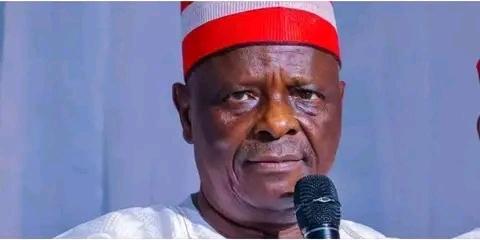
Former Kano governor Rabiu Kwankwaso has denied reports linking him and the Nigeria Democratic Congress (NDC) to a planned protest over rising insecurity, describing the message circulating on social media as false and misleading.
In a statement on Monday, issued at a time of growing political tension and worsening security concerns across parts of the country, Kwankwaso urged Nigerians to disregard what he called disinformation designed to create a false impression about the party’s position.
The former Kano governor said neither he nor the NDC was mobilising supporters for street demonstrations, insisting that the party remained committed to democratic engagement rather than actions that could trigger public disorder.
READ RELATED NEWS UPDATES
NDC disowns viral primary results, delays declaration until NEC meeting
Kwankwaso hinted at possible NDC-ADC alliance ahead of 2027 elections
Arguing that political change must come through constitutional means, Kwankwaso said the ballot box remained the most legitimate avenue for citizens to express dissatisfaction with governance and seek leadership change.
He stated that the NDC was focused on winning future elections through lawful political participation and not through protests that could escalate tensions or threaten public safety.
The statement appears to be a direct response to online messages alleging that opposition figures were planning mass action over insecurity, one of the issues already shaping early conversations ahead of the 2027 general election.
While Kwankwaso did not identify those behind the claims, he warned Nigerians against relying on unverified social media messages, particularly at a time when political misinformation has become increasingly common.
His intervention comes as opposition parties attempt to define their strategy on national issues without being seen as encouraging unrest. Security remains one of the most contentious subjects in the country’s political debate, with attacks by armed groups, kidnappings and communal violence continuing to generate public concern.
Rather than endorsing public protests, Kwankwaso maintained that electoral participation should serve as the vehicle for political accountability.
The position aligns with recent messaging from several leading figures associated with the NDC, who have repeatedly framed the 2027 election as the central battleground for challenging the ruling establishment.
Peter Obi, while criticising the country’s security and economic conditions in recent remarks, has also consistently presented electoral mobilisation as the preferred route for political change. During his acceptance speech after securing the NDC presidential ticket, Obi argued that Nigeria’s worsening insecurity required urgent intervention but stopped short of calling for public protests, instead emphasising democratic participation and institutional reform.
The NDC itself has in recent weeks issued several statements warning against misinformation surrounding its activities and internal processes. The party recently disowned unofficial social media accounts and dismissed unauthorised political announcements circulated online, insisting that only statements released through recognised party channels should be treated as authentic.
It is noted that the latest controversy reflects a broader challenge confronting opposition parties as preparations for 2027 gather pace. With social media increasingly driving political narratives, parties now find themselves responding not only to opponents but also to rumours, fabricated statements and unauthorised campaign messages.
For the NDC, the immediate concern appears to be preventing any perception that it is encouraging actions capable of destabilising public order.
Kwankwaso’s statement therefore serves two purposes: distancing the party from the protest claims and reinforcing its attempt to project itself as a platform seeking power through electoral competition rather than street agitation.
Whether the clarification ends the speculation remains unclear. Yet the message from the party’s vice-presidential candidate was unmistakable: dissatisfaction with the country’s challenges, he suggested, should be expressed at the polling unit, not on the streets.
For More Details, Visit New Daily Prime News

