


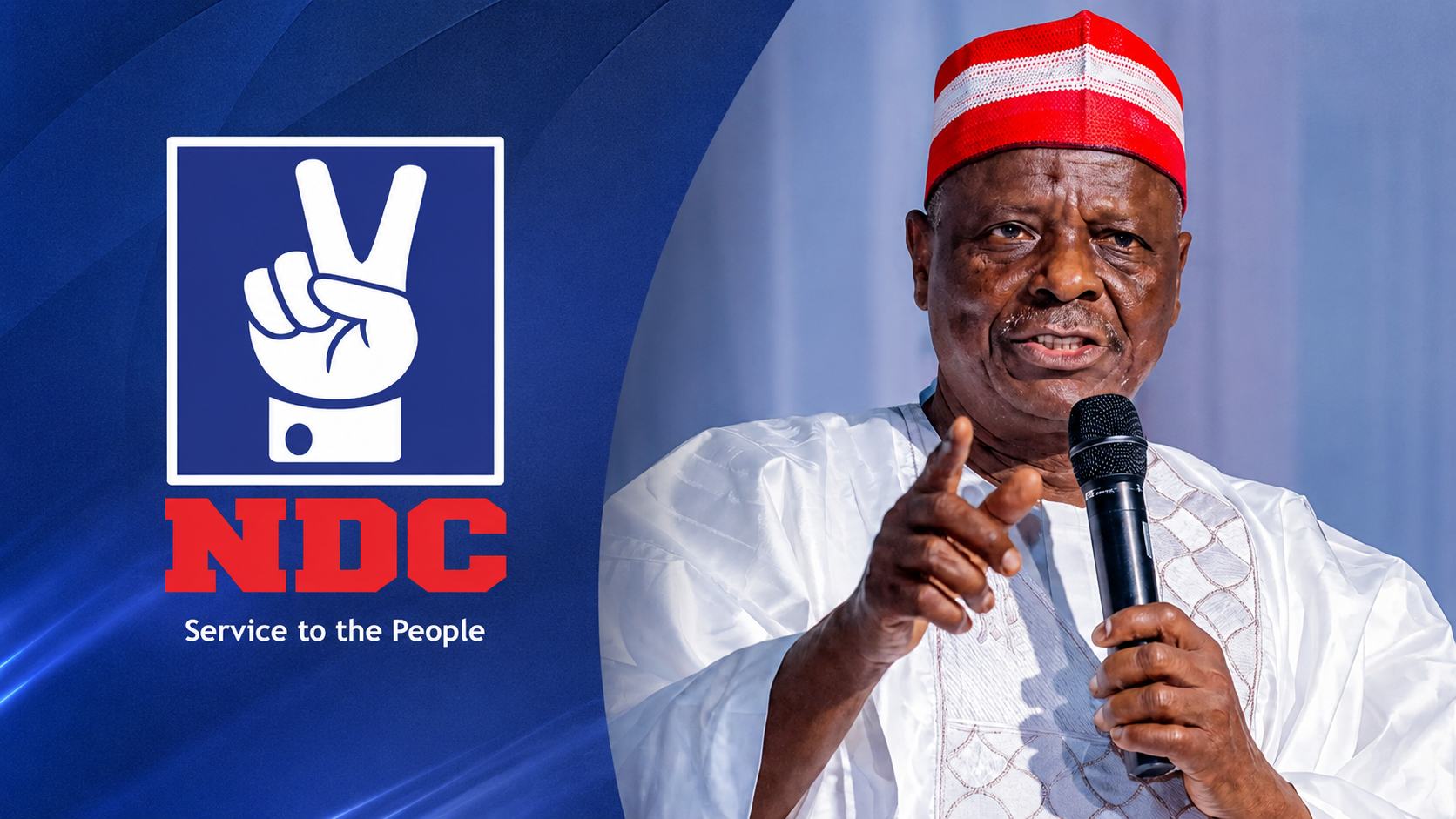
The Nigeria Democratic Congress, NDC, has zoned its 2027 presidential ticket to Southern Nigeria, a move that could reshape opposition politics ahead of the next general election.
Read more breaking stories from our latest nigeria news
The decision was taken as the party continues to attract attention following the movement of former Anambra State governor, Peter Obi, and former Kano State governor, Rabiu Musa Kwankwaso, into its fold.
According to reports, the NDC resolved that its presidential candidate for 2027 would come from the South. The party also indicated that after a single four-year term, the ticket would return to the North. Party figure Buba Galadima also confirmed during an interview that the presidential candidature had been zoned to the South.
Read related news:
Aisha Yesufu defects to NDC, declares bid for FCT Senate seat in 2027
Omokri questions claim of 10 Million NDC registrations
Dickson welcomes Marafa to NDC ahead of 2027
Kwankwaso urges supporters to join NDC after defection with Obi
The development appears to clear the way for Obi and other southern aspirants to seek the NDC presidential ticket. Obi, who was the Labour Party presidential candidate in 2023, remains one of the most visible opposition figures in the country.
Obi and Kwankwaso recently left the ADC-led opposition arrangement and joined the NDC after raising concerns over legal disputes, internal division and mistrust within the former platform. New Daily Prime earlier reported that Obi and Kwankwaso, who came third and fourth respectively in the 2023 presidential election, moved to the NDC after the opposition alliance suffered fresh cracks.
The zoning decision may be good news for Obi’s supporters, especially those in the Obidient movement who are pushing for another presidential run. However, it also raises a major question about Kwankwaso’s political future within the party.
No report has yet confirmed whether Kwankwaso and his camp are comfortable with the NDC’s decision to zone the 2027 presidential ticket to the South. The former Kano governor has also not publicly stated whether he will accept the decision, challenge it, or negotiate another political arrangement within the party.
The decision could affect Kwankwaso’s presidential ambition if he planned to contest for the NDC ticket in 2027. But it may also open the door for talks over a possible alliance, running mate arrangement, or future power-sharing deal.
For more updates on party developments, follow the latest APC news in Nigeria.
For now, the party’s decision appears to favour southern aspirants. But Kwankwaso’s next move will be important in determining whether the NDC can maintain unity as it prepares for the election.
The NDC is currently listed by the Independent National Electoral Commission, INEC, as the Nigeria Democratic Congress. INEC’s website lists Senator Cleopas Moses Zuwoghe as the party’s national chairman, Barrister Ikenna Morgan Enekweizu as national secretary, and Barrister Reuben Egwuaba as national legal adviser, all marked “by court order.”
However, the party’s registration has also attracted controversy. Umar Ardo, a founding leader of the All Democratic Alliance, ADA, has said his group would appeal the court order that compelled INEC to register the NDC. According to TheCable, Ardo claimed the NDC was not part of the earlier pre-qualified associations cleared by INEC in October 2025.
The party is also facing questions over claims that millions of Nigerians registered with it within 24 hours of Obi and Kwankwaso joining. Reno Omokri, a former presidential media aide, dismissed the claim as unrealistic, saying the technology needed to register 10 million users in one day would require major server capacity.
Omokri said political parties should be careful with public claims if they want to be taken seriously by Nigerians. The NDC had not publicly responded to his comments at the time of this report.
Despite the controversies, the NDC has quickly become one of the most talked-about opposition platforms in the country. The arrival of Obi and Kwankwaso has given the party instant visibility, but visibility alone may not be enough.
To become a serious force in 2027, the NDC will need strong structures across states, local governments and wards. It will also need to manage ambition among its major figures, avoid internal court battles and convince Nigerians that it is more than a temporary platform for election-season politics.
For Obi, the zoning decision may be a major boost. For Kwankwaso, it presents a political test. For the NDC, it may solve one problem but create another: how to keep both southern and northern power blocs united before 2027.

