


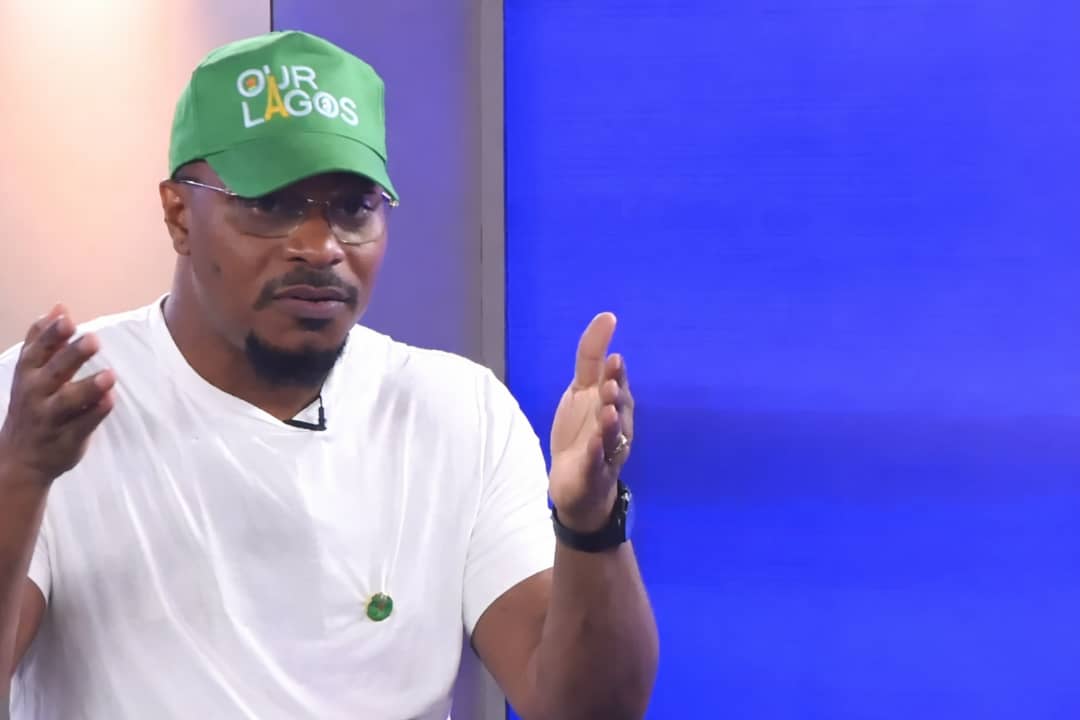
The 2023 Lagos governorship candidate under the Labour Party (LP), Gbadebo Rhodes-Vivour, has said he will remain in the African Democratic Congress (ADC), insisting his decision is guided by conviction rather than political convenience.
In a statement on Tuesday, Rhodes-Vivour acknowledged the shifting dynamics within Nigeria’s opposition space but maintained that loyalty to grassroots mobilisation and long-term vision informed his stance.
Rhodes-Vivour position comes amid recent defections by prominent figures, including Peter Obi and Rabiu Musa Kwankwaso, who have both moved to the Nigeria Democratic Congress (NDC).
“I want to make it clear that I am staying in the African Democratic Congress (ADC). It is the platform we have built, the ground we have fought on, and the vehicle that can take us to victory,” he said.
Rhodes-Vivour stressed that his decision was not influenced by prevailing political trends or perceived advantages, but by a commitment to the ideals that brought him into the party.
“It is not because it is the convenient choice, or that the political winds are blowing in our favour. But because of what brought me here and because of what was paid for me to be here,” he added.
The politician noted that remaining in the ADC may come at a personal cost but described it as a necessary sacrifice rooted in principle.
“That Lagos is not a fantasy. It is a choice. And it requires people who are willing to stay and do the work, even when staying is hard. I have always stood on conviction,” he said.
“It has cost me things. It will continue to cost me things. But I have never regretted a decision made from principle, and I do not intend to start now. This is our moment. This is our stand. And we will not back down.”
Meanwhile, seventeen members of the House of Representatives have defected from the ADC to the NDC.
This is coming two days after Peter Obi and Rabiu Kwankwaso defected from the ADC to the NDC ahead of the 2027 presidential election.
The defections of the lawmakers were formally announced on the floor of the Green Chamber during Tuesday’s plenary session by the Deputy Speaker of the House of Representatives, Benjamin Kalu.
The lawmakers cited “unresolved crises” as the reason for their decision to leave the party.
Those who moved to the NDC include Yusuf Datti, Uchenna Okonkwo, Adamu Wakili, Thaddeus Attah, George Ozodinobi, Lilian Orogbu, Oluwaseyi Sowunmi, Peter Aniekwe, Mukhtar Zakari, George Oluwande, and Munachim Umezuruike.
Others are Emeka Idu, Jesse Onuakalusi, Ifeanyi Uzokwe, Afam Ogene, and Abdulhakeem Ado.
Kwankwaso and Peter Obi, former governor of Anambra state, formally joined the NDC on Sunday after leaving the African Democratic Congress (ADC), citing uncertainties surrounding the party’s future after the April 30 ruling of the Supreme Court.
At the event, the NDC national chairman, Cleopas Moses Zuwoghe, presented membership cards to both politicians.
Speaking afterwards, Kwankwaso said discussions with party leaders revealed a shared ideological direction, which informed their decision to join the platform.
In a post on Monday, the former minister described the move as a strategic step toward repositioning the political landscape.
“Yesterday, we took a bold and decisive step by formally joining the Nigeria Democratic Congress (NDC),” he wrote.
“At the residence of Senator Seriake Dickson in Abuja, I announced that our decision stems from a deep commitment to democratic values.
“We are determined to provide our people with a credible platform where they can thrive and realise their full potential.
“I therefore call on all our dedicated supporters and well-meaning Nigerians to join the NDC and stand with us in this renewed fight for good governance and true democracy.”

