


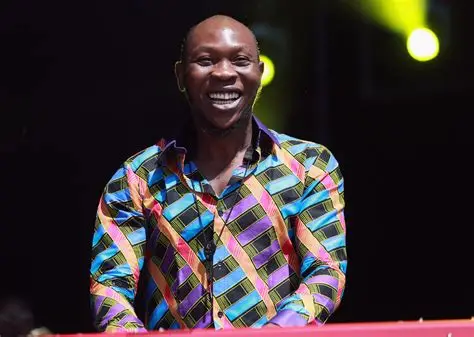
Grammy-nominated Afrobeat singer Seun Kuti has alleged that he has been blacklisted within the Nigerian music industry for over a decade due to the politically conscious nature of his music.
Speaking during a recent episode of the Saleh Meditate podcast, the son of Afrobeat pioneer Fela Anikulapo-Kuti argued that his experience reflects a broader pattern in which artists who challenge authority or address social realities are sidelined in favour of those producing less critical, commercially friendly content.
Read Also: ‘It’s for life’ — Seun Kuti on feud with Wizkid
According to Kuti, the Nigerian government became wary of the influence of protest music following the legacy of his father and other socially conscious musicians of that era.
He claimed that this led to a deliberate shift, where more support and visibility were given to artists whose music does not confront political or societal issues.
“The impact of Fela and his contemporaries who spoke truth to power scared the government. They realised the power of artistry. So, the government invested more in artists who don’t make conscious music than artists who sing about realities,” he said.
Kuti further revealed that his own struggles within the industry intensified after a performance at an event organised during the tenure of former Lagos State Governor Akinwunmi Ambode.
He claimed that shortly after that appearance, he began to face increased restrictions and what he described as an informal “cancellation” that has persisted for about 13 years.
Despite these claims, the singer maintained that he has never softened his stance or censored his message.
He emphasised that he continues to speak freely, regardless of potential backlash, even noting that some critics have called for his cancellation over the years.
“When I am in Nigeria, I don’t fear to say whatever I want to say. A lot of people are saying I should be cancelled. But I have been cancelled for about 13 years now,” he stated.
However, Kuti downplayed the impact of the alleged blacklist on his career. He explained that his audience extends far beyond Nigeria, making the local industry only a small portion of his overall market.
As a result, he said the supposed restrictions have not significantly hindered his success or reach.
“Nigeria is just a really small percentage of my market. So, being cancelled doesn’t really affect me,” he added.
His comments also touched on a broader issue within the music industry, the balance between artistic expression and commercial viability.
Kuti suggested that many artists avoid politically charged themes not necessarily out of preference, but out of concern for their careers, particularly if their primary fanbase is within Nigeria.
He argued that this fear of being blacklisted or losing opportunities discourages musicians from addressing pressing societal issues in their work.
According to him, this has contributed to a shift in the industry’s content, with fewer artists engaging in the kind of activism that once defined Afrobeat.
Kuti’s perspective revives longstanding conversations about the role of music as a tool for social commentary and political engagement.
Historically, Afrobeat, pioneered by his father, was deeply rooted in activism, often confronting corruption, inequality, and governance issues head-on.
In contrast, today’s mainstream Afrobeats scene is largely driven by themes of lifestyle, romance, and entertainment, with only occasional forays into social or political commentary.
While this evolution has helped the genre achieve global success, critics like Kuti argue that it has come at the cost of its original purpose as a voice for the people.
At the same time, others within the industry have pointed out that the globalisation of Afrobeats has created new pressures and expectations, pushing artists to cater to international audiences and commercial markets.
Kuti’s remarks, therefore, sit at the intersection of art, politics, and business, raising questions about who controls the narrative within the music industry and what kinds of voices are amplified or suppressed.
Whether or not his claims of blacklisting can be independently verified, they highlight the ongoing tension between creative freedom and institutional influence.
For Kuti, however, the message is clear: his commitment to conscious music remains unchanged, regardless of the challenges he believes it brings.
As the conversation continues, his stance serves as a reminder of Afrobeat’s origins and the enduring debate over the role of artists in shaping public discourse.
For more details, visit New Daily Prime at www.newdailyprime.news.

