


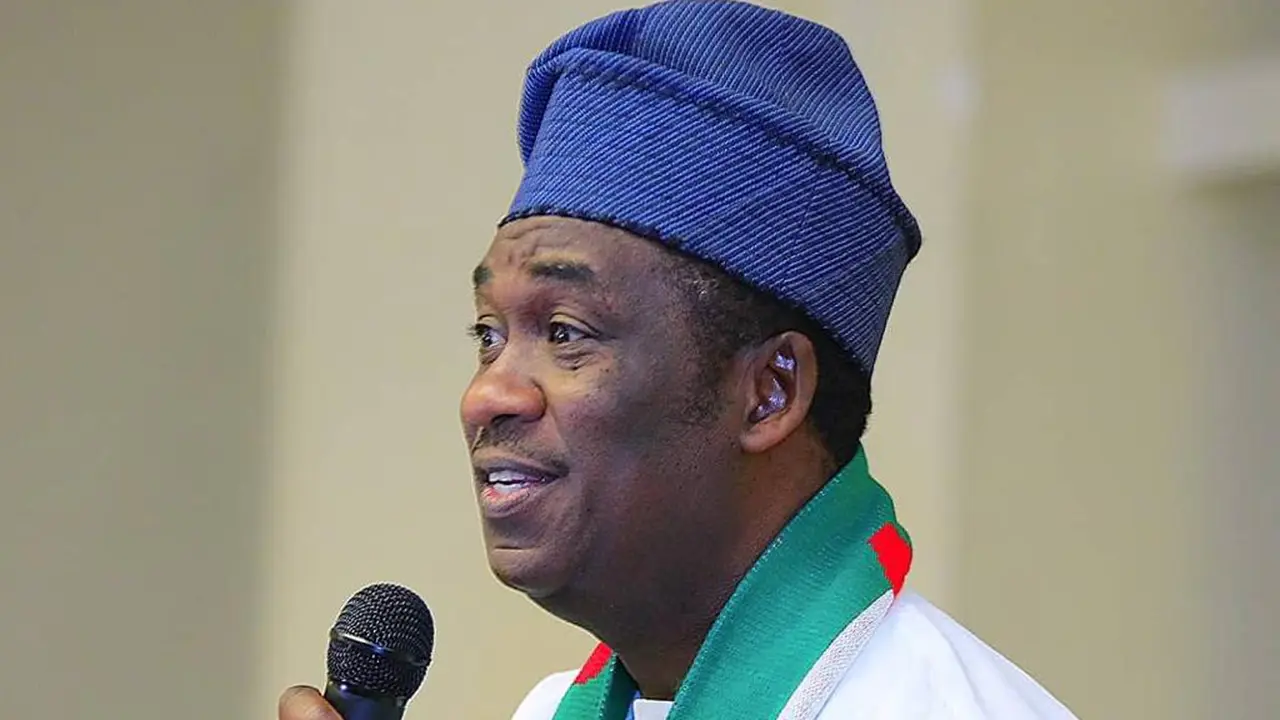
Ahead of the 2027 governorship election in Lagos State, Nigeria’s ruling All Progressives Congress (APC) is showing early signs of internal strain following a wave of coordinated endorsements backing Deputy Governor Obafemi Hamzat as the preferred successor to Governor Babajide Sanwo-Olu.
What initially appeared to be routine political alignment has quickly evolved into a broader debate around internal democracy, candidate imposition, and the future balance of power within the Lagos APC. While party leaders have largely rallied behind Hamzat, some stakeholders are expressing quiet but growing concerns about the process.

The succession conversation gained momentum on 27 April 2026, when Sanwo-Olu convened a closed-door meeting with members of the Governance Advisory Council (GAC) and other influential figures at Lagos House, Marina. According to sources, Hamzat used the meeting to formally declare his intention to contest the governorship election, a move swiftly followed by the governor’s endorsement.
Read related news:
Lagos deputy gov Hamzat submits nomination for governorship election
2027 Lagos Governorship: Hamzat seeks Gbajabiamila’s backing
Nigeria needs active problem-solvers, not passive graduates — Hamzat
Within 24 hours, the GAC—widely regarded as the apex decision-making body of the Lagos APC—also threw its weight behind Hamzat, reinforcing perceptions that the party leadership had already settled on him as the leading candidate.
The momentum intensified further on 29 April when President Bola Ahmed Tinubu reportedly endorsed Hamzat during a meeting with GAC members at the Presidential Villa in Abuja. Insiders suggest the president’s backing effectively cemented Hamzat’s position within the party hierarchy.
Additional support came from the Speaker of the Lagos State House of Assembly, Mudashiru Obasa, signalling alignment among key power blocs despite earlier speculation about his own ambitions.
However, the wave of endorsements has opened fresh conversations within the party over how the nomination process should be handled. While many members see the growing support for Hamzat as a sign of confidence in his experience, others believe the party should still create room for all interested aspirants to participate fairly.
The development has also brought renewed attention to the choice between a consensus arrangement and direct primaries. Abdul-Azeez Olajide Adediran, who had earlier shown interest in the race, had spoken in favour of open primaries instead of consensus, but his later withdrawal has further shaped the internal discussion.
Meanwhile, Dr Samuel Mawuyon Ajose has entered the contest, suggesting that the race remains open despite the strong backing already building around Hamzat.
Beyond the nomination process, questions of regional balance have also come into focus. Some party stakeholders believe the party should consider wider representation across Lagos’ five IBILE divisions, while others argue that Hamzat’s years as deputy governor give him the experience and continuity needed for the next phase of governance.
The conversation has also revived interest in former governor Akinwunmi Ambode, who served only one term. However, some influential party figures are believed to prefer a fresh direction, with Hamzat emerging as the leading choice among key power brokers.
Political observers describe the situation as early-stage positioning rather than a major internal crisis. They note that Lagos politics has often been shaped by consensus among party leaders. Still, they say the party will need to manage the process carefully to maintain unity and strengthen mobilisation ahead of the 2027 elections.

