


From Australia to India, from China to Bangladesh, and across the United Kingdom, today’s front pages present a clear picture of a world facing pressure on multiple fronts. Security threats, political divisions, and economic uncertainty dominate headlines, showing how closely linked national stories have become in a globalised era.
Several newspapers highlight growing geopolitical risks, with tensions involving Iran and the United States raising fears of wider conflict. At the same time, economic concerns run deep, as countries grapple with rising fuel prices, supply challenges and the long shadow of post-pandemic recovery. Reports from different regions point to similar worries: inflation, energy costs and the strain on ordinary households.
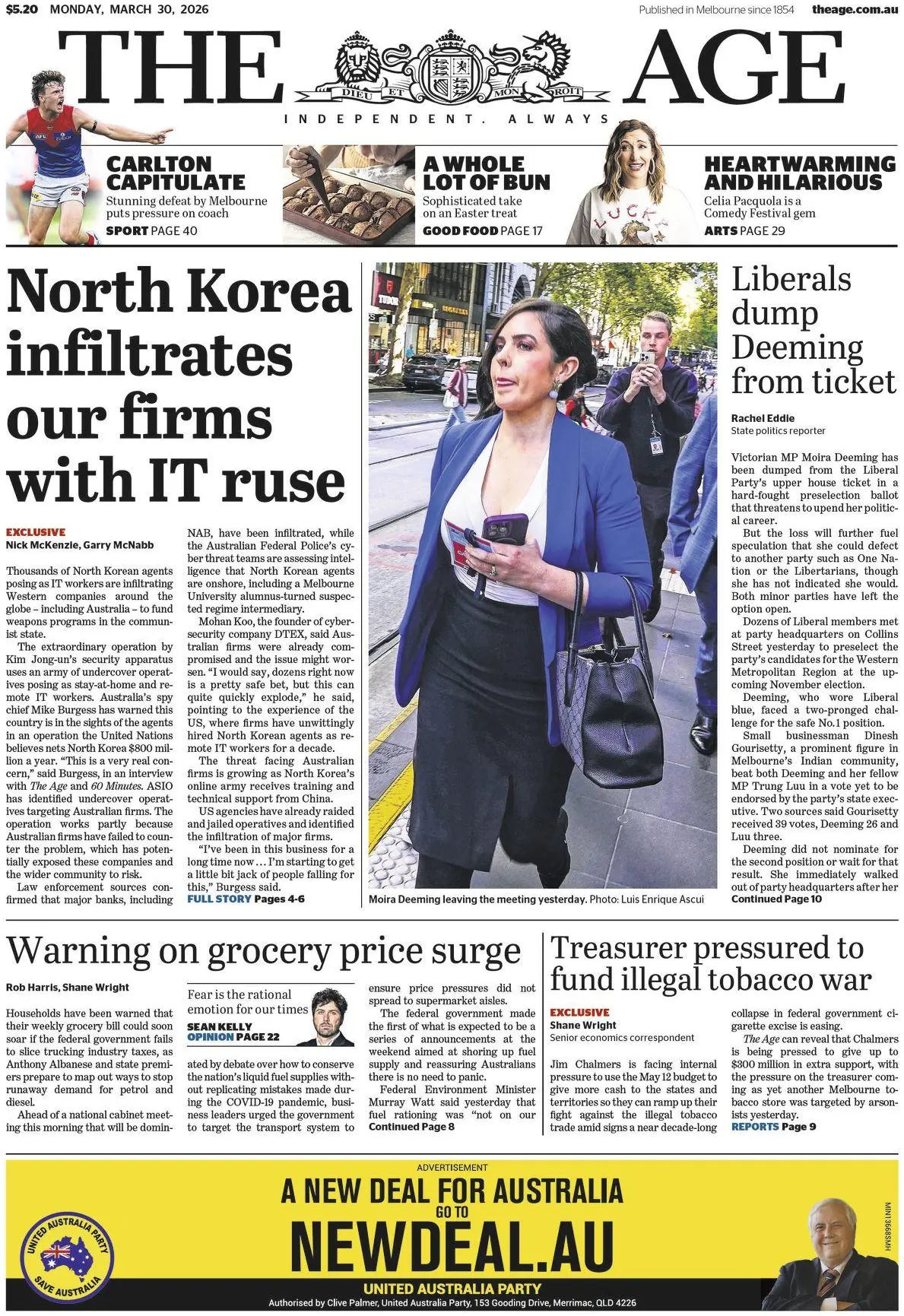
This edition of The Age highlights major concerns facing Australia, led by an investigation into alleged infiltration of local firms by operatives linked to North Korea posing as IT workers. The front page also reflects political tension within the Liberal Party after Moira Deeming was removed from its ticket, alongside economic worries as households are warned about rising grocery prices. In addition, pressure on the Treasurer to tackle the illegal tobacco trade points to ongoing challenges in law enforcement and government spending
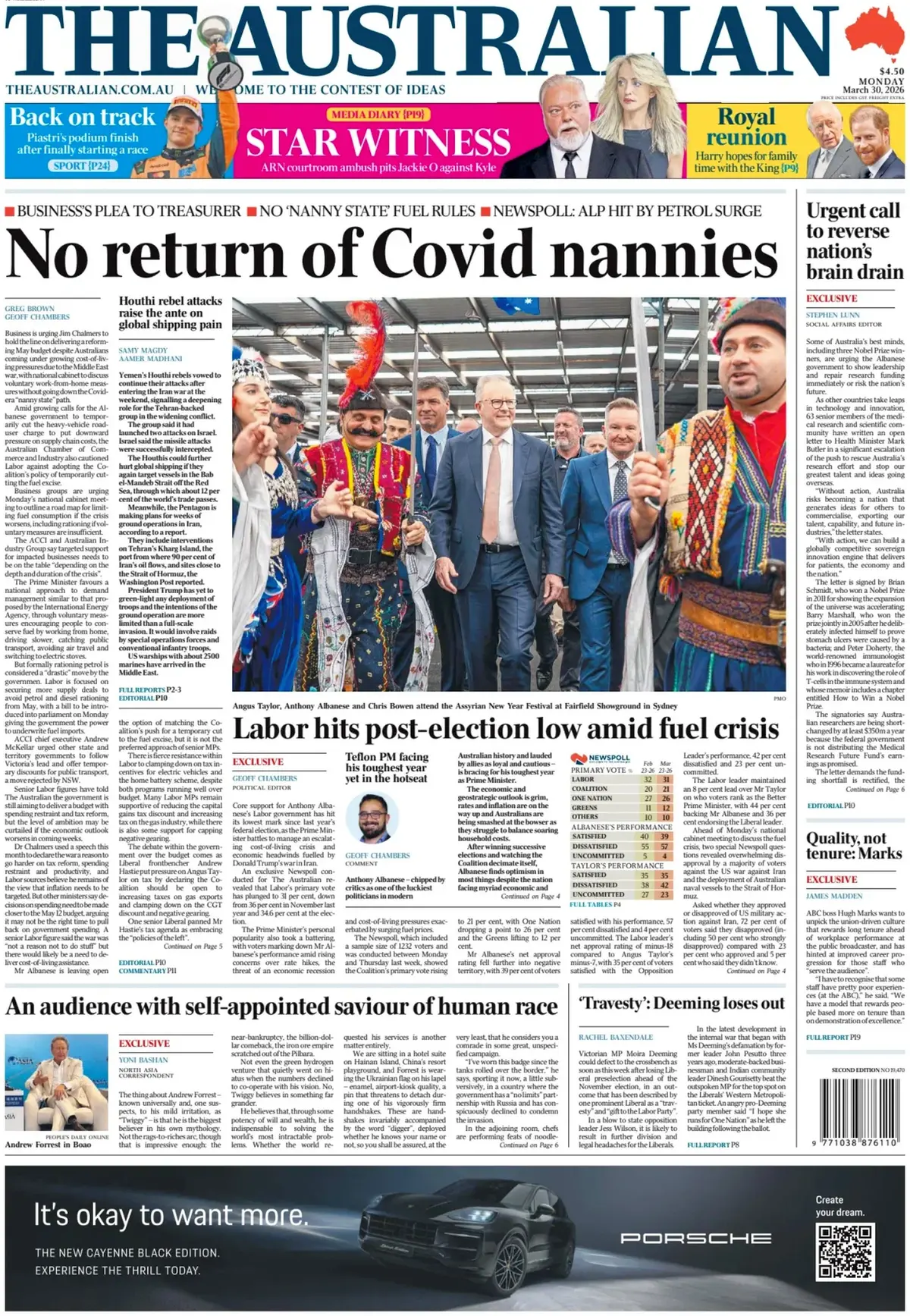
This front page of The Australian focuses on political and economic pressure in Australia, led by a strong message against the return of strict COVID-era government controls. The paper highlights declining support for the Labor government as fuel prices rise, adding to cost-of-living concerns. It also reports warnings about skilled workers leaving the country, raising fears over a growing “brain drain.” Alongside these issues, the coverage reflects broader debate about leadership, policy direction and national priorities as Australia faces economic uncertainty.
United Kingdom
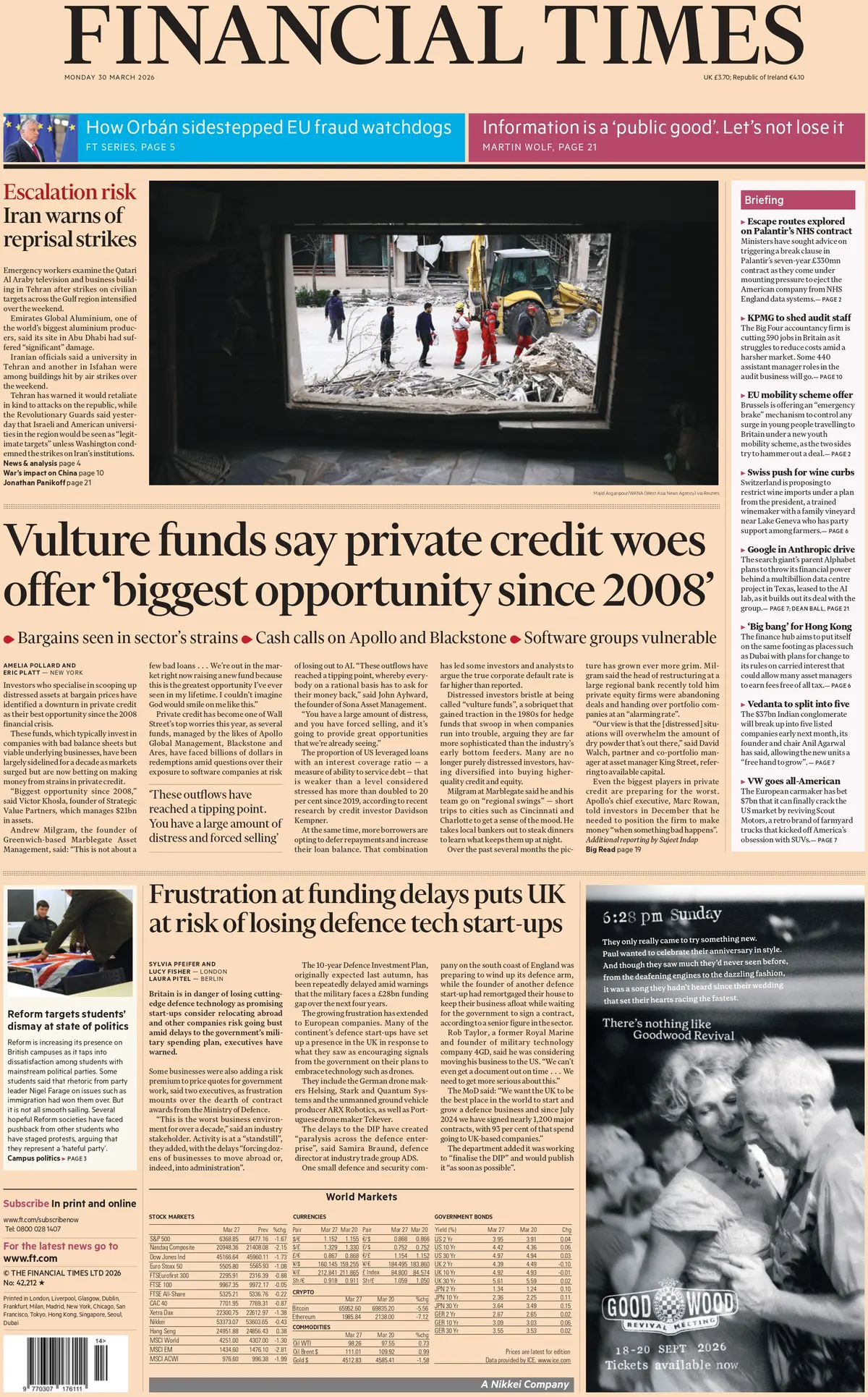
The Financial Times front page centres on global economic and geopolitical risks, with investors eyeing opportunities in troubled private credit markets, comparing the moment to the aftermath of the 2008 financial crisis. At the same time, tensions in the Middle East are highlighted as Iran signals possible retaliatory strikes, raising fears of wider instability. Closer to home, the UK faces concerns over delayed funding that could drive defence technology start-ups abroad, underlining broader challenges in maintaining innovation and competitiveness in a strained economic climate.
Read related news:
Front Pages of Global Newspapers — Key Headlines, March 29, 2026
Front pages of Newspapers around World — 27 March 2026
China
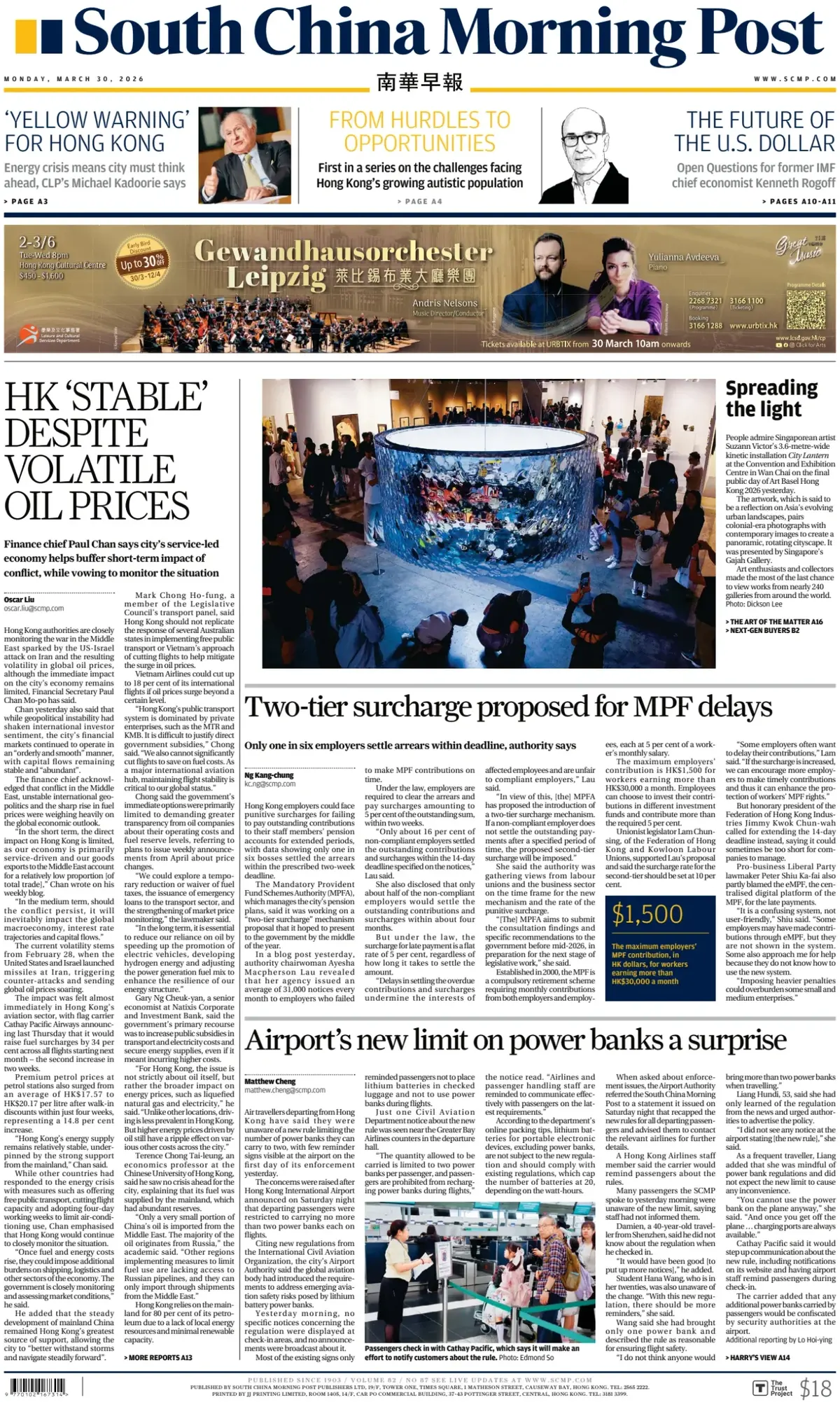
The South China Morning Post highlights economic resilience in Hong Kong despite fluctuating global oil prices, with officials stressing stability in the city’s service-driven economy. Financial policy is also in focus, as authorities consider new penalties for delays in mandatory pension contributions. At the same time, changes affecting daily life emerge, including unexpected airport restrictions on power banks. Together, the stories reflect a city balancing economic pressures, regulatory changes and public concerns while maintaining confidence in its financial system.
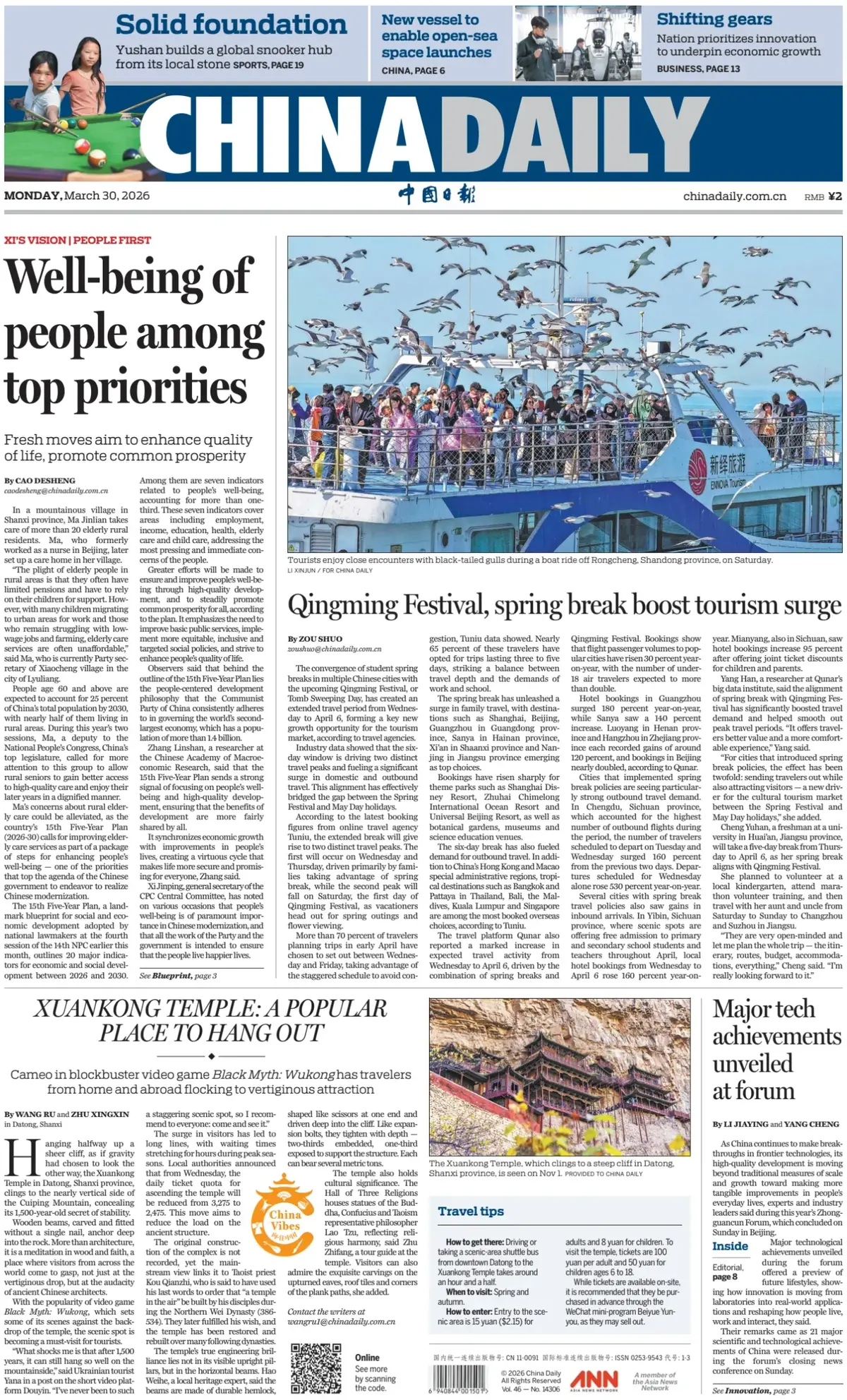
The front page of China Daily focuses on national development priorities, highlighting government efforts to improve quality of life and promote shared prosperity across China. It reports a rise in domestic tourism driven by the Qingming Festival and spring travel, reflecting economic recovery and consumer activity. Cultural heritage also features, with attention on historic sites attracting visitors, while advances in technology are showcased as part of China’s push for innovation and long-term growth.
India
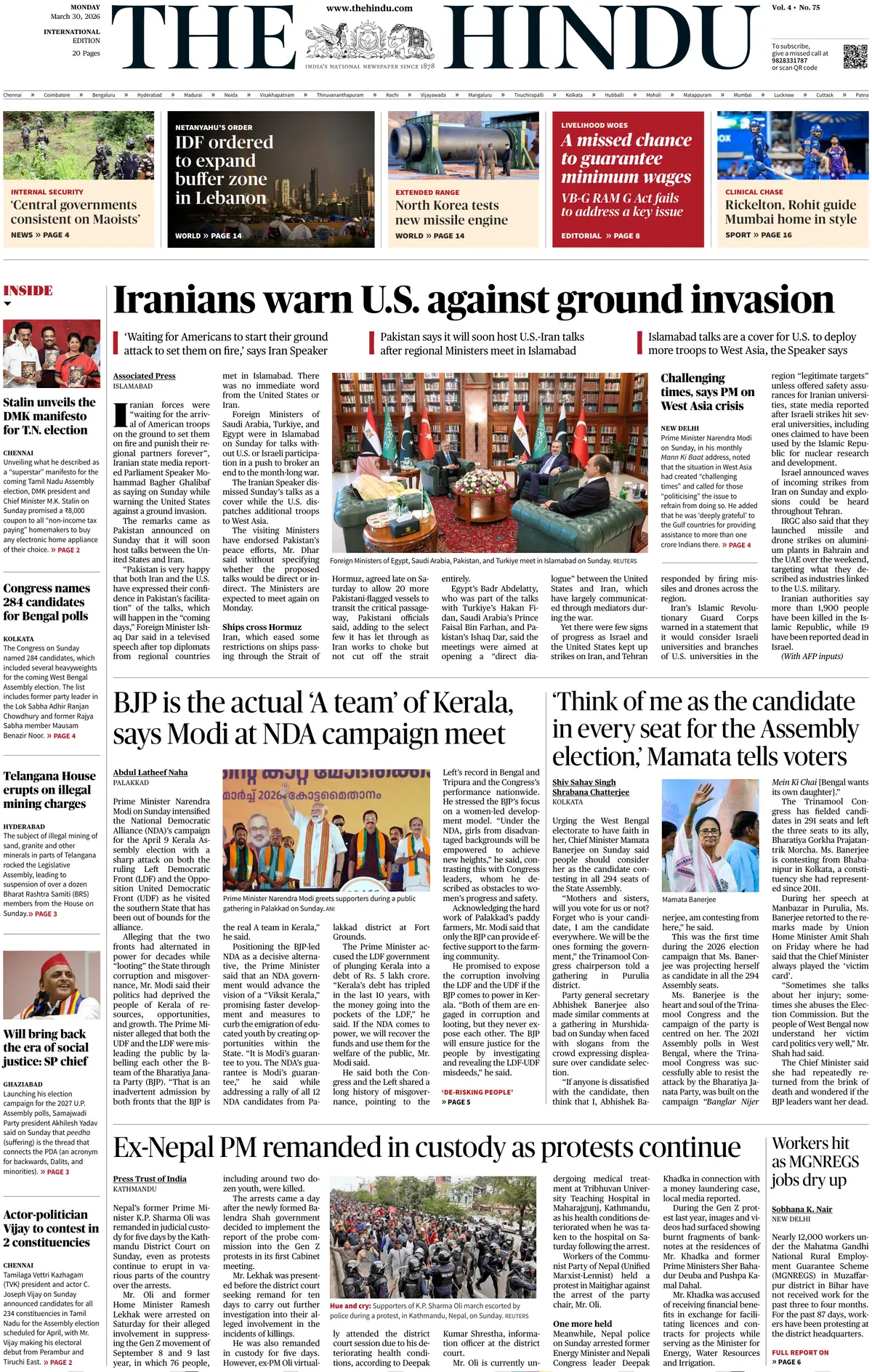
The front page of The Hindu brings together international tensions and regional politics, with Iran warning the United States against military escalation, highlighting growing instability in the Middle East. Domestically, political campaigning intensifies as Prime Minister Narendra Modi promotes the BJP in Kerala, while Mamata Banerjee rallies voters ahead of assembly elections. The paper also reports unrest in Nepal, where a former prime minister has been remanded in custody amid ongoing protests, reflecting political uncertainty
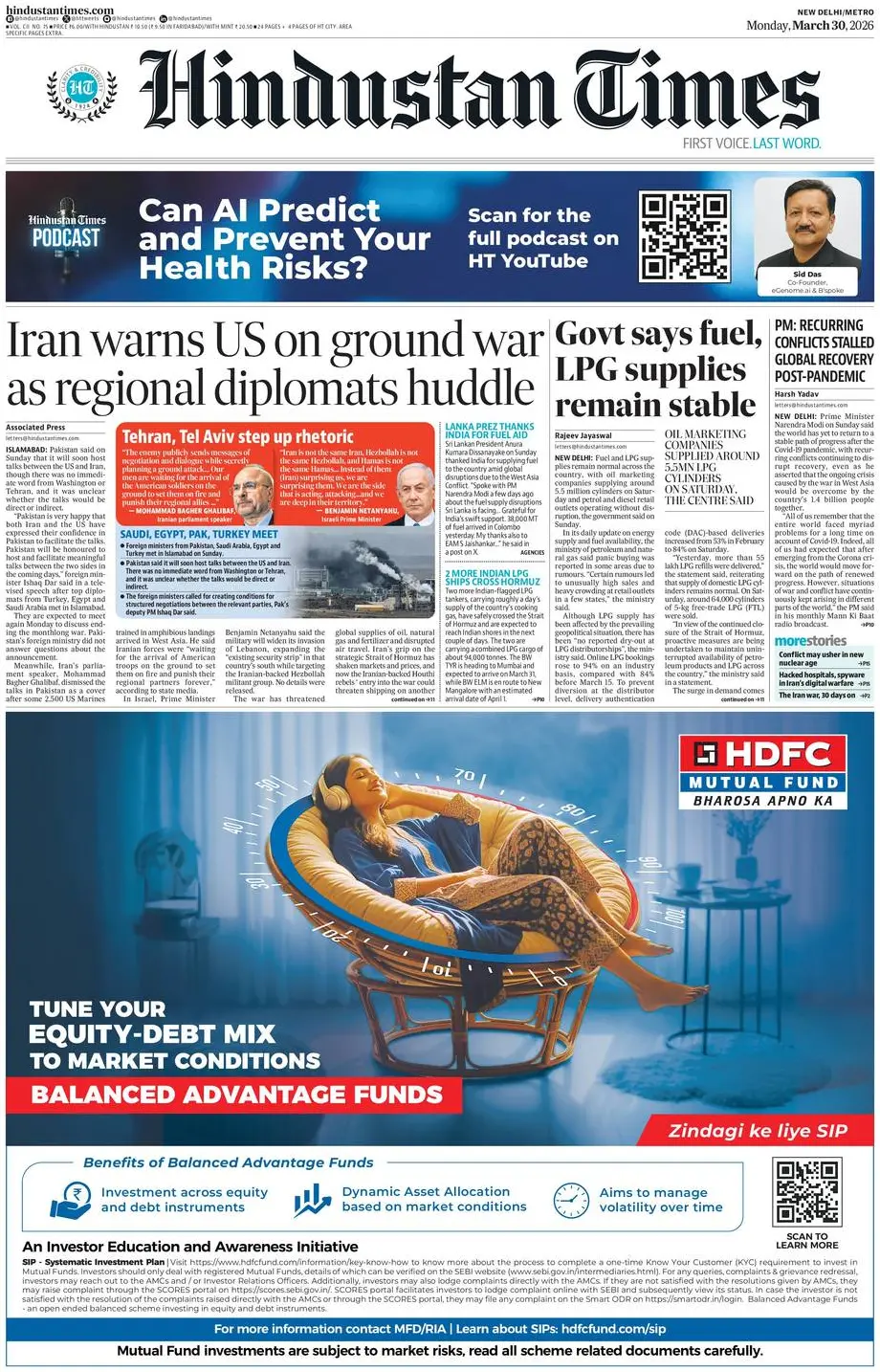
The front page of Hindustan Times focuses on rising global tensions and domestic stability, with Iran warning the United States against escalating conflict as regional talks continue. At the same time, the Indian government reassures citizens that fuel and LPG supplies remain steady despite global uncertainty. The Prime Minister also highlights how repeated conflicts have slowed global economic recovery after the pandemic, reflecting concerns about both international instability and its impact on India’s economy.
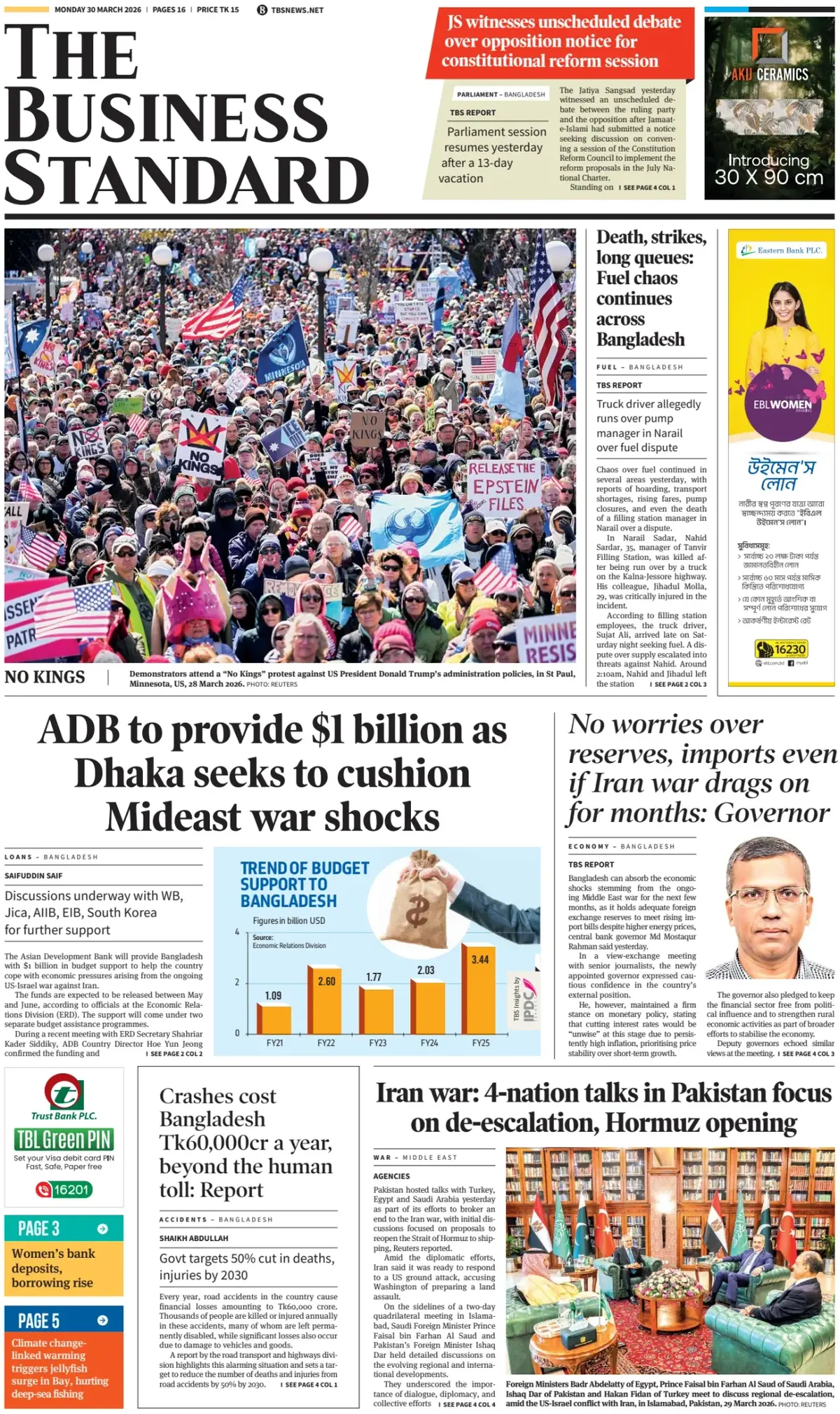
The front page of The Business Standard focuses on the economic impact of Middle East tensions on Bangladesh, with financial support from the Asian Development Bank aimed at easing potential shocks. Officials maintain that reserves and imports remain stable despite fears of a prolonged conflict involving Iran. However, domestic challenges are evident as fuel shortages trigger disruptions, long queues and public frustration. The paper also highlights diplomatic efforts in the region to reduce tensions, underlining how global events are directly affecting Bangladesh’s economy and daily life.
Irish
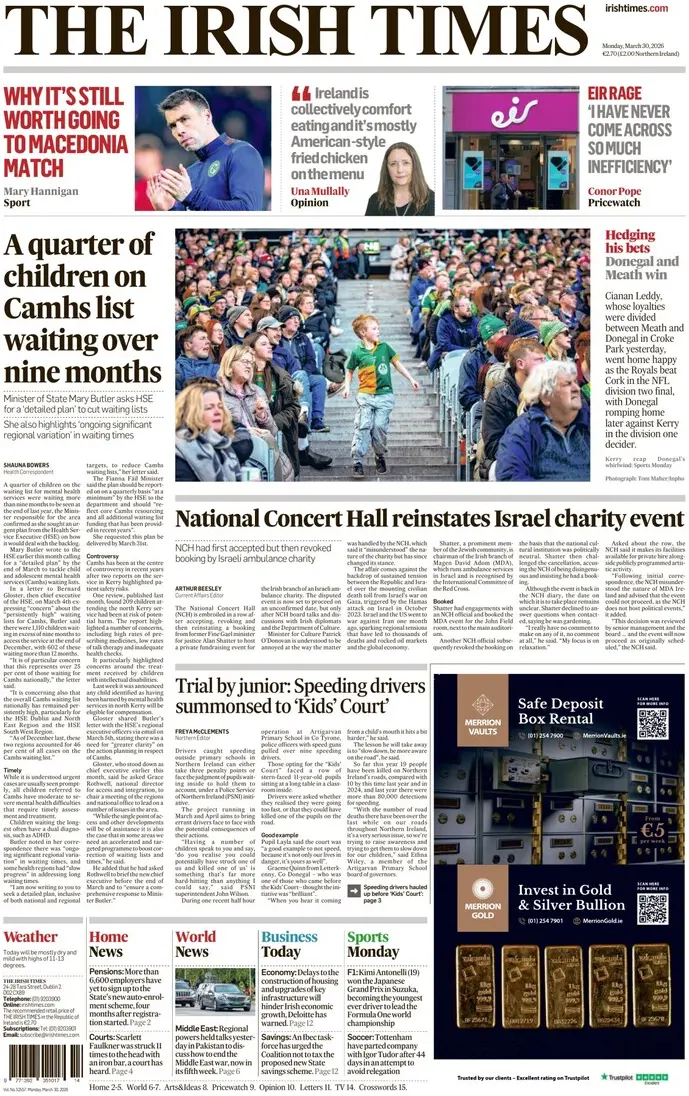
The front page of The Irish Times focuses on pressures within Ireland’s public services and social systems. A major concern is the long waiting times for children seeking mental health support, highlighting strain on healthcare resources. The paper also reports controversy surrounding the reinstatement of an Israel-linked charity event at the National Concert Hall, reflecting wider sensitivities around international issues. Meanwhile, a new approach to handling minor offences involving young drivers signals efforts to address road safety and youth behaviour. Together, the stories show a country dealing with healthcare challenges, social debate and policy responses.
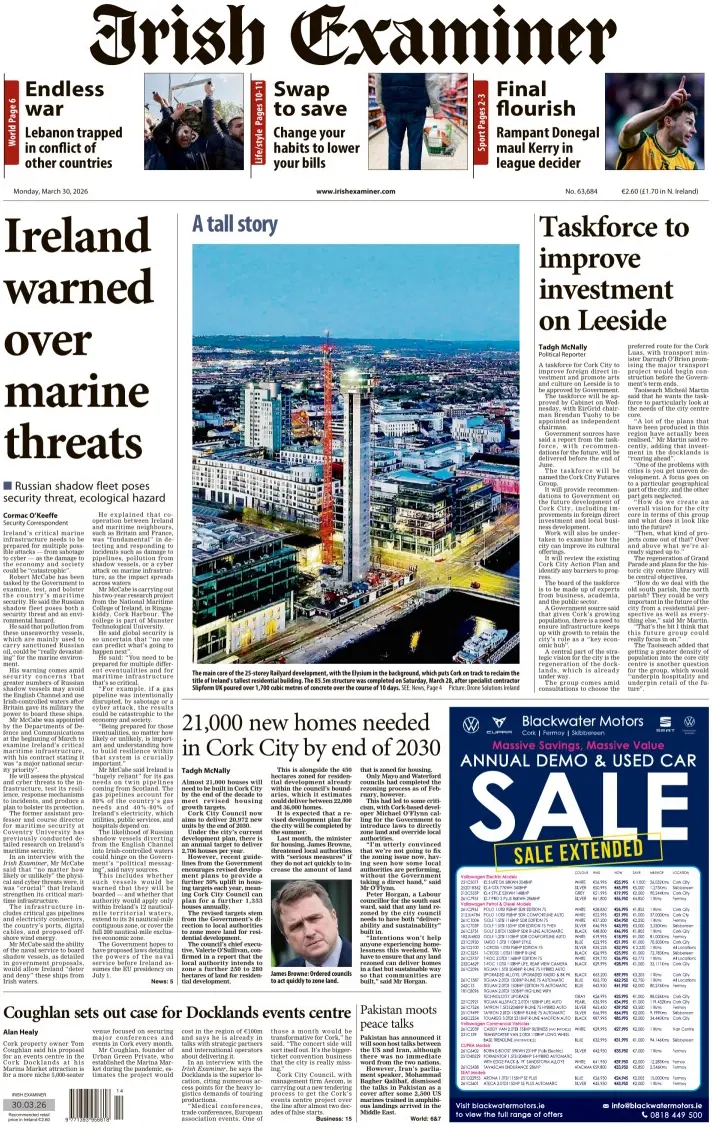
The front page of the Irish Examiner highlights key national challenges, led by warnings about potential marine threats linked to foreign activity and environmental risks. Economic development is also in focus, with plans to boost investment in Cork and calls for large-scale housing expansion to meet future demand. Infrastructure and urban growth remain central themes, alongside proposals to develop major projects such as the Docklands events centre. Overall, the coverage reflects a country balancing security concerns with long-term economic planning and development.

