


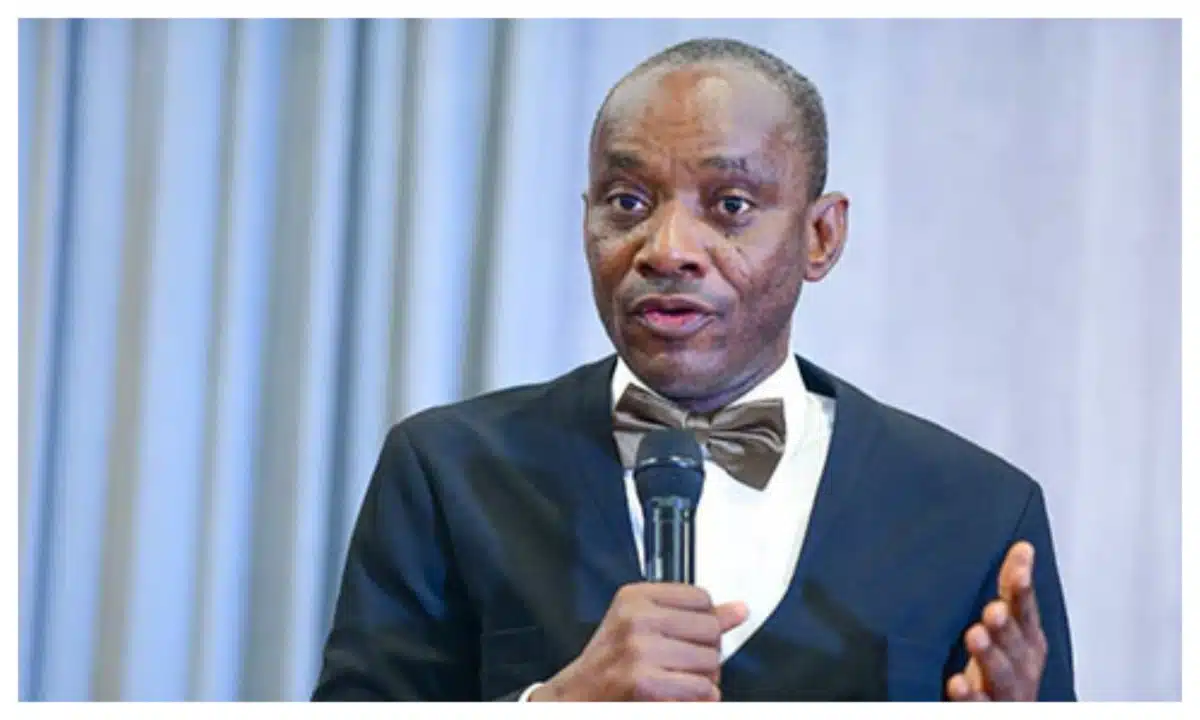
Former chairman of the Nigerian Electricity Regulatory Commission, Sam Amadi, has reignited discussions over the South-East region’s ability to produce a Nigerian president, suggesting that the region may never realistically attain the nation’s highest office.
Amadi made the remarks in a post on X on Friday, stating that the South-East may have no viable path to the presidency in 2027, 2031, or even 2035. He advised that the region should instead focus on economic development and expanding its influence within Nigeria and internationally.
“Maybe South-East has no chance at all, whether in 2027, 2031 or 2035, just as Jews never have in the US. We can focus on building South-East and prospering across Nigeria and the world,” he wrote.
In the same post, Amadi questioned the intrinsic value of the Nigerian presidency, describing it as largely a conduit for personal enrichment. “By the way, what has been the worth of Nigerian presidency? Just another opportunity for some people to steal a varnishing wealth as they are doing now,” he added.
The comments followed an earlier post by X user Demola Olarewaju, who argued that the South-East has never had a clear pathway to the presidency since Nigeria returned to democratic rule in 1999. Olarewaju contrasted this with the South-West, which he said has produced presidents through both nationalist and regional political strategies, while the South-South attained the position largely by “chance or fate.”
“Not my place to say, and I won’t. I’ll just add that a Yoruba has two pathways to Presidency in Nigeria since 1999: You can be a nationalist like Obasanjo and win; you can still be an ethnocentrist like Tinubu and win. South-South got a chance by mistake/fate, South-East has never,” Olarewaju wrote.
Amadi’s remarks have sparked fresh debate on social media, with users divided over the feasibility of a South-East presidency and the broader implications for regional representation in Nigeria’s political landscape. Analysts suggest that the controversy underscores long-standing tensions over geopolitical zoning and the perceived inequities in Nigeria’s presidential succession since the return to democracy.
As Nigeria approaches the 2027 general elections, discussions about regional access to the presidency remain a polarising topic, highlighting both the political aspirations and frustrations of different parts of the country.

