



The Minister of Humanitarian Affairs and Poverty Reduction, Dr Bernard Doro, has launched a national initiative that will lift millions of Nigerians out of poverty, unveiling a unified system to transform the delivery of humanitarian and poverty reduction interventions nationwide. The framework, known as the One Humanitarian, One Poverty Response System (OHOPRS), was introduced in Abuja at a national technical workshop led by the Minister, Dr. Bernard Doro.
The initiative targets the ambitious goal of moving 50 million Nigerians out of poverty within five years, as part of broader reforms under the administration of Bola Ahmed Tinubu.
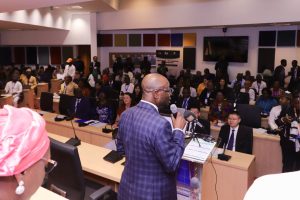
Unified System to Address Poverty Crisis
Speaking at the event, Dr. Bernard Doro said the new system was designed to tackle Nigeria’s deep-rooted poverty challenges through coordinated action, data-driven planning, and improved accountability.
He noted that despite significant investments in poverty alleviation over the years, the impact has remained limited due to fragmentation across ministries, departments, and agencies.
“We have been managing poverty, not ending it,” he said. “Nigeria does not lack interventions; Nigeria lacks systems. That is why OHOPRS has become necessary.”
The programme seeks to integrate humanitarian assistance, social protection, and long-term development strategies into a single national framework.
Read related news:
Bernard Doro promises N-Power payments, pledges major reforms
Humanitarian is my calling says Bernard Doro
Bernard Doro launches ECMS to drive Nigeria’s paperless civil service agenda
N16 Trillion Funding Plan Unveiled
According to the financial architecture presented at the workshop, the government plans to mobilise N16 trillion between 2026 and 2030 to fund the initiative. Annual funding of approximately N3.2 trillion is expected from multiple sources, including: Federal Government – N1.5 trillion, Development Partners – N800 billion, Private Sector & Impact Finance – N600 billion and Climate & Global Funds – N300 billion
Key contributors are expected to include institutions such as the World Bank, European Union, United Nations, and bilateral donors.
Innovative Financing and Trust Fund
As part of the strategy, the government plans to establish a National Humanitarian and Poverty Reduction Trust Fund. The fund will leverage innovative financing mechanisms, including: Climate financing, Social impact bonds, Private sector investment, Islamic finance instruments such as Zakat, Sukuk, and Waqf and Carbon credit initiatives
Officials say the blended financing approach is aimed at ensuring sustainability and reducing reliance on traditional funding sources.
The government also outlined a governance structure to ensure transparency and efficiency.
This includes: A National Steering Committee, Independent audit systems, Results-based financing and Real-time digital transparency
Dr. Doro emphasised that the system will rely heavily on data to guide decision-making and improve outcomes.
Nigeria continues to face a significant poverty challenge. According to data from the National Bureau of Statistics (NBS), about 63 per cent of Nigerians—equivalent to 133 million people—are living in multidimensional poverty.
The Statistician-General, Adeyemi Adeniran, said addressing such a complex issue requires collaboration across multiple sectors.
“No single institution can address the complexity of poverty and humanitarian needs alone,” he said, stressing the importance of coordinated action.
UN Calls for Urgent System Reform
The United Nations also backed the initiative, describing poverty in Nigeria as a humanitarian crisis requiring immediate intervention.
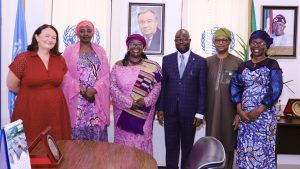
Speaking on behalf of the UN Resident Coordinator, Elsie Attafuah said the new system offers an opportunity to improve how resources are deployed. “This is not simply about spending more, but investing better,” she said. “Resources must be targeted precisely to address the root causes of poverty.”
The OHOPRS framework aims to move households beyond emergency support toward long-term resilience and economic mobility.
Over the coming days, stakeholders are expected to engage in technical sessions to refine implementation strategies and ensure alignment across government agencies, development partners, and the private sector.
The launch of OHOPRS signals a shift in Nigeria’s approach, from fragmented interventions to a unified, system-driven model.
With a clear target, structured financing, and emphasis on accountability, the government hopes the initiative will deliver measurable improvements in living standards.
As implementation begins, the focus will be on whether the programme can translate policy ambition into real impact for millions of Nigerians.

