


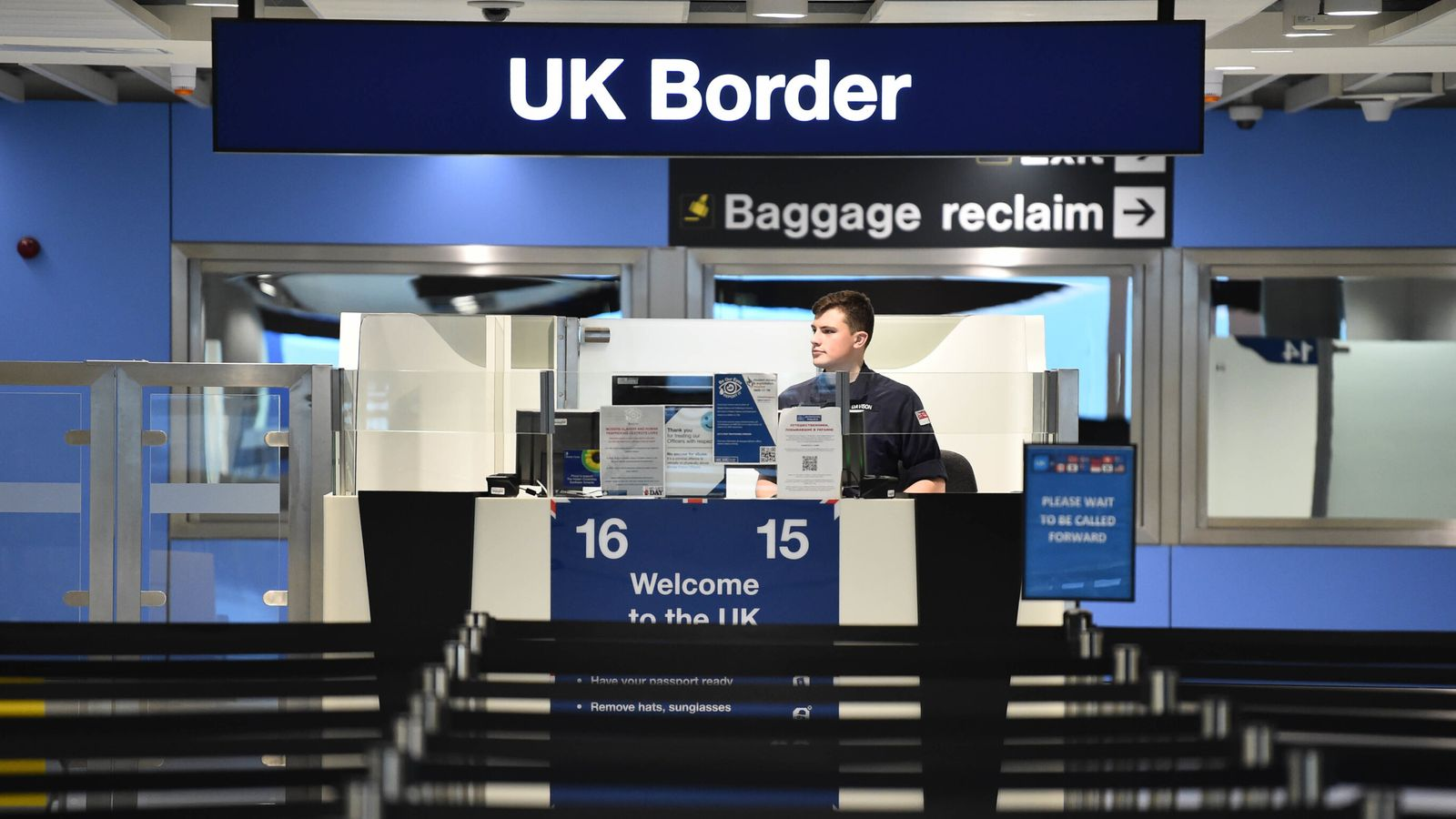
The Home Office does not know how many failed asylum seekers may have disappeared after coming to the UK, according to a new report by MPs.
The Public Accounts Committee said the situation was “shocking and unacceptable” after officials told MPs they knew where the “vast majority” of people were, but could not give a full account of everyone whose asylum claim had been rejected.
The committee said ministers must produce a clear estimate of how many failed asylum seekers remain in the country and explain how long it will take to remove those with no legal right to stay.
MPs also called on the Government to set out how it plans to find people who are no longer in regular contact with the authorities. They said the Home Office must explain how it will deal with illegal working, take action against employers who break the rules, and remove delays that stop cases from moving through the system.
Read related news:
Reform UK plans review of asylum cases, proposes mass deportations
Two Iranian footballers reject Asylum in Australia despite safety guarantees
Asylum applications to EU fall as Iran crisis raises refugee fears
The report gives a blunt assessment of Britain’s asylum process. It says the system has been too focused on short-term solutions, rather than a clear plan that deals with the problem from start to finish.
Sir Geoffrey Clifton-Brown, chairman of the committee, said the findings showed a system under severe strain. He said officials had struggled to explain what the asylum system was trying to achieve overall, leaving some people stuck in limbo while others were effectively lost from view.
The committee said the Home Office’s system for tracking failed asylum seekers needs a major overhaul. Officials told MPs they knew where “some” people were after their claims had been refused and their appeal rights had ended.
However, the department also admitted it does not count every person leaving the country. This means it cannot say with certainty who has departed and who is still in the UK.
The report said that was not good enough for a system dealing with large numbers of people, high public costs and serious pressure on local services.
Home Office figures also show how difficult removals have become over time. In 2006, the return rate for failed asylum seekers was close to 90 per cent. By the latest figure shown, it had fallen to 23.3 per cent.
That drop has raised further questions about whether the Government has enough control over what happens after an asylum claim is refused.
The committee also criticised what it described as a lack of joined-up planning. It said decisions had often been made in reaction to immediate pressure, such as rising backlogs or accommodation costs, rather than through a stable long-term strategy.
MPs warned that fixing one part of the system without dealing with the wider problem simply moves pressure elsewhere.
Accommodation remains one of the most visible signs of that pressure. Labour has promised to end the use of asylum hotels by the end of this Parliament, but the committee said previous efforts to move people into other sites had been difficult.
Home Office data shows the number of asylum seekers in hotels is now higher than it was when Labour came to power, although still below the peak recorded in 2023. The figures suggest hotel use fell in early 2024 but rose again after July.
The report also raised concerns about poor communication with councils. Sir Geoffrey said engagement with local authorities had been inconsistent, even though councils are often left dealing with the impact of asylum accommodation decisions.
One example is Wealden District Council in East Sussex, which said it was dismayed to learn that Crowborough Training Camp could remain in use until 2030. The site had originally been expected to operate for a much shorter period.
The council accused the Government of failing to communicate openly about the plans.
The report comes as wider immigration pressures remain under scrutiny. Separate Home Office data on migrants who arrived between 2021 and 2024 suggests that many people who came through major visa routes remain in the UK. These include sponsored study, work, Ukraine schemes, family visas, refugee and asylum routes, and British national overseas visas.
The largest categories were sponsored study and worker routes. In several groups, many migrants still had valid leave to remain, while some had indefinite leave and others had expired status.
For MPs, the central issue is not only the number of people arriving but whether the Government has a reliable system for tracking cases, enforcing decisions and removing those who have no right to stay.
The committee said ministers now need to show how they will regain control, reduce delays and give the public a clearer picture of what is happening inside the asylum system.

