


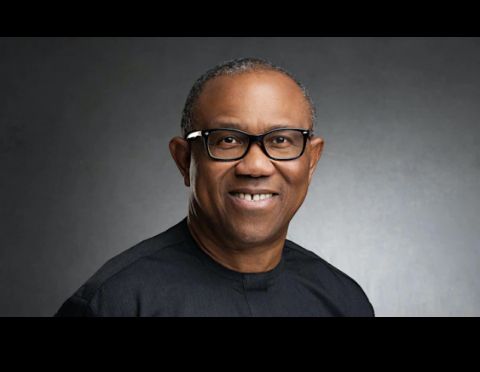
Former Labour Party (LP) presidential candidate Peter Obi on Saturday accepted his nomination as the presidential candidate of the Nigerian Democratic Congress (NDC), presenting a wide-ranging policy agenda that focuses on national unity, security, healthcare, education, agriculture, energy, employment, governance reforms and democratic accountability ahead of the 2027 general election.
He spoke at the party’s nomination event in Abuja said Nigeria was facing serious economic and social challenges but maintained that the country could overcome them through responsible leadership, investment in people and a renewed commitment to production and good governance.
He reiterated that “a New Nigeria is Possible”, noting that his candidacy was not about personal ambition but about restoring hope and building a better future for Nigerians. He insisted that national unity must be the foundation of any meaningful progress, urging citizens to rise above ethnic, religious and regional divisions.
Read Related News Updates
Peter Obi, movement that changed Nigeria’s political conversation
Obi’s defection sparks surge in NDC registrations, says OK movement coordinator
Obi raises fresh concerns as Nigeria’s debt servicing nears ₦18tn
On security, Obi described the worsening insecurity across the country as a major threat to national development. He pledged to adopt an intelligence-driven and technology-based approach to tackling terrorism, banditry and other crimes.
He maintained that improved coordination among security agencies, support for security personnel and efforts to address poverty and unemployment would form part of the strategy.
Healthcare featured prominently in his speech. Obi promised to expand health insurance coverage from the current level of about 10 per cent to more than 20 per cent within four years. He also pledged to increase healthcare spending to at least 10 per cent of Nigeria’s Gross Domestic Product (GDP) and improve staffing and services across the country’s primary healthcare centres. He said every ward in Nigeria would have access to a functional primary healthcare facility.
In the education sector, Obi promised increased investment in schools, teachers, technology and vocational training. He said education should equip young people with practical skills that would enable them to create jobs and contribute to national productivity.
Addressing hunger and poverty, Obi described Nigeria’s situation as unacceptable given the country’s vast agricultural potential. He said that large-scale investment in farming and the cultivation of unused land, particularly in the North, would help reduce hunger, create jobs and strengthen the economy. He reiterated his long-standing position that Nigeria must move from consumption to production.
He also outlined plans for the energy sector, promising to increase electricity generation and distribution by at least 10,000 megawatts over the next four years. He said improved power supply would support businesses, encourage industrial growth and boost economic activity.
On employment, Obi proposed tax incentives, affordable financing and targeted support for micro, small and medium-sized enterprises. He identified agriculture, manufacturing, entertainment, sports and distribution as key sectors for job creation.
He further pledged to reduce corruption, cut the cost of governance, uphold the rule of law and strengthen democratic institutions. Obi said opposition parties would be respected under his administration and promised transparent governance.
In addition, Obi formally nominated Rabiu Kwankwaso as his running mate, saying the vice-president would serve as a genuine partner in government rather than “a spare tyre.”

