


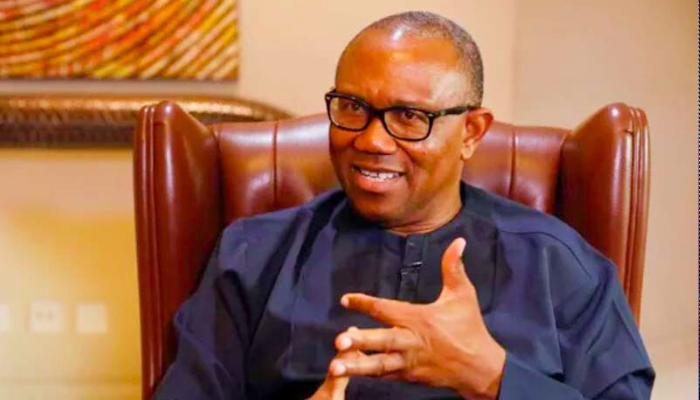
Former Labour Party presidential candidate, Peter Obi, has raised fresh concerns over Nigeria’s rising debt burden, warning that the country’s growing spending on debt servicing could weaken investment in critical sectors such as education, healthcare, and poverty reduction.
Obi made the remarks in a statement on Monday while reacting to President Bola Tinubu’s recent disclosure during a foreign engagement that Nigeria would spend about $11.6 billion on debt servicing.
The former Anambra State governor asserted that borrowing itself is not the core problem, but the inability of government to channel loans into productive sectors capable of generating long-term economic returns.
According to him, countries such as Japan, the United Kingdom, the United States, the United Arab Emirates, Singapore, and Indonesia also maintain high debt profiles, but invest heavily in infrastructure, healthcare, innovation, and education to strengthen productivity and repayment capacity.
Obi said, “Nigeria’s situation, however, is markedly different.”
He claimed that a significant portion of the country’s past borrowing had been directed towards consumption with limited visible developmental impact.
READ RELATED STORY
Peter Obi, movement that changed Nigeria’s political conversation
Onanuga questions Obi’s one-term promise ahead of 2027 election
He further alleged that a large share of the debts currently being serviced was accumulated under the present administration, while fresh borrowing has continued through both external and domestic channels.
Obi listed recent external loan commitments by the Federal Government to include about $5 billion from First Abu Dhabi Bank in the United Arab Emirates, $1 billion through UK Export Finance via Citibank London, a proposed $1.25 billion World Bank facility, and another $516 million reportedly arranged through Deutsche Bank.
According to him, the latest external borrowing commitments amount to roughly $7.8 billion, excluding ongoing domestic borrowing through bond issuances.
The former governor also drew attention to what he described as an imbalance in the Federal Government’s fiscal priorities.
Citing figures from the 2026 budget, Obi stated that health received ₦2.46 trillion, education ₦2.56 trillion, while poverty alleviation was allocated ₦865 billion, bringing the combined allocation for the three sectors to about ₦5.885 trillion.
By comparison, he noted that the projected debt servicing bill of approximately ₦17 trillion to ₦18 trillion, based on prevailing exchange rates, is almost three times higher than the combined allocation to the three sectors.
He said, “This imbalance highlights a troubling fiscal reality in which debt obligations increasingly crowd out investment in human capital and poverty reduction.”
Obi also warned that even the limited allocations approved for key sectors may not be fully released or efficiently utilised.
He maintained that the broader national concern should centre on whether public borrowing is translating into measurable productivity, inclusive growth, and improved living conditions for citizens.
In his conclusion, Obi stated, “Ultimately, the central issue is not borrowing itself, but whether borrowed funds are being converted into measurable productivity, inclusive growth, and improved living standards.
The comments come at a time of continued debate over Nigeria’s rising public debt profile, mounting inflationary pressure, and growing concerns about the sustainability of government spending.
