


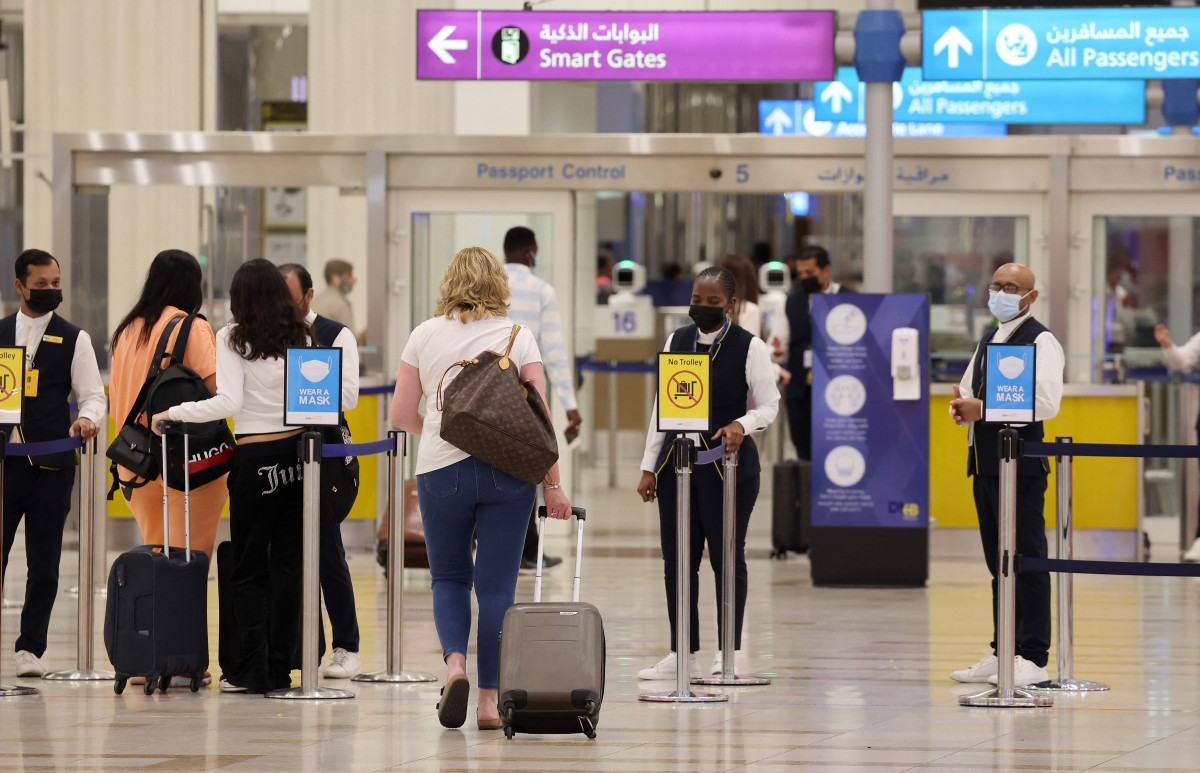
Passenger traffic at Dubai International Airport fell sharply in March, plunging by two-thirds following regional security disruptions linked to attacks on the United Arab Emirates during the Middle East conflict, according to the emirate’s media office.
In a statement issued on Monday, the Dubai Media Office said traveller numbers at the airport—traditionally the world’s busiest hub for international passenger traffic—declined to 2.5 million, representing a 66 percent year-on-year drop.
The airport experienced what officials described as a “period of regional disruption that significantly constrained airspace capacity and flight schedules,” affecting both inbound and outbound operations.
Dubai Airports stated that normal operations are now gradually being restored as regional airspace stabilises. “With airspace within the UAE now fully restored, Dubai Airports is moving decisively to scale up operations, increasing flight movements in line with available regional routing capacity,” the statement said.
The disruption was linked to heightened tensions during a wider Middle East conflict, during which the United Arab Emirates faced retaliatory drone activity following US-Israeli strikes on Iranian targets. The airport was reportedly among several critical infrastructure sites affected during the period of escalation.
Despite the March downturn, quarterly figures showed a broader slowdown rather than a complete collapse in activity. Total passenger traffic for the first quarter of 2026 fell by 21 percent to 18.6 million.
Prior to the disruption, Dubai International Airport had been on track for another record-breaking year. It handled 95.2 million passengers in the previous year and had projected an increase to 99.5 million passengers in 2026.
Dubai Airports Chief Executive Officer Paul Griffiths described the situation as unprecedented for a global aviation hub, noting the scale of operational disruption caused by regional instability.
“The extraordinary events of the past few weeks are unprecedented for any major airport hub,” Griffiths was quoted as saying in the official statement.
Aviation analysts say the incident underscores the vulnerability of global air travel networks to geopolitical tensions, particularly in strategically located hubs like Dubai, which serves as a major transit point between Europe, Asia, and Africa.
As airspace conditions stabilise, authorities expect a gradual recovery in passenger volumes, though full restoration of pre-crisis traffic levels may depend on sustained regional calm and the resumption of normal flight routes.

