


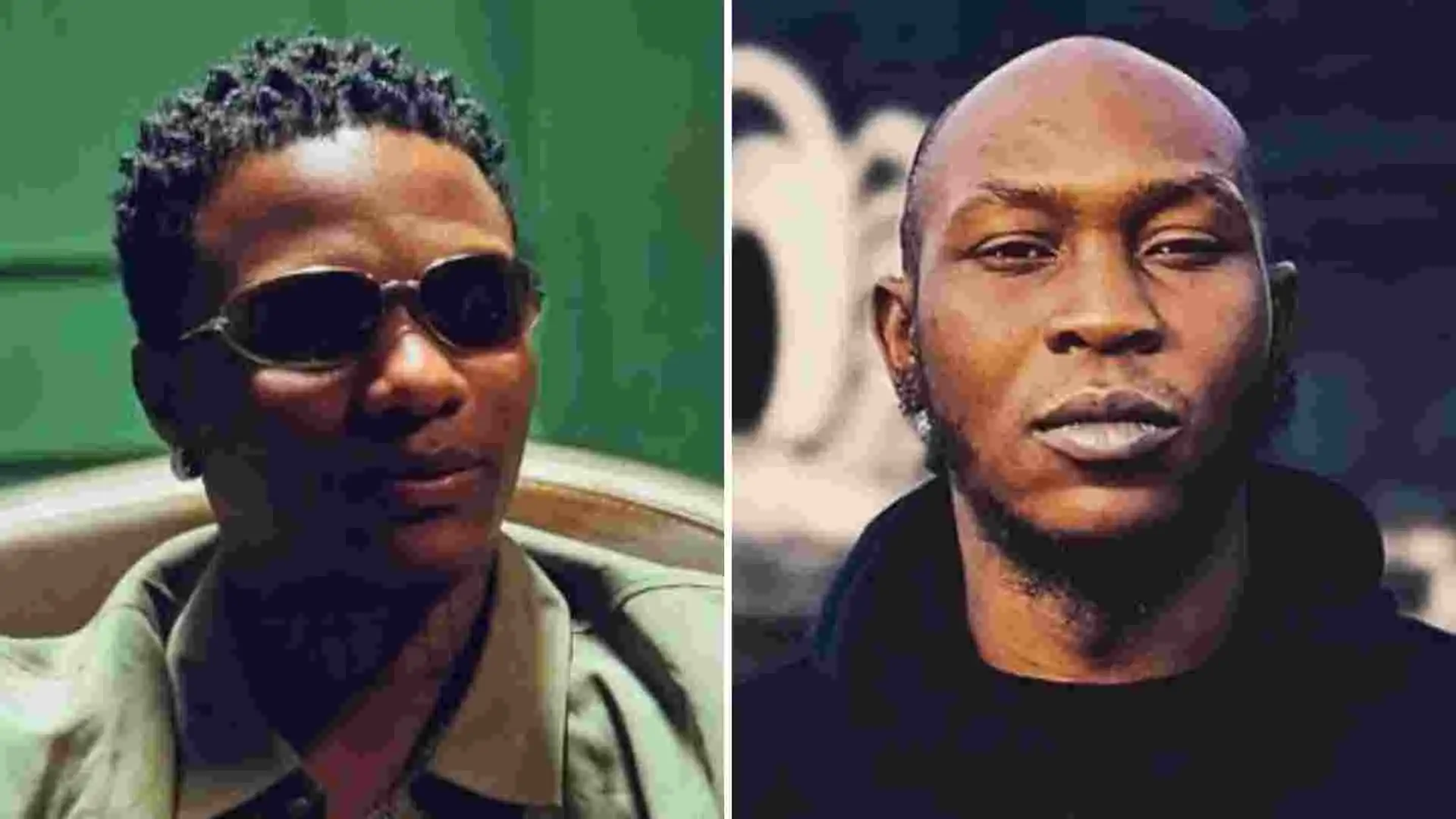
Maverick Afrobeat singer Seun Kuti has firmly ruled out any possibility of reconciliation with Afrobeats superstar Wizkid, declaring that their long-running rift will last a lifetime.
The tension between the two artistes can be traced back to a controversial comparison involving Seun’s late father, Fela Anikulapo-Kuti, who is widely regarded as the originator of Afrobeat and one of Africa’s most influential musical figures.
The disagreement began when Wizkid suggested that he was greater than Fela, a claim that sparked widespread debate across the Nigerian music industry and beyond.
Seun Kuti, who has consistently defended his father’s legacy, strongly opposed such comparisons. At the time, he had urged fans and commentators to stop placing contemporary Afrobeats stars alongside Fela, arguing that the contexts, messages, and impact of their music differ significantly.
In a recent podcast interview, Seun was asked directly whether he and Wizkid had settled their differences. His response was blunt and unequivocal.
“It is on for life. I don’t have anything to say about him but it is on for life. You don’t say things about my dad and then it is fine. There is no coming back from that,” he said.
His remarks highlight the deeply personal nature of the dispute. For Seun, the issue is not merely about industry rivalry or public opinion but about respect for his father’s legacy and contributions to music, culture, and political activism.
Fela Anikulapo-Kuti was not only a musician but also a fearless critic of government and social injustice. Through his music, he challenged authority and inspired generations across Africa and the diaspora. His influence extended beyond entertainment into political consciousness, making him a symbol of resistance and cultural pride.
Seun Kuti, who leads his father’s former band, Egypt 80, has carried on that legacy, blending music with activism. As such, any perceived slight against his father is viewed not just as a personal affront but as a broader disregard for a historical figure he believes should be revered.
On the other hand, Wizkid represents a different era of Nigerian music, one defined by global appeal, commercial success, and mainstream recognition. As one of the leading figures of modern Afrobeats, he has played a significant role in taking Nigerian music to international audiences, earning accolades and collaborations with global stars.
The clash between Seun Kuti and Wizkid, therefore, reflects a wider conversation about generational differences within the Nigerian music scene. While Fela’s era was marked by political messaging and resistance, today’s Afrobeats landscape is often centred on entertainment, lifestyle, and global marketability.
For some observers, comparisons between the two eras are inevitable but problematic. Supporters of Seun argue that Fela’s contributions transcend music, making it inappropriate to measure his legacy using the same metrics applied to contemporary artists. Meanwhile, fans of Wizkid point to his global achievements and cultural impact as evidence of his greatness within his own generation.
Despite differing perspectives, Seun Kuti’s latest comments suggest that, for him, the matter is not open to debate or reconciliation. His stance reinforces the idea that certain lines, particularly those involving family and legacy, cannot be crossed without lasting consequences.
The situation also underscores how personal values and cultural heritage continue to shape relationships within the entertainment industry. In an era where collaborations and public reconciliations are common, Seun’s refusal to mend ties with Wizkid stands out as a rare example of a conflict he considers non-negotiable.
As discussions around legacy, influence, and respect continue within Nigeria’s music space, the divide between Seun Kuti and Wizkid remains a reminder of how deeply rooted such issues can be, extending far beyond music into identity, history, and personal conviction.
For more details, visit New Daily Prime at www.newdailyprime.news.

