


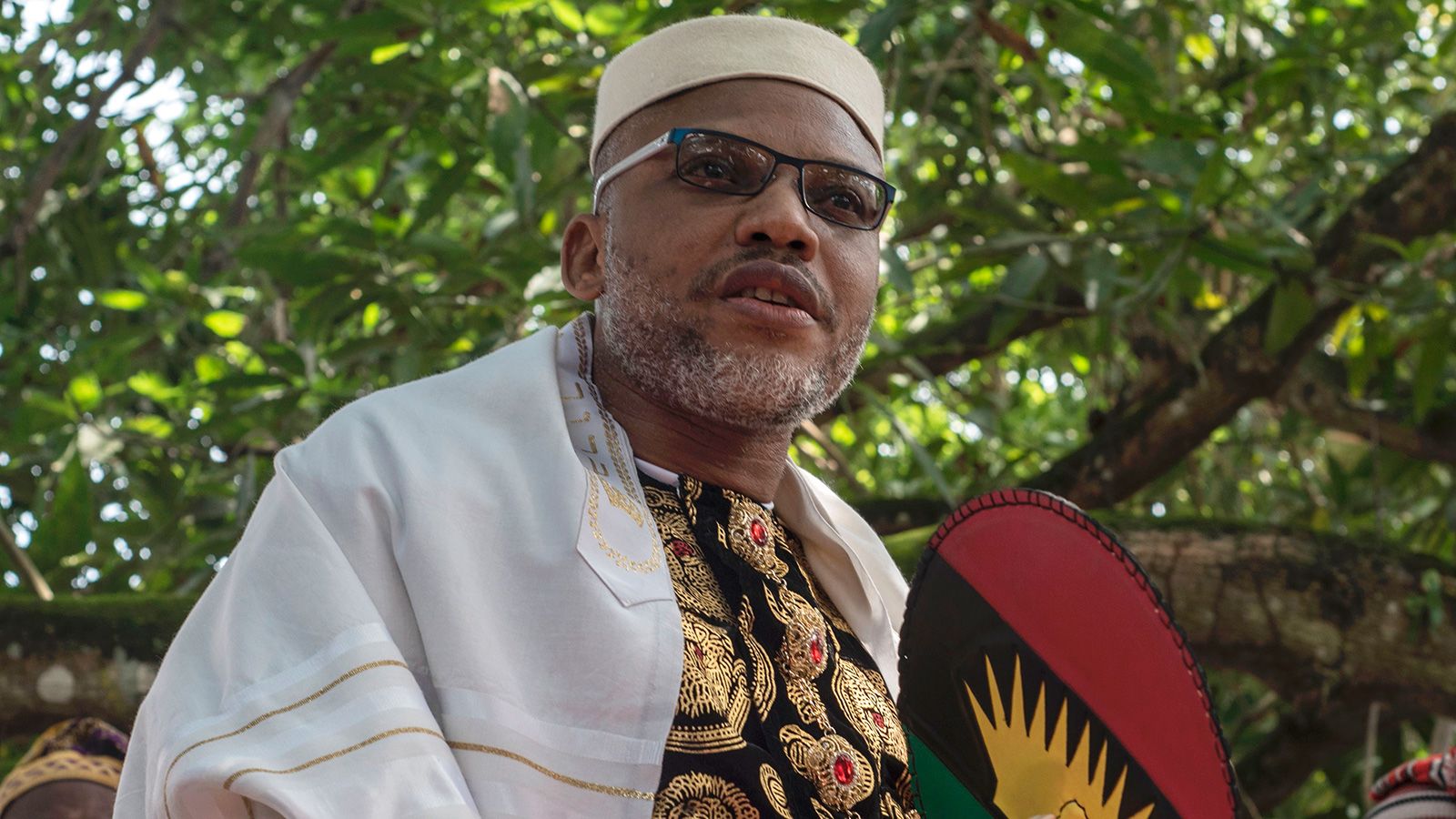
Even from detention, Nnamdi Kanu remains one of the few Nigerians capable of shaping political conversations, influencing public sentiment and commanding loyalty across regions without holding elected office.
In a country where influence is usually tied to government power, wealth or institutional control, the leader of the Indigenous People of Biafra (IPOB) represents a different kind of authority — one built on identity, emotion, grievance and digital mobilisation.
Years after his arrest, Kanu continues to dominate discussions around national unity, South-East politics and the future of Nigeria itself. Supporters view him as a symbol of resistance and justice. Critics accuse him of fuelling division and instability. Yet both sides agree on one fact: his influence remains impossible to ignore.
Nnamdi Kanu Influence Scorecard (2026)
| Indicator | Weight (%) | Score (/10) |
|---|---|---|
| Current Power & Institutional Control | 15% | 6 |
| Reach & Visibility | 20% | 9 |
| Impact & Tangible Results | 15% | 8 |
| Soft Power & Cultural Influence | 15% | 9 |
| Relevance to 2026 | 10% | 8 |
| Generational Influence | 15% | 9 |
| National & International Recognition | 10% | 8 |
Total Weighted Influence Score: 82/100
Unlike governors, ministers or traditional political power brokers, Kanu does not command government institutions, military structures or state resources. Yet his influence consistently forces reactions from the presidency, courts, security agencies and political leaders.
That influence became visible through IPOB’s rise and the controversial sit-at-home movement that disrupted economic and social activities across parts of the South-East.
Although many residents criticised the shutdowns, the situation demonstrated how a non-state movement could shape public behaviour across multiple states.
His detention has also remained politically sensitive. South-East governors, lawmakers and religious leaders continue facing pressure from citizens demanding his release. In modern Nigerian politics, very few individuals outside government command that level of attention.
Read related news:
IPOB ends Monday sit-at-home in South-East
IPOB leader’s detention illegal, Lawyer demands Kanu’s release
IPOB declares 12hrs lockdown May 30
Why Young Nigerians Still Follow Him
Part of Kanu’s influence comes from his ability to connect emotionally with young people frustrated by insecurity, unemployment and feelings of exclusion.
Many supporters see him as someone who openly challenged the Nigerian state at a time when distrust in leadership was growing.
“Whether people agree with him or not, he made many young Igbo youths believe somebody was finally speaking boldly for them,” said Chukwudi Eze, a trader in Aba.
That emotional connection explains why his message survives despite arrests, court battles and divisions within IPOB itself.
For many followers, Kanu represents more than politics. He represents anger, identity and a search for belonging.
The Fear, Loyalty and Symbolism Behind IPOB
Kanu’s strongest influence may not be political power but emotional symbolism.
Through Radio Biafra, online broadcasts and social media, he transformed historical grievances linked to the Nigerian civil war into a modern movement driven largely by young people and members of the diaspora.
Flags, songs, slogans and digital campaigns helped create a powerful emotional network among supporters across different countries.
But influence has also come with consequences.
Many traders, transport operators and business owners across the South-East have repeatedly complained about economic losses linked to sit-at-home orders and insecurity.
“There are days we lose millions because people are afraid to open shops,” said a market trader in Onitsha who asked not to be named.
This division reflects the complexity of Kanu’s influence. To supporters, he symbolises resistance. To critics, he represents instability and fear.
The Historical Frustration Behind His Movement
To understand Kanu’s rise, many analysts say it is important to understand the long-standing grievances that still exist in the South-East decades after the Nigerian civil war.
Many Igbos believe the region remains politically marginalised in federal appointments, infrastructure development and national power sharing.
The absence of a South-East president since Nigeria’s return to democracy in 1999 has deepened that frustration among many young people.
Kanu successfully transformed those frustrations into a political identity movement with emotional and cultural appeal.
Before IPOB became globally recognised, conversations about Biafra were largely confined to history discussions and older generations. Kanu brought the issue back into mainstream national debate.
Today, no serious conversation about restructuring or national unity ignores the South-East question.
Reach, Visibility and Media Strategy
One major reason Kanu remains influential is his communication strategy.
He understood early that influence in the digital age depends on visibility. Through Radio Biafra and social media, he built a loyal online audience both in Nigeria and abroad.
His speeches, court appearances and statements regularly trend across X, Facebook, TikTok and YouTube. Even critics who oppose him often amplify his message by reacting to it.
That constant visibility has kept him politically relevant despite years in detention.
Few activists in Nigeria maintain national attention for such a long period without holding office or appearing regularly in public.
Relevance to 2026
As Nigeria approaches another political cycle, Kanu remains highly relevant because unresolved regional tensions continue shaping national politics.
Economic hardship, insecurity and distrust in institutions have increased frustration among many young Nigerians, especially in the South-East.
Any major development regarding Kanu’s detention, trial or possible release before 2026 could influence political conversations across the region and beyond.
His relevance therefore extends beyond IPOB itself. He remains connected to larger questions about justice, inclusion and the future stability of Nigeria.
National and International Recognition
Kanu’s influence is no longer limited to Nigeria.
His arrest, extradition and detention attracted reactions from international human rights organisations, foreign observers and global media platforms.
Within Nigeria, his name remains one of the most recognised political identities outside formal government structures.
Very few activists remain nationally influential for years while in detention. Kanu has managed to do so through symbolism, controversy and sustained public attention.
Nnamdi Kanu’s influence does not come from government office, military authority or financial wealth. It comes from his ability to shape emotions, dominate conversations and represent unresolved national frustrations.
Whether viewed as a freedom advocate or a divisive agitator, his impact on Nigeria’s political landscape is undeniable.
In modern Nigeria, few men without political office command as much emotion, division and loyalty as Nnamdi Kanu.

