


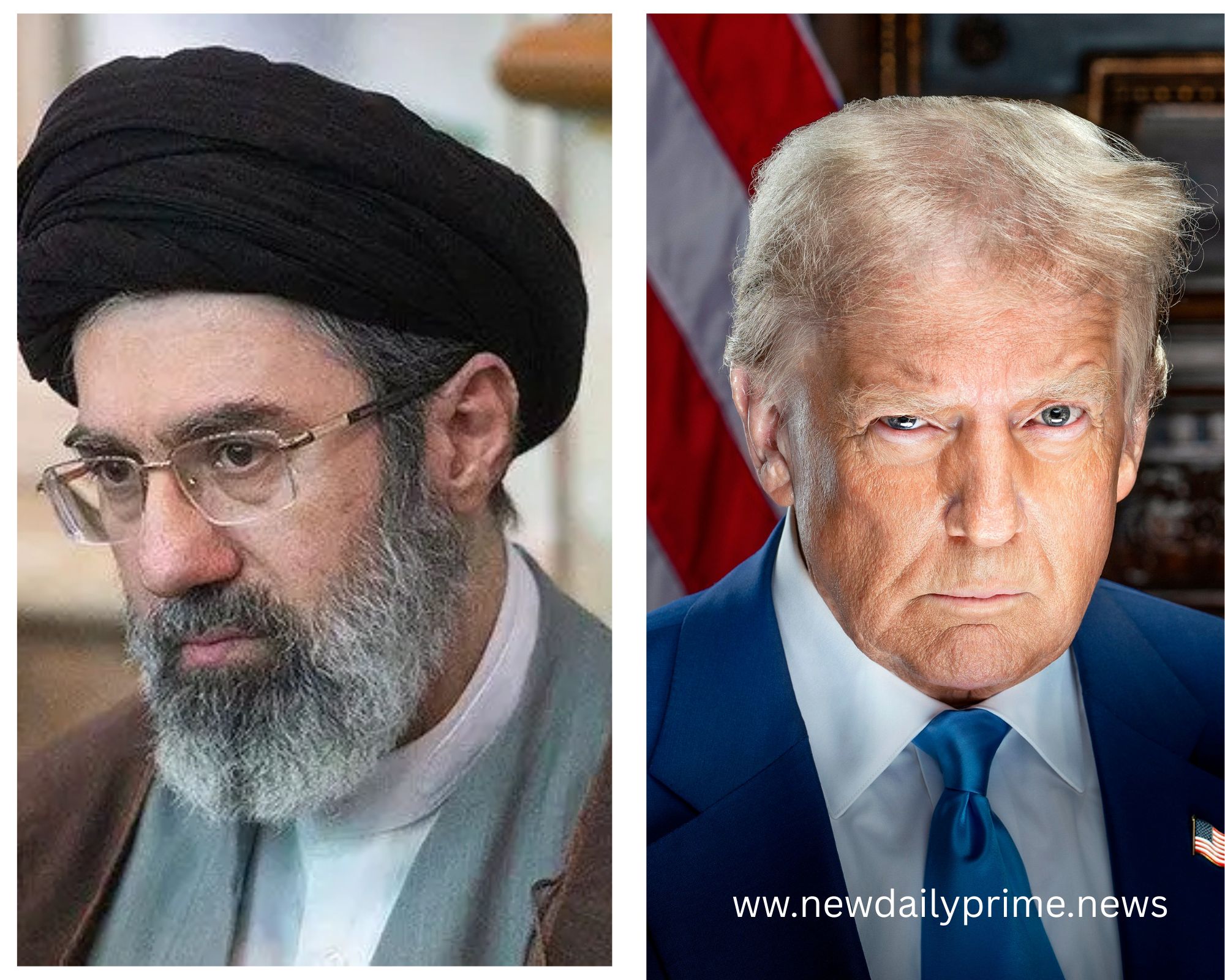
US President Donald Trump has warned Iran could be “taken out in one night”, setting a Tuesday deadline for Tehran to reach a deal or face what he described as overwhelming military action.
Read more breaking stories from our world news
Speaking at a White House press conference, Trump said failure to agree would trigger a rapid escalation.
“The entire country can be taken out in one night—and that night might be tomorrow night,” he said.
The remarks mark one of the most direct threats yet in a crisis that has intensified in recent days, following military exchanges involving the United States, Iran and regional allies.
US Defence Secretary Pete Hegseth reinforced the warning, saying Monday would see the largest wave of strikes since the start of operations, with further escalation expected if no agreement is reached by Tuesday.
Read related news:
Iran rejects ceasefire plan as Israel continues strikes on key energy sites
Trump threatens to ‘blow everything up’ as Iran crisis deepens
Iran defies Trump’s threat, chooses Mojtaba Khamenei as new leader.
Amid the rising tensions, Trump disclosed details of a US recovery operation after a fighter jet was downed inside Iran.
He described the search for a missing airman as “like finding a needle in a haystack”, saying the individual had taken refuge in mountainous terrain.
Read more breaking stories from our latest nigeria news
According to Trump, the airman continued moving to higher ground to improve the chances of being located, while avoiding detection by Iranian forces. Hundreds of US personnel were involved in the search, with efforts focused on securing the airman before Iranian authorities could reach him.
Diplomatic efforts to contain the crisis appear to have stalled.
Iranian officials have rejected proposals for a temporary ceasefire, including a reported 45-day plan aimed at ending hostilities in phases. A senior official said Tehran would not accept a ceasefire in exchange for reopening the Strait of Hormuz, through which a significant portion of the world’s oil supply passes.
Iran argues that such an agreement would allow its adversaries to regroup.
“We are calling for an end to the war and for preventing its recurrence,” said Iranian foreign ministry spokesperson Esmail Baghaei.
He described US proposals as “excessive, unusual and illogical”, adding that diplomacy cannot proceed under threats of force.
Rising Tensions and Political Fallout
Despite growing international concern, Trump has shown little sign of softening his stance. His comments, including suggestions that he is not bound by international law, have drawn criticism from both Democrats and some members of his own party.
His latest warnings also included threats to target critical infrastructure if Iran fails to comply with US demands—remarks that have alarmed legal experts and human rights observers.
Iranian officials dismissed the statements as “unbalanced” and accused Washington of escalating tensions rather than seeking a diplomatic solution.
The situation on the ground continues to deteriorate.
Iranian authorities said at least 25 people were killed in strikes they attributed to the US and Israel. In response, Iran launched missiles towards Israeli and Gulf targets, raising fears of a broader regional conflict.
Israel said it had struck a petrochemical facility and killed a senior intelligence figure in Iran’s Revolutionary Guard, identified as Maj. Gen. Majid Khademi.
The escalation has triggered warnings from international legal experts. More than 100 specialists have said US strikes on Iran could violate the United Nations Charter and may constitute war crimes, particularly if civilian infrastructure is targeted.
The Strait of Hormuz remains a critical flashpoint, with any disruption likely to have immediate consequences for global energy markets and economic stability.
With a firm deadline set and diplomatic options narrowing, the coming days are likely to be decisive.
Whether negotiations resume or military action intensifies, the risk of a wider conflict is growing—one that could extend far beyond the immediate region.
For now, both sides appear entrenched, with rhetoric hardening and little indication of compromise.
The question is no longer whether tensions will rise—but how far they will go

