



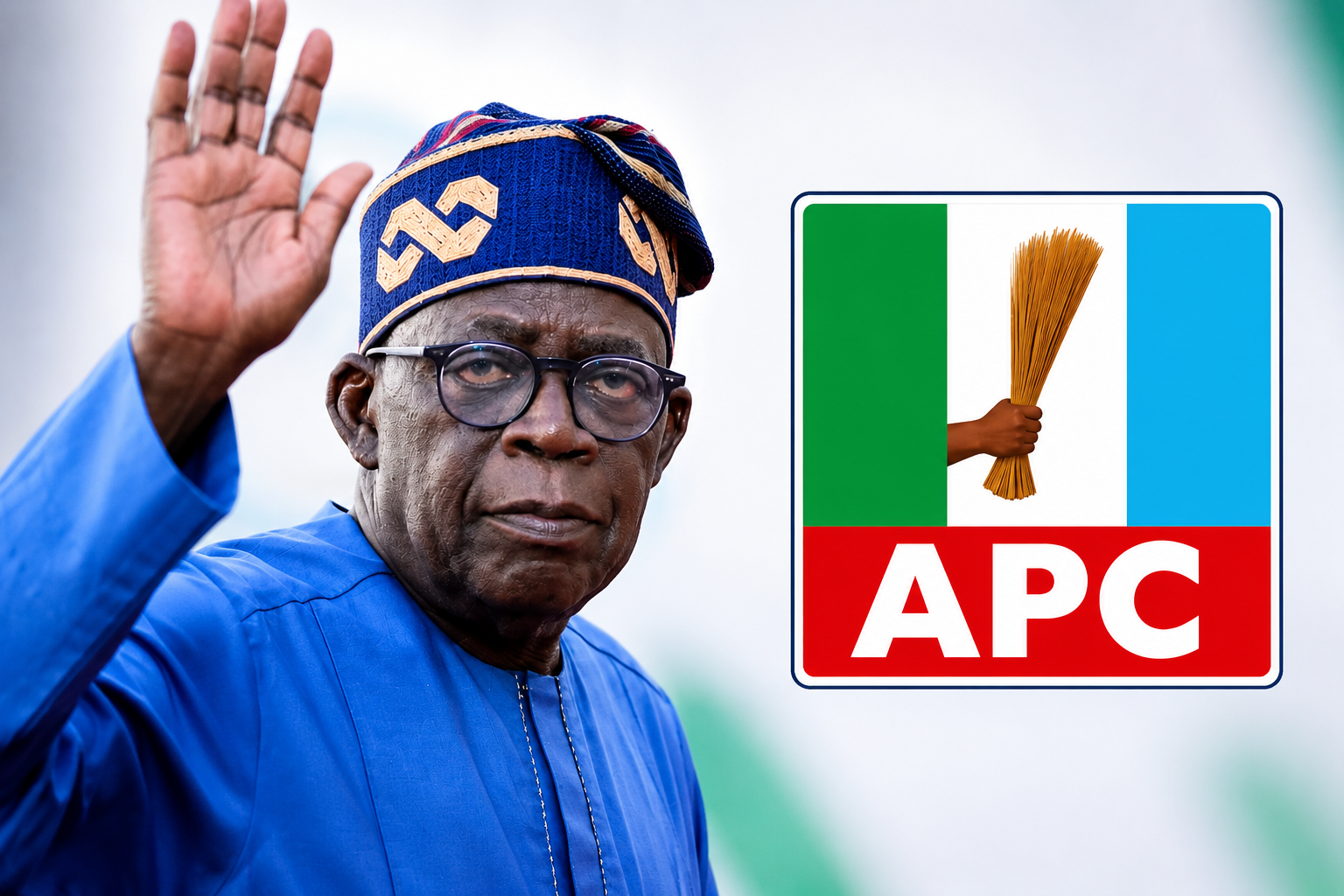
President Bola Tinubu has emerged as the presidential candidate of the All Progressives Congress for the 2027 general election after winning the party’s nationwide primary by a wide margin.
The results, collated from all 36 states and the Federal Capital Territory, showed Tinubu far ahead of his only challenger, Stanley Osifo. According to figures announced at the President Bola Ahmed Tinubu International Conference Centre in Abuja, Tinubu secured 10,999,967 votes, while Osifo polled 16,504 votes.
The primary was held across 8,809 wards nationwide. Governors from 31 states, alongside senior party officials who served as state coordinators and collation officers, presented the results to the APC Presidential Primary Election Committee chaired by former Senate President Pius Anyim.
Read related news:
Tinubu hit by APC crisis as Nwoko rejects primary
Tinubu confirms US joint counterterrorism operation killing of ISIS deputy leader
APC primaries: Tinubu urges leaders to prioritise women, youth
Tinubu’s victory confirms his grip on the ruling party ahead of the 2027 election cycle. It also gives the APC a clear direction as opposition parties begin moves to prepare their own presidential candidates.
In the South-West, Tinubu recorded strong numbers in states considered his political base. He polled 814,988 votes in Lagos, 322,485 in Ogun, 181,996 in Ondo, 142,754 in Oyo, 100,888 in Osun and 85,340 in Ekiti. Osifo recorded only small figures in the region, including 1,186 votes in Lagos and 929 votes in Oyo.
The North-West also delivered large numbers for the President, with Kaduna producing 618,914 votes, Kano 500,852 votes and Katsina 467,003 votes. In the North-Central region, Tinubu secured 374,787 votes in Benue, 310,990 in Kwara, 285,436 in Nasarawa and 241,720 in Plateau. The Federal Capital Territory gave him 36,103 votes, while Osifo failed to secure any vote there.
The South-East and South-South also produced major figures for Tinubu. In the South-East, he polled 582,960 votes in Imo, 383,382 in Enugu, 207,579 in Ebonyi, 161,005 in Abia and 43,034 in Anambra. In the South-South, he received 407,646 votes in Delta, 389,197 in Akwa Ibom, 280,082 in Rivers and 227,192 in Bayelsa.
Osifo’s performance remained weak across most states, leaving a wide gap between him and the President at the end of collation.
The result will likely be welcomed by APC leaders as a sign of party unity. However, opposition parties may question the process, the scale of the figures and the level of internal competition, given the huge margin between Tinubu and his only challenger.
The outcome comes as Tinubu’s supporters continue to project his administration’s achievements as the basis for his re-election campaign. Former presidential aide Reno Omokri recently listed what he described as 50 achievements that could strengthen Tinubu’s chances in 2027.
According to Omokri, the achievements cut across economic reforms, infrastructure, education, governance, foreign relations and public service delivery. He listed the student loan scheme, local government autonomy, the Lagos-Calabar Coastal Highway, the Sokoto-Badagry Expressway and improved capital inflow as some of the key points in favour of the administration.
He also pointed to improved oil production, reforms in the banking sector, passport processing changes, increased non-oil revenue and investments in healthcare as part of the administration’s record.
Despite the party victory, Tinubu’s expected re-election bid will face questions from Nigerians over the cost of living, inflation, insecurity, unemployment and the wider impact of economic reforms introduced by his government.
With the APC ticket now secured, Tinubu has crossed the first major hurdle. The bigger test will come in 2027, when Nigerians will decide whether his record in office deserves another mandate.

