


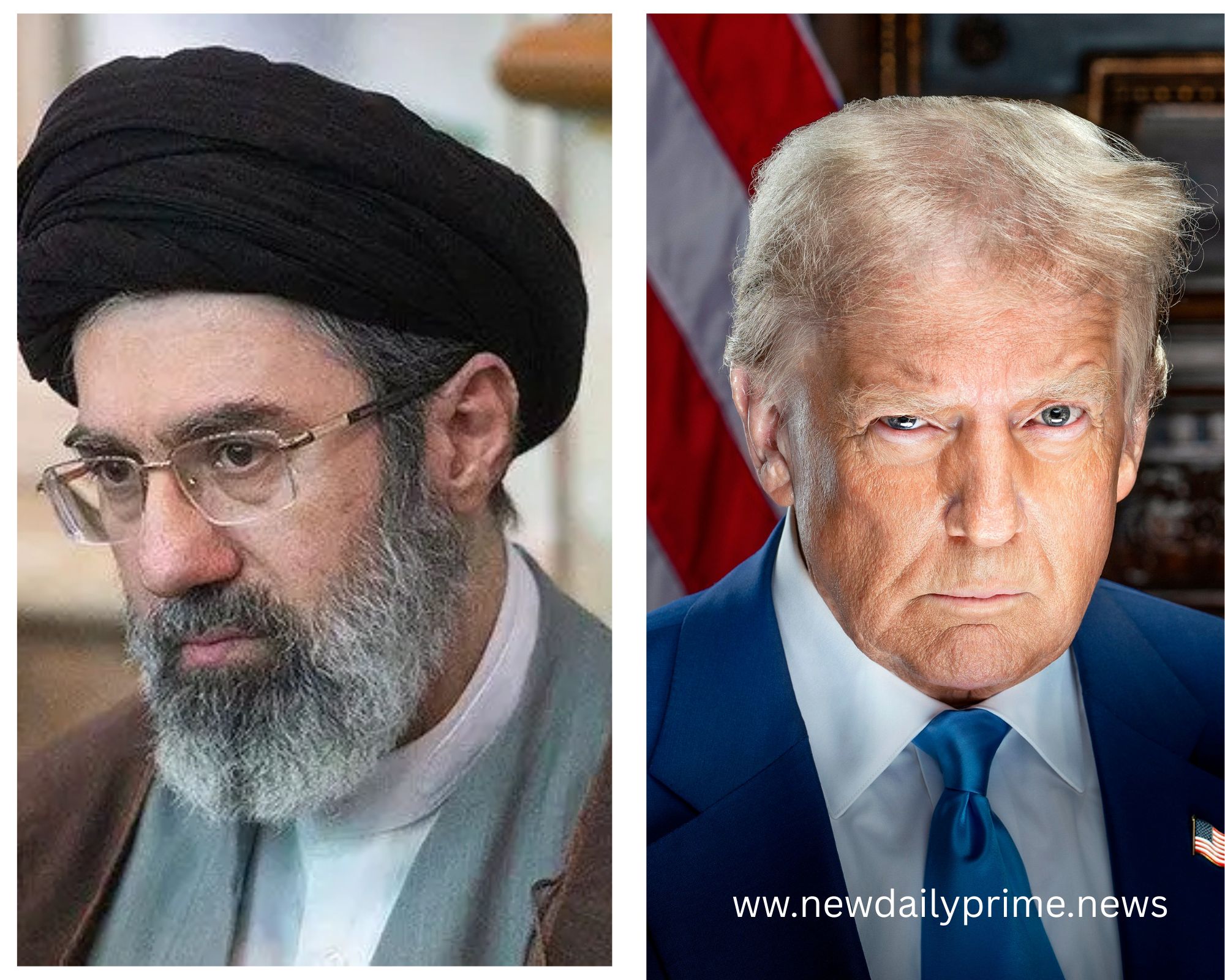
Tensions between the United States and Iran have escalated sharply after President Donald Trump issued a 48-hour ultimatum demanding Tehran reopen the Strait of Hormuz or face sweeping military action.
Read more breaking stories from our latest nigeria news
The warning, delivered through a series of interviews and social media posts, marks one of the most direct threats in the ongoing crisis. Trump said there was a “good chance” of a deal being reached within hours, but warned that failure to comply would trigger severe consequences.

“If they don’t make a deal, and fast, I’m considering blowing everything up and taking over the oil,” he said, adding that negotiations were still ongoing.
In a separate statement, the US president set a firm deadline, warning that Iran’s key infrastructure could be targeted if no agreement is reached. “If they don’t do something by Tuesday evening, they won’t have any power plants and they won’t have any bridges standing,” he said.
The Strait of Hormuz remains central to the crisis. The narrow waterway handles roughly 20 million barrels of oil per day—nearly a fifth of global supply—making it one of the world’s most critical energy routes. Its continued disruption has already unsettled global markets and raised fears of a wider economic shock.
Read related news:
Iran threatens to turn Middle East into ‘Swamp’ if US escalates war
Trump attacks NATO allies as Iran war exposes deep Western divide
Iran’s next supreme leader must win US approval to survive — Trump
Iran has responded with defiance. A spokesperson for the Iranian foreign ministry warned that any attack on the country’s infrastructure would be met with retaliation targeting US-linked assets in the region. “If aggression expands, the entire region will become unsafe,” the official said, according to state media.
The crisis has prompted calls for restraint from global powers. Wang Yi said China is working with Russia to push for a ceasefire and a diplomatic solution. Speaking after talks with Russian foreign minister Sergei Lavrov, Wang stressed that dialogue remains the only viable path to de-escalation.
Both countries are expected to play a role in discussions at the United Nations Security Council, where a resolution aimed at protecting commercial shipping in the Gulf region is under consideration.
Military tensions have also intensified. US Central Command confirmed that both crew members of a downed F-15E Strike Eagle were successfully rescued following an earlier incident over Iranian territory. The episode has underscored the risks faced by military personnel operating in the region.
In Washington, Trump’s rhetoric has drawn criticism from lawmakers. Patty Murray described the president’s statements as “deeply concerning,” warning that such language could increase the risk of escalation and place American troops in danger.
For more updates on party developments, follow the latest APC news in Nigeria.
Security analysts say the coming hours will be decisive. While diplomatic channels remain open, the combination of military threats and rising tensions has created a volatile situation with little room for error.
“The situation is extremely fragile,” one regional analyst said. “Any miscalculation could trigger a broader conflict involving multiple countries.”
Markets are also reacting to the uncertainty. Oil prices have shown signs of volatility, while shipping companies are reassessing routes through the Gulf amid fears of further disruption.
Despite the escalation in rhetoric, officials on both sides have indicated that negotiations are continuing behind the scenes. Trump said Iranian negotiators had been granted temporary assurances to allow talks to proceed, suggesting that a last-minute agreement remains possible.
As the deadline approaches, global attention remains fixed on whether diplomacy can prevail or whether the crisis will tip into open conflict. The outcome could have far-reaching consequences for regional stability, global energy supply, and international security.

