



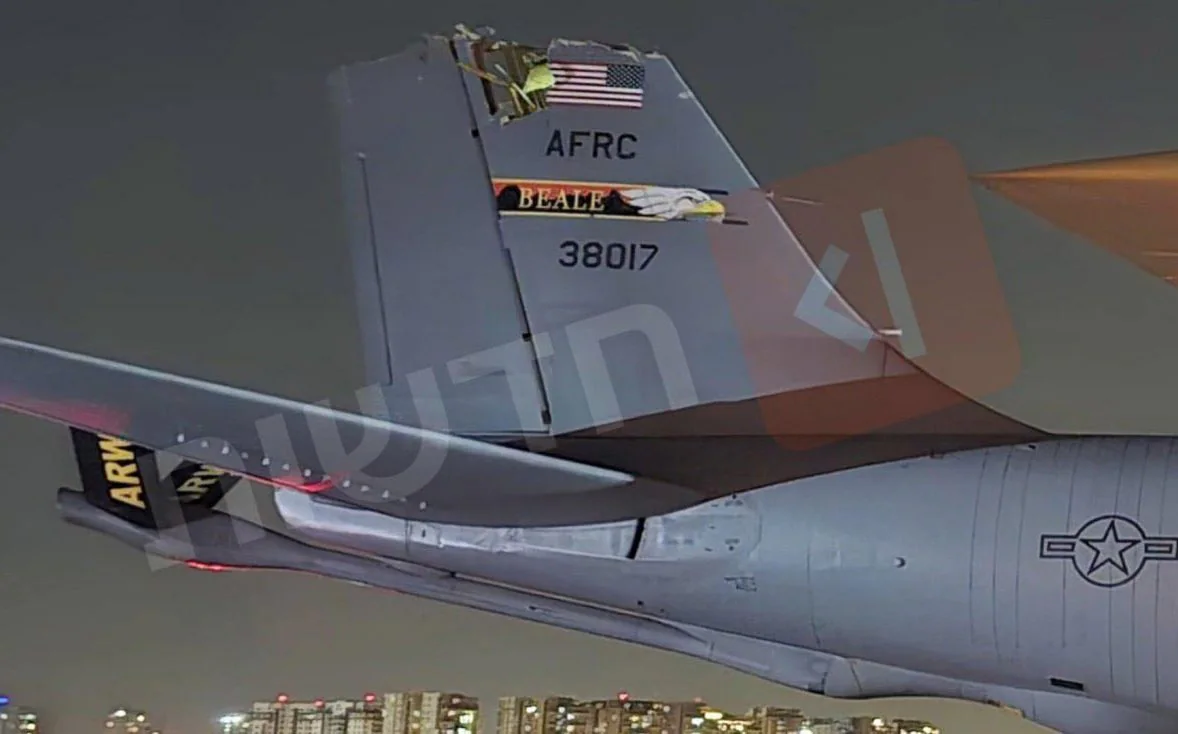
Six American service members were killed when a U.S. military refuelling aircraft crashed in western Iraq during operations linked to the ongoing conflict with Iran, the U.S. military said on Friday.
The aircraft, a Boeing KC-135 Stratotanker, went down near Turaibil along the Iraqi-Jordanian border at about 7 p.m. GMT on Thursday while participating in Operation Epic Fury, according to the United States Central Command.
All six crew members on board were killed in the crash. Their identities have not yet been released, pending notification of their families.
Military officials said two KC-135 refuelling aircraft were involved in what they described as an “incident” in friendly airspace. One aircraft crashed in western Iraq, while the second aircraft landed safely later in Tel Aviv, though it was reported to have suffered damage to part of its tail fin.
Read related news:
Breaking: US KC-135 military aircraft crashes in Iraq
Iraq unveils first industrial-scale solar plant
Alleged ISIS member questioned in Iraq over New Orleans terror attack
Centcom said the cause of the crash remains under investigation but stressed that the loss of the aircraft was “not due to hostile fire or friendly fire.” Initial reports suggest the crash may have been caused by a mid-air collision, though officials said the exact circumstances remain unclear.
Iranian state television claimed the aircraft had been struck by a missile fired by an allied Iraqi militia group. However, U.S. officials disputed the claim, saying early evidence did not support the allegation.
An Iran-backed militia group known as Islamic Resistance in Iraq later claimed responsibility, saying the attack was carried out “in defence of our country’s sovereignty and airspace.”
The crash marks the latest loss of U.S. aircraft during the conflict between Washington and Tehran. The KC-135 is believed to be the fourth American aircraft lost since the war began in late February.
Earlier in the conflict, three McDonnell Douglas F-15E Strike Eagle aircraft were mistakenly shot down by Kuwait forces in a friendly-fire incident. In that case, all six crew members aboard the jets successfully ejected and survived.
Since the start of hostilities on Feb. 28, 11 U.S. service members have been killed and more than 140 injured, according to figures released by the Pentagon.
The latest developments came as tensions across the region continued to escalate. On Thursday night, Emmanuel Macron confirmed that a French soldier had been killed in a drone attack near Erbil. The soldier, identified as Chief Warrant Officer Arnaud Frion, died after the attack struck coalition forces stationed in the region.
Macron condemned the assault as “unacceptable,” saying French forces were in Iraq strictly as part of international operations to combat terrorism.
The broader conflict has already taken a heavy toll. More than 1,000 people have reportedly been killed in Iran, including civilians caught in air strikes during the opening days of the war.
The fighting has also rattled global energy markets. Iran has effectively closed the Strait of Hormuz, a narrow waterway through which roughly 20 percent of the world’s oil supply normally passes.
Attacks on shipping in the Gulf have sent crude prices sharply higher, fuelling fears of a prolonged energy shock.
The rising human and economic costs of the conflict are increasingly drawing scrutiny in Washington. U.S. officials estimate the war has already cost billions of dollars, including roughly $5 billion in munitions alone.
Senator Richard Blumenthal said the American public deserves clearer answers about the scope and consequences of the war.
“The American people deserve to know much more than this administration has told them about the cost of the war, the danger to our sons and daughters in uniform, and the potential for further escalation,” he said.

