


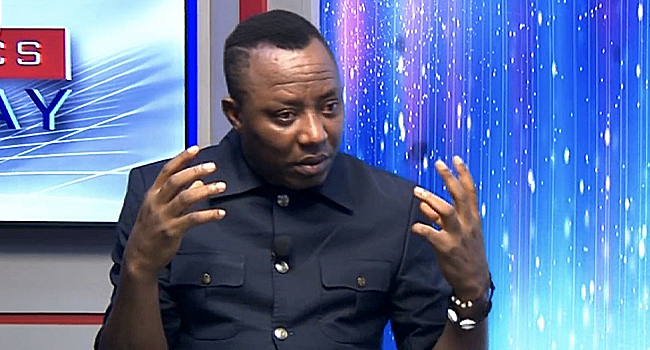
Former presidential candidate and activist Omoyele Sowore has dismissed a reported proposal by state governors to set Nigeria’s minimum wage at ₦100,000, describing the figure as inadequate and renewing his demand for a ₦500,000 monthly living wage for workers.
Sowore’s reaction came hours after he claimed governors had responded to his recent campaign for a significantly higher wage benchmark, a proposal he said would better reflect the realities of Nigeria’s rising cost of living.
In a statement released on Saturday, the activist argued that a ₦100,000 monthly wage would leave workers trapped in poverty despite being formally employed.
He contended that the amount was insufficient to cover basic necessities such as food, housing, transportation, healthcare, education, and utility bills, especially at a time of persistent inflation and increasing living costs.
READ RELATED NEWS UPDATES
Sowore ₦500,000 minimum wage pledge would bankrupt Nigeria, Omokri warns
Sowore gets AAC presidential ticket, resigns as national chair
Sowore condemns “selective free speech” enforcement, calls for equal rights online
Sowore accused political leaders of failing to appreciate the economic pressures facing ordinary workers; he insisted that any minimum wage policy should guarantee a decent standard of living rather than mere survival.
His intervention marks the latest contribution to a growing national conversation over workers’ welfare and the widening gap between wages and living expenses.
The debate was triggered earlier in the week when Sowore publicly asked Nigerians to estimate what income would enable a worker and family to live comfortably under current economic conditions. He suggested that discussions about wages should extend beyond fares and food purchases to include savings, recreation, healthcare, education, and decent accommodation.
A day later, he took a firmer position, when he declared that a ₦500,000 minimum wage was justified for Nigerian workers. He specifically argued that teachers, healthcare professionals, security personnel, and other public servants deserved what he called a living wage, with additional allowances for workers in critical sectors.
In his latest statement, Sowore claimed governors were alarmed by the growing public discussion around higher wage demands and alleged that political leaders were attempting to contain expectations by advancing a lower figure.
He further argued that Nigeria possesses sufficient public resources to support improved worker compensation if those resources are managed differently.
While presenting his position, Sowore framed the wage debate as a broader question of economic justice and income distribution. According to him, workers should not be expected to bear the burden of economic reforms while public officials continue to enjoy extensive government-funded privileges.
The comments arrive against the backdrop of continued concerns over inflation, food prices, and declining purchasing power, issues that have remained central to public discourse since the implementation of major economic reforms by the Federal Government.
Although Sowore’s proposed ₦500,000 benchmark is substantially higher than figures that have circulated in recent wage discussions, his remarks underscore increasing pressure from labour advocates and political actors for compensation packages that more closely reflect current market realities.
For now, neither the governors referenced in Sowore’s statement nor relevant government authorities have publicly responded to his latest claims. However, the exchange highlights what is likely to become a more contentious national debate as questions over wages, living standards, and economic recovery continue to shape Nigeria’s political landscape ahead of the 2027 elections.
At the centre of the argument lies a question that extends beyond politics: how much income is required for a Nigerian worker to live with dignity rather than merely endure the month.
For More Details, Visit New Daily Prime News
