


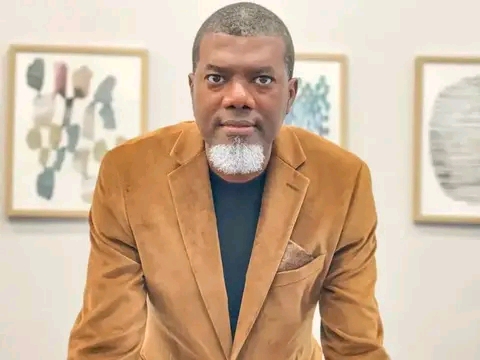
Nigeria’s Ambassador Designate to Mexico Reno Omokri has publicly challenged Sowore’s promise of a ₦500,000 minimum wage, arguing that the pledge is financially unworkable and would push the country back into borrowing just to pay salaries.
Omokri on Thursday in a statement shared on Facebook laid out a straightforward arithmetic case against the proposal. Nigeria currently employs roughly two million civil servants. Add the military, police, and paramilitary services, and that figure climbs to three million. Factor in pensioners, and the total reaches four million people whose pay would be pegged to — or above — whatever minimum wage is set.
At ₦500,000 per month, Omokri calculates the conservative monthly wage bill for the public sector alone would hit ₦2 trillion. In practice, he argues, it would be closer to ₦4 trillion, because the majority of workers earn above the minimum rate.
Stretched across a full year, that puts the total annual wage commitment somewhere between ₦24 trillion and ₦48 trillion — against a projected federal revenue of less than ₦30 trillion.
Read Related News Updates
Omokri questions claim of 10 Million NDC registrations
Why Reno Omokri remains one of Nigeria’s most influential public voices
Omokri, Fani-Kayode tell Nigerians to rally behind Tinubu-2027
“Where will Nigeria get ₦36 trillion annually to pay a ₦500,000 minimum wage in the public sector?” Omokri asked.
The implication, he said, is stark. A government spending more on salaries than it earns in revenue would have nothing left for roads, hospitals, schools, or defence. Capital expenditure would effectively collapse. Worse, the government would face a choice between two unpleasant options — borrow heavily or sack workers in large numbers.
Omokri reminded readers that President Bola Tinubu had specifically ended the previous practice of borrowing to fund the wage bill, a habit widely criticised as fiscally reckless. Returning to that model, he suggested, would represent a serious step backwards.
He stopped short of dismissing the goal of better wages for Nigerian workers, but called on presidential candidates to be realistic and apply greater rigour to their campaign commitments.
“. . . may I appeal to presidential candidates to be a bit more realistic and circumspect about the promises they make to the electorate? You may mean well, but please think things through so you can be true to yourself,” he wrote.
Sowore, the activist and presidential contender, has not yet publicly responded to Omokri’s challenge.
This development fuels the tension in Nigerian politics ahead of the next elections where, in the belief of many, ambitious economic promises routinely outpace any credible explanation of how they would be funded.
Moreover, critics have long argued that voters are offered headline figures with no accompanying fiscal framework, a pattern Omokri himself appears to be pushing back against from the other side of the fence.
To establish his position, Omokri invited readers to independently verify his figures, repeatedly urging them to “fact-check” his claims.
