


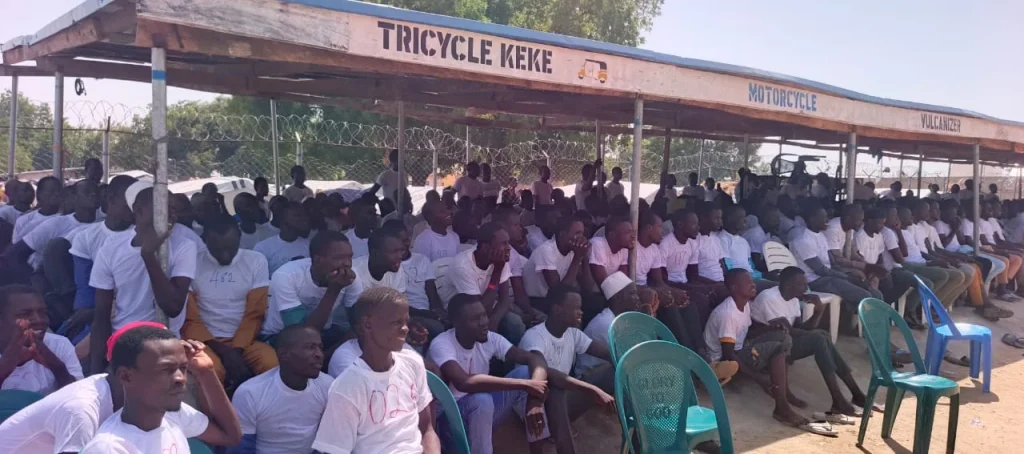
The Borno State Government has reintegrated 720 rehabilitated former insurgents into their respective communities after they successfully completed a deradicalisation, rehabilitation and reintegration programme designed to promote peace and stability in the North-East.
The beneficiaries, classified as low-risk participants under Batch 9 of the state’s rehabilitation initiative, were formally released during a ceremony held at the Hajj Camp in Maiduguri on Friday. Before their release, the former insurgents took an oath on the Holy Quran, pledging to remain law-abiding citizens and renounce all forms of violence and extremist activities.
Speaking at the event, the Special Adviser on Security to Governor Babagana Zulum, retired Brigadier General Ishaq Abdullahi, described the exercise as another significant milestone in the state’s non-kinetic approach to combating insurgency. He said the programme has continued to serve as a model for peace building, reconciliation and community recovery in conflict affected areas.
According to Abdullahi, the rehabilitation initiative was launched in July 2021 as part of the state government’s broader efforts to complement military operations with measures aimed at addressing the root causes of violent extremism. He noted that the programme has contributed significantly to encouraging insurgents and their families to surrender and embrace peaceful coexistence.
The latest batch of graduates brings the total number of former insurgents successfully rehabilitated and reintegrated through the programme to 9,680 across nine batches. Officials also disclosed that hundreds of spouses and dependants linked to former insurgents have benefited from various support services provided under the initiative.
Abdullahi explained that participants undergo a rigorous rehabilitation process following their surrender. The programme includes psychological counselling, religious reorientation, civic education and behavioural assessments aimed at helping them reject extremist ideologies and adapt to civilian life.
As part of the reintegration process, participants are also equipped with vocational and entrepreneurial skills to enable them become self reliant upon returning to their communities. Training is provided in trades such as carpentry, tailoring, welding, bricklaying, metal fabrication, phone repairs, solar installation, motorcycle maintenance, barbing and other income-generating activities.
To support their transition, the state government provides starter packs and other forms of economic assistance to help beneficiaries establish small businesses and rebuild their lives. Officials believe that empowering former insurgents economically reduces the likelihood of a return to criminal or extremist activities.
Community involvement remains a critical aspect of the programme. Traditional rulers, community leaders, members of the Civilian Joint Task Force and local security stakeholders participate in screening and verification exercises before beneficiaries are cleared for reintegration. Authorities say the process is intended to strengthen public confidence and encourage acceptance within host communities.
The beneficiaries released under Batch 9 were drawn from several local government areas across Borno State, including Bama, Konduga, Maiduguri Metropolitan Council, Jere, Mafa, Dikwa, Gwoza, Damboa, Marte, Monguno, Kukawa, Ngala, Kala-Balge and Gubio.
Also speaking at the ceremony, officials from the Ministry of Women Affairs and Social Development described the programme as a symbol of reconciliation, resilience and renewed hope for communities affected by years of insurgency. They reaffirmed the government’s commitment to supporting peacebuilding initiatives, community recovery and sustainable development across the state.
While concerns continue to be raised in some quarters regarding the reintegration of former insurgents, Borno State authorities maintain that rehabilitation, reconciliation and economic empowerment remain essential components of long-term peace and security efforts in the North-East.
The government expressed confidence that the programme will continue to contribute to reducing radicalisation, promoting social cohesion and fostering lasting stability in communities recovering from the impact of insurgency.

