


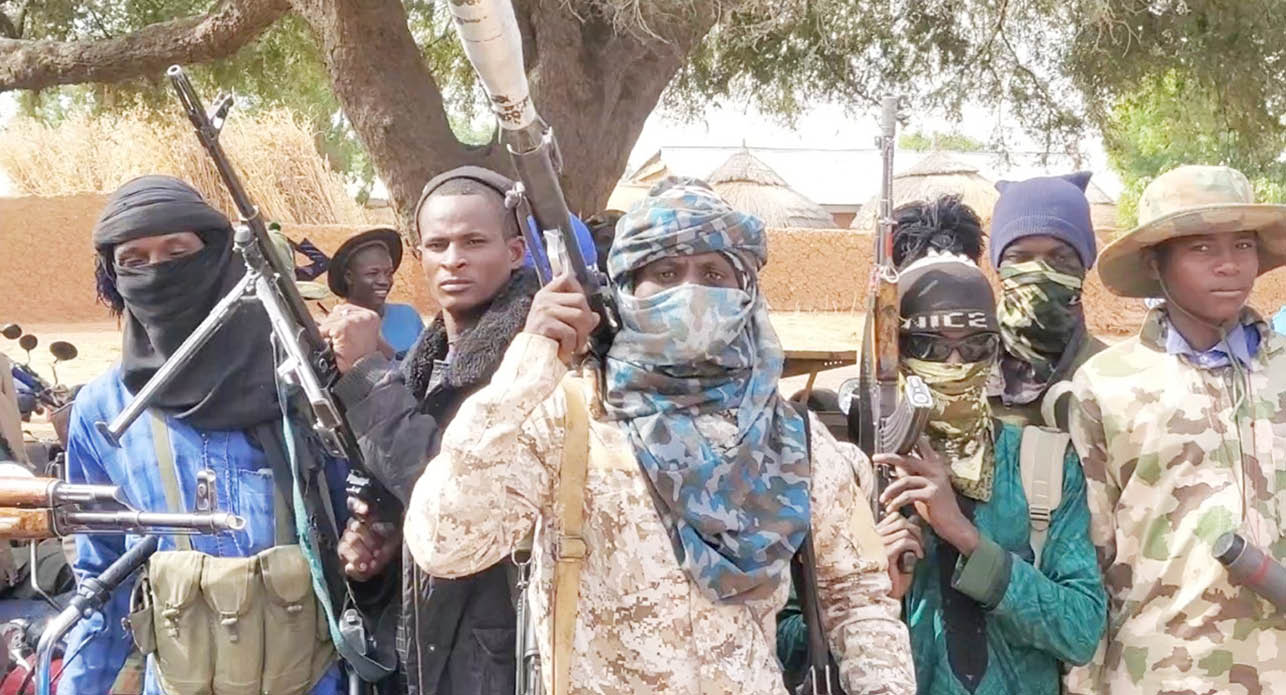
Bandits have killed two local government officials in Zamfara State, raising fresh concern over insecurity in the North-West and placing renewed pressure on the All Progressives Congress, APC, which now controls the state government.
The victims were identified as Habibu Jangebe, the councillor representing Jangebe Ward, and Alhaji Jamilu Sani, the Director of Planning of Talata-Mafara Local Government Area.
They were reportedly abducted on May 18, 2026, while travelling from Jangebe to the local government headquarters to prepare for the last pilgrimage exercise. They were later killed after spending about 10 days in captivity.
The killings come in Zamfara, one of the states worst hit by banditry in recent years. The state is now governed by Governor Dauda Lawal, who defected from the Peoples Democratic Party, PDP, to the APC in March 2026. Channels Television reported that Lawal resigned from the PDP and joined the APC, a move that increased the number of APC governors at the time.
The Zamfara State Government also confirmed the governor’s defection, saying it followed a stakeholders’ meeting in Gusau. The government said Lawal cited the crisis in the PDP as one of the reasons for joining the ruling party.
The latest attack shows that insecurity is not only affecting ordinary residents, farmers and travellers. Local politicians, public servants and government officials are also being targeted by armed groups.
A local source, who spoke on condition of anonymity for security reasons, alleged that the two officials were killed over claims that Talata-Mafara Local Government had been making monthly payments to Lakurawa terrorists to prevent attacks on communities in the area.
The source claimed that bandits operating in the area became angry because the alleged payments were not extended to them.
“A certain amount of money is allegedly given to the Lakurawa terrorists on a monthly basis by the Talata-Mafara Local Government, but such gestures are not extended to the bandits operating in the area,” the source said.
“As a result, the bandits abducted the two officials 10 days ago and later killed them to express their anger.”
The source also alleged that the bandits had threatened to kill the chairman of Talata-Mafara Local Government, Yahaya Yari, over claims that they were excluded from the alleged arrangement.
However, Yari denied the allegation that the council was paying Lakurawa terrorists. He described the killing of the two officials as tragic and unfortunate but insisted that the local government had no agreement with any terrorist group.
He said both the bandits and the Lakurawa group were terrorists and that his administration would not support either of them.
“My local government will never give money to either of them,” Yari said.
The chairman said the Zamfara State Government, under Governor Lawal, had made it clear that there would be no negotiation with terrorists.
According to him, the only group receiving assistance from the local government is the Civilian Joint Task Force from Borno State, which is helping security agencies in the fight against banditry in the area.
“We have people from Borno State who are in the local government to assist in the fight against banditry,” he said.
“They are the people we support, not Lakurawa terrorists as being claimed by mischief makers. The DSS and other security agencies are aware of this arrangement, and they are doing their best in fighting banditry.”
Yari said the bandits were angry because of the council’s support for security operations and had continued to attack officials and residents in an attempt to create fear.
“This is why the bandits are unhappy and have continued attacking government officials and innocent residents in an attempt to scare us, but we will never relent in our efforts to get rid of them,” he added.
The killing was also reported by Daily Post, which said the councillor and the Director of Planning were murdered over alleged links to Lakurawa. The report also identified the victims as Habibu Jangebe and Alhaji Jamilu Sani.
The PUNCH also reported that the two officials were allegedly killed over claims of payments to Lakurawa terrorists, while noting the council chairman’s denial of the allegation.
The attack has added to the political pressure on the APC at both state and federal levels. The party controls the Federal Government and now governs Zamfara, making security in the state a key test of its promise to restore peace and protect lives.
Although there is no confirmed public record yet showing that Jangebe himself was an APC member, the incident took place under an APC-led state government. It also shows that political office holders and government workers are not immune from the violence affecting communities across Nigeria.
Zamfara has remained one of the centres of bandit attacks, abductions and killings. Armed groups have targeted villages, highways, schools and local officials despite repeated security operations.
The crisis is also no longer limited to the North-West. In Oyo State, Governor Seyi Makinde recently confirmed that seven teachers were abducted during an attack on schools in the Oriire area of the state. He said an Islamic Studies teacher was killed, while the exact number of missing pupils was still being verified.
Makinde warned that armed groups under pressure from military operations in the North-West could move southward in search of weaker targets.
“With the pressure on the terrorists and the bandits in the North-West, they will keep moving southward,” he said.
The incidents in Zamfara and Oyo underline the widening nature of Nigeria’s security crisis. Teachers, pupils, travellers, farmers, councillors and local government officials are all now exposed to attacks.
For the APC, the killing of the Zamfara councillor and local government director presents a difficult political test. The party now has to show that its control of the Federal Government and Zamfara State can produce stronger security coordination, better intelligence and visible protection for citizens and public officials.
Residents of Talata-Mafara and surrounding communities are calling for more security presence, better intelligence gathering and a stronger response to the activities of bandits and terrorist groups.
For now, the killing of Jangebe and Sani has left another community in mourning and raised fresh questions about how far armed groups have penetrated local communities in Zamfara.
The attack also sends a clear message: Nigeria’s insecurity is no longer only a rural tragedy. It is now a national crisis affecting ordinary citizens, public servants and politicians across party lines.

