


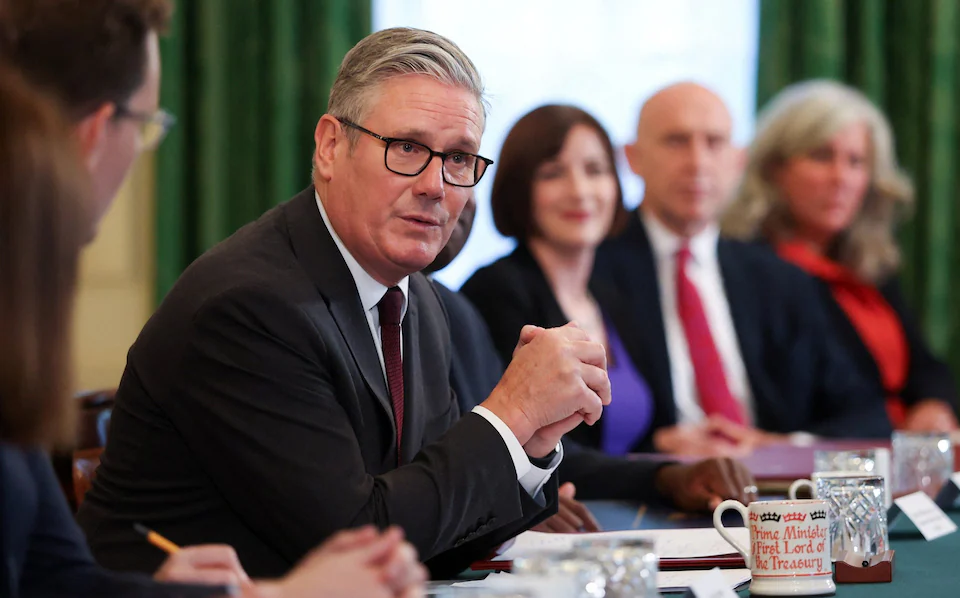
Prime Minister Sir Keir Starmer is facing mounting political pressure but has refused to resign over the growing scandal surrounding Lord Peter Mandelson’s failed security vetting and subsequent appointment as UK ambassador to the United States.
Read more breaking stories from our lates UK News
The controversy has sparked a political storm in Westminster, with critics accusing the Prime Minister of deflecting responsibility after it emerged that Mandelson had failed an enhanced vetting process before being cleared for the high-profile diplomatic role.
Downing Street has come under scrutiny after Starmer blamed Foreign Office officials for the appointment, a move that reportedly led to the dismissal of Sir Olly Robbins, the department’s most senior civil servant. The decision has fuelled accusations that the Prime Minister is attempting to shield himself from political fallout.
However, senior government figures have defended Starmer’s position. Chief Secretary to the Treasury Darren Jones rejected calls for the Prime Minister to step down, describing the situation as a “failing of the state” rather than a personal error in judgment.
“You need a credible, reliable, strong Prime Minister to take the country through difficult challenges,” Jones told Sky News, pointing to global tensions and economic pressures affecting living standards.
Read related news:
Starmer says conservatives “have problem with muslims” after Trafalgar Square remarks
Starmer apologises over Mandelson appointment scandal
Starmer invites Japan PM to UK visit
He insisted that Starmer could not be held accountable for information that was not presented to him, adding that the Prime Minister was “furious” over what he described as a serious security failure.
The row has intensified following claims that Starmer was aware of the vetting concerns before facing MPs but failed to disclose them. Opposition leader Kemi Badenoch has accused the Prime Minister of “deliberate dishonesty”, arguing that ministers are required to correct the parliamentary record promptly if they mislead lawmakers.
Read more breaking stories from our latest nigeria news
The scandal deepened further after investigations revealed that the vetting concerns were overridden, raising questions about transparency and accountability at the highest levels of government. The issue has been compounded by renewed focus on Mandelson’s past links to disgraced financier Jeffrey Epstein, adding another layer of controversy to the case.
Lord Mandelson, a former Labour heavyweight, has denied wrongdoing, but the revelations have reignited debate over standards in public appointments and the integrity of the vetting process. His appointment and subsequent removal have become a focal point in wider discussions about governance and political accountability.
Analysts say the episode exposes weaknesses in the system used to assess candidates for sensitive roles, while also highlighting the political risks facing the Prime Minister as he navigates both domestic challenges and international pressures.
Despite the growing criticism, Starmer has shown no sign of stepping aside. Instead, his government is attempting to contain the fallout and shift attention toward broader national and global issues.
With investigations ongoing and opposition scrutiny intensifying, the Mandelson vetting row is likely to remain a defining issue for the government in the weeks ahead.
