


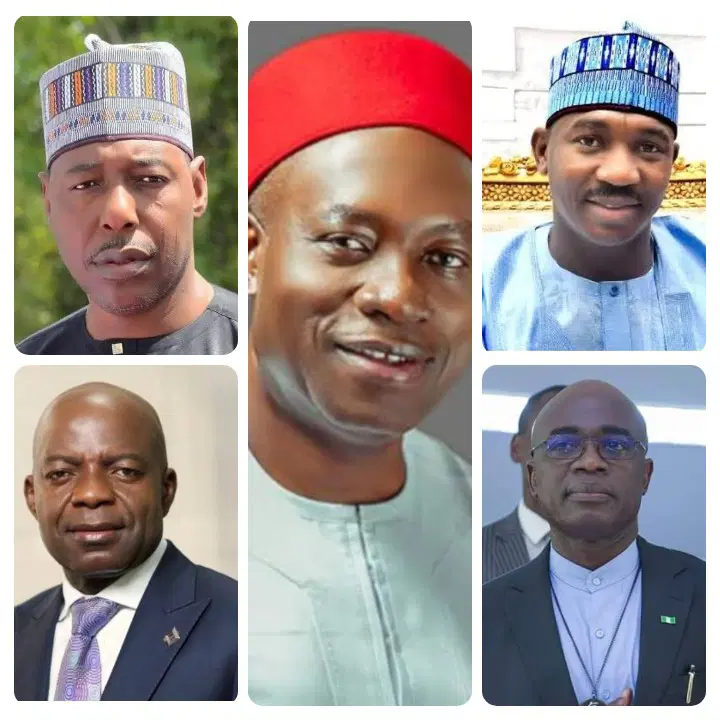
A detailed review of Nigeria’s political leadership has revealed that only six out of the country’s 36 serving state governors hold verified Doctor of Philosophy (PhD) degrees, raising fresh questions about academic credentials and transparency in public office.
Read more breaking stories from our latest nigeria news
The findings come amid increasing scrutiny over the widespread use of the “Dr.” title among politicians, many of whom rely on honorary awards rather than earned academic qualifications.
Among the governors confirmed to possess earned doctoral degrees is Charles Soludo, a former governor of the Central Bank of Nigeria and one of the country’s most prominent economists, who holds a PhD in Economics. In Abia State, Alex Otti is reported to have a doctorate in finance and business-related studies.
Read related news:
Tinubu’s reforms driving governors’ defection to APC — Governor Sule
Accord Party confirms Adeleke as candidate for Osun governorship election
Nigeria needs active problem-solvers, not passive graduates — Hamzat
In the North-East, Babagana Zulum stands out as a professor of agricultural engineering, having built a strong academic career before entering politics. Similarly, Hyacinth Alia holds a doctorate in theology and education, reflecting his background as a Catholic cleric.
Other governors on the list include Umo Eno, who earned a PhD in Public Administration from the University of Uyo in 2024, and Dauda Lawal, who holds a doctorate in Business Administration from Usmanu Danfodiyo University, Sokoto.
Together, they represent a small minority within Nigeria’s leadership structure, where most governors hold master’s degrees or professional qualifications but not doctoral-level education.
The issue has gained prominence in recent years as several politicians publicly adopt the “Dr.” title, often without clearly distinguishing between earned doctorates and honorary awards. Universities frequently confer honorary doctorates on public figures in recognition of achievements, but such honours do not carry the academic weight of a PhD.
Education analysts say the blurred lines between honorary and earned titles risk misleading the public.
“There must be clarity,” said one academic familiar with university accreditation standards. “An honorary doctorate is not the same as an earned PhD. Public officials should not present them interchangeably.”
Between 2025 and 2026, multiple governors—including those in Lagos and other states—received honorary doctorates from local and international institutions. While these recognitions highlight public service or leadership, they do not reflect formal academic research or scholarly contribution.
Concerns have also been raised about the verification of some academic claims, particularly degrees obtained through lesser-known institutions or distance-learning programmes. Analysts argue that stricter disclosure standards and independent verification could strengthen public trust.
For more updates on party developments, follow the latest APC news in Nigeria.
Former governors such as Okezie Ikpeazu, Kayode Fayemi, Benedict Ayade and Abdullahi Ganduje were also widely known to hold PhDs during their time in office, further fuelling debate about the role of advanced education in governance.
While Nigeria’s constitution does not require candidates for public office to hold advanced degrees, observers say academic background can influence policy direction, administrative competence and public perception.
For many citizens, however, the concern goes beyond qualifications. The growing demand is for transparency, honesty and accountability in how public officials present their credentials.
As scrutiny intensifies, the spotlight is likely to remain on Nigeria’s political class—not just for the degrees they claim, but for the clarity and credibility behind them.

