


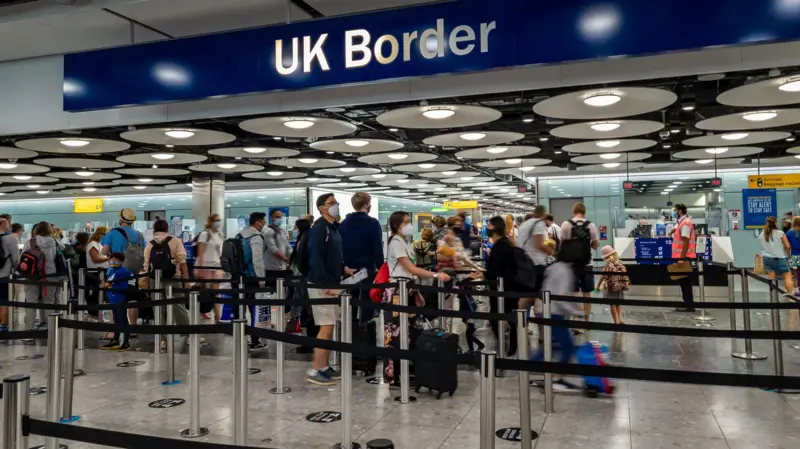
More than 15,500 babies were born to mothers born in Nigeria in England and Wales in 2025, as the share of children with at least one foreign-born parent reached a record high.
New figures from the Office for National Statistics show that 40.2 per cent of babies born in England and Wales last year had at least one parent who was born outside the UK.
It was the first time the figure had passed 40 per cent. The rate was 39.5 per cent in 2024 and 30.1 per cent in 2008, showing a major shift in the background of parents giving birth in England and Wales.
The figures refer to parents’ country of birth, not nationality or immigration status. This means some parents counted as foreign-born may now be British citizens, while others may have lived in the UK for many years.
Read related news:
FIFA sanctions Malaysia over fake player documents
Nigeria ranks 4th in U.S. military naturalisations from 2020-2024
Prayers, foreign religions have not improved Nigeria — 9ice
In total, more than 235,000 of the 585,396 babies born in 2025 had at least one parent who was born outside the UK.
Mothers born in India made up the largest group among foreign-born mothers, giving birth to 27,601 babies in England and Wales. Pakistan followed with more than 22,000 births, while mothers born in Nigeria gave birth to more than 15,500 babies.
Mothers born in Romania accounted for about 10,600 births. Other leading countries of birth included Bangladesh, Poland, Ghana and Afghanistan.
The figures show how migration and falling birth rates are reshaping the population. They also show that the rising share of babies born to foreign-born parents is not only about migration. It is also linked to the falling number of births overall.
There were 585,396 live births in England and Wales in 2025, down from 594,677 in 2024. That was a fall of 1.6 per cent in one year and the lowest number of live births since 1977.
The latest total is close to levels seen during parts of the Second World War, even though the population of England and Wales is now much larger than it was then.
The total fertility rate also fell to 1.39 children per woman, down from 1.41 in 2024. This was the lowest rate since records began in the 1930s.
The ONS said the 2025 fertility rate was provisional and based on projected population figures. Final fertility rates are expected to be released later in 2026.
The average age of parents also continued to rise. Mothers had a provisional average age of 31.1 in 2025, while fathers had an average age of 34.0. In 1975, the average age was 26.4 for mothers and 29.5 for fathers.
The trend reflects wider social and economic changes, with many people having children later in life or having fewer children than previous generations.
Demographers usually say a fertility rate of about 2.1 children per woman is needed to keep a population stable over time without immigration. England and Wales have not recorded a fertility rate above that level since 1972.
The fall in births is likely to raise fresh concern about the long-term impact of an ageing population. A smaller number of children today can mean fewer workers in future, while the number of older people needing pensions, healthcare and social care continues to rise.
The Office for Budget Responsibility has warned that lower birth rates can have negative long-term consequences for the public finances. In the short term, fewer children may reduce pressure on schools. But over time, fewer working-age people could leave the tax base under greater strain.
Recent migration figures also show the growing role of non-EU migration in Britain’s population change. ONS data for the year ending December 2023 showed Indian, Nigerian and Pakistani nationals were among the largest groups arriving in the UK for long-term stays.
However, the births data should not be read as a direct measure of recent immigration. A parent born outside the UK may have arrived many years ago, may have settled permanently, or may now hold British citizenship.
The figures instead show a wider demographic shift: England and Wales are recording fewer births overall, while a growing share of babies are being born to families where at least one parent was born abroad.
That change is likely to remain central to debates over immigration, housing, schools, the NHS, pensions and the future size of the workforce.
