


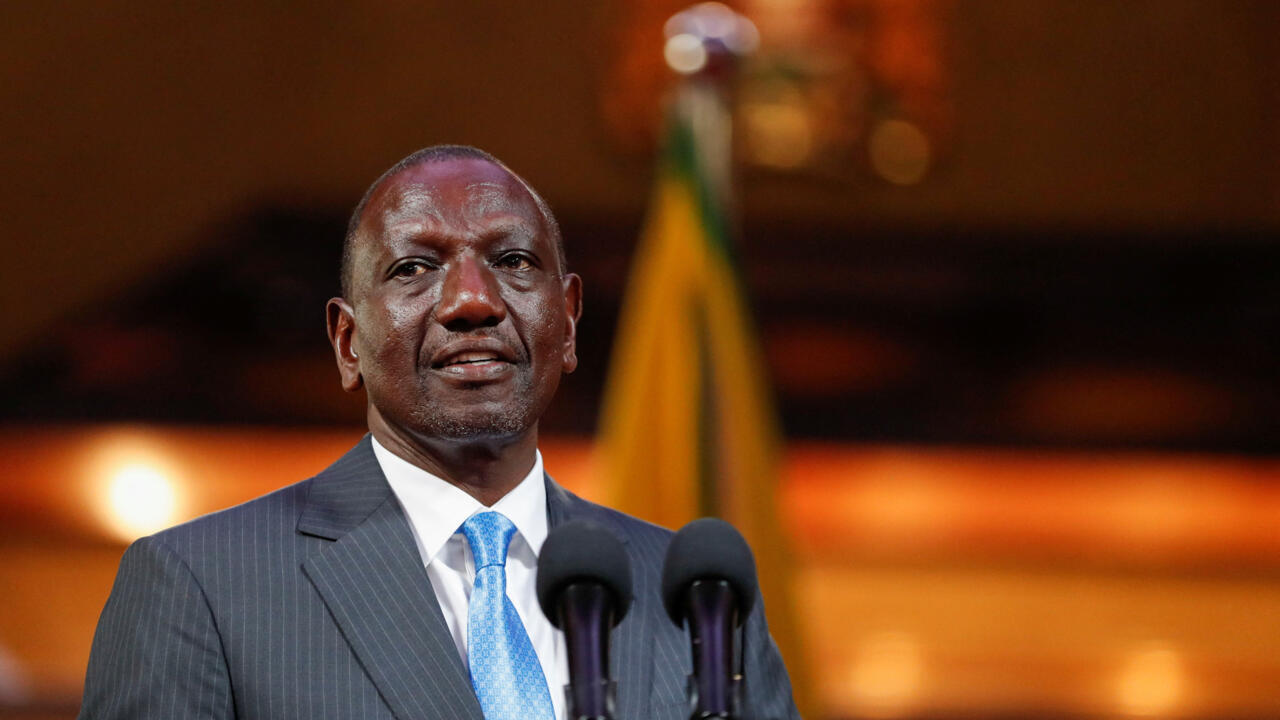
Kenyan President William Ruto has sparked debate across social media platforms after suggesting that Kenyans speak better English than Nigerians, a comment that has drawn mixed reactions from both countries.
Speaking during an engagement with Kenyans living in Italy on Monday, Ruto praised his country’s education system and language proficiency, asserting that Kenyans rank highly in spoken English.
“Kenyans, you know our education is good, our English is good. We speak some of the best English in the world… that is true,” he said.
He went further to compare Kenya’s English with Nigeria’s, adding, “If you listen to a Nigerian speaking, you don’t know what they are saying — you need a translator even when they’re speaking English.”
The remarks quickly triggered criticism online, particularly among Nigerians, many of whom viewed the statement as dismissive and unnecessary.
Both Kenya and Nigeria, as former British colonies, use English as an official language. However, variations in pronunciation and speech patterns exist, shaped by each country’s linguistic diversity. Nigeria, for instance, has over 500 indigenous languages influencing its English accents, while Kenya’s mix of Bantu, Nilotic, and Cushitic languages contributes to its own distinct speech patterns.
Linguists note that no single accent can be considered superior. Research by institutions such as the University of Cambridge emphasises that clarity and effectiveness in communication matter more than accent differences.
Reacting to the controversy, former Nigerian senator Shehu Sani defended Nigeria’s global literary reputation, referencing some of the country’s most celebrated writers.
“Ruto is mocking the English of the country with a Nobel Prize for literature winner. The Nation of Achebe and Chimamanda,” he wrote, alluding to Wole Soyinka, Chinua Achebe, and Chimamanda Ngozi Adichie.
Other social media users linked Ruto’s comments to a recent statement by President Bola Tinubu, who had said Nigerians were “better off than those in Kenya and other African countries,” a remark that had earlier drawn criticism from Kenyan users online.
Although Ruto did not explicitly connect his comments to Tinubu’s statement, some observers interpreted his remarks as a subtle response. Others, however, dismissed the exchange as light-hearted banter between two African nations with long-standing cultural ties.

