



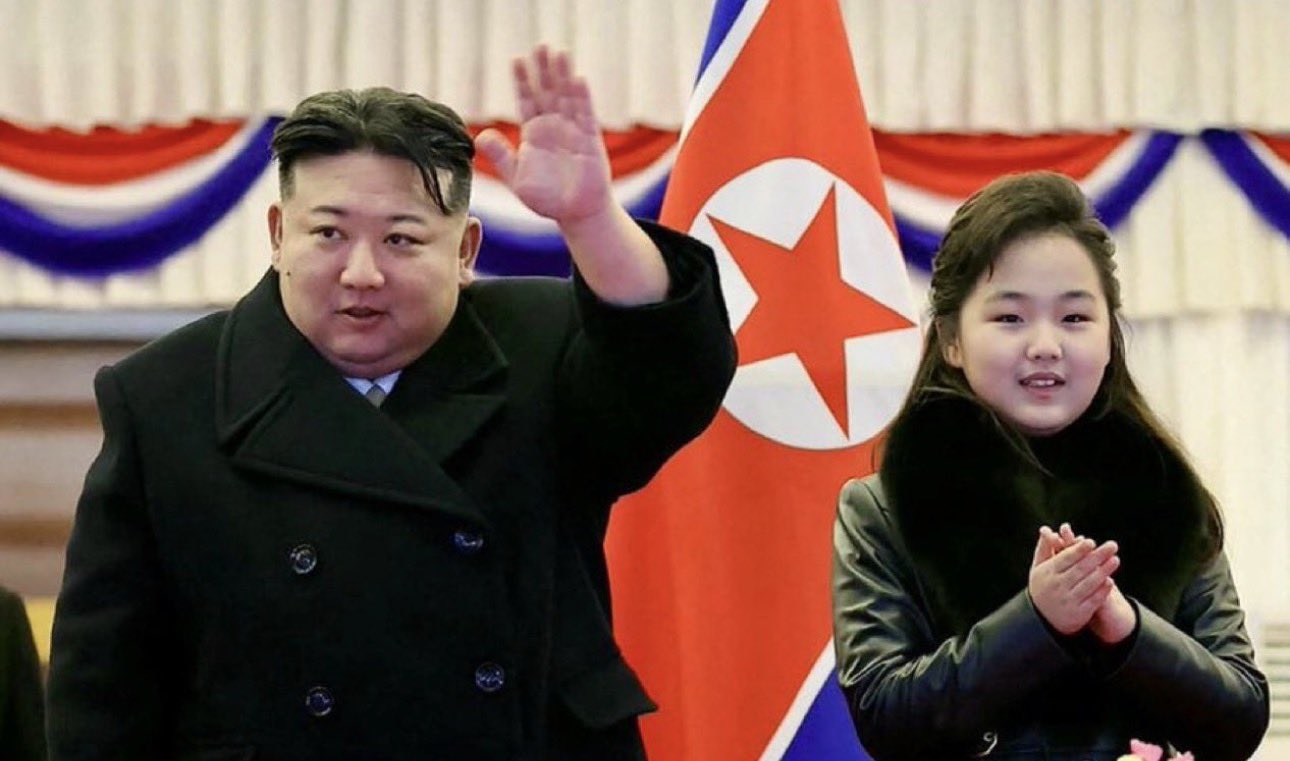
South Korea’s National Intelligence Service (NIS) has assessed that North Korean leader Kim Jong Un has chosen his daughter, Kim Ju Ae, as his successor.
According to a report by the BBC, the NIS briefed lawmakers that its conclusion was based on a “range of circumstances,” including Ju Ae’s growing visibility at major state functions.
In recent months, the 13-year-old has accompanied her father to several high-profile events, notably a September visit to Beijing — her first recorded trip outside North Korea. The intelligence agency indicated it would closely observe whether she appears at the ruling party’s congress later this month, a key political gathering held every five years where Pyongyang outlines its direction on foreign policy, defence strategy and nuclear development.
Lawmaker Lee Seong-kwen told reporters that Ju Ae’s role appears to have progressed beyond mere preparation.
“As Kim Ju Ae has shown her presence at various events, including the founding anniversary of the Korean People’s Army and her visit to the Kumsusan Palace of the Sun, and signs have been detected of her voicing her opinion on certain state policies, the NIS believes she has now entered the stage of being designated as successor,” he said.
Ju Ae, the only publicly acknowledged child of Kim Jong Un and his wife, Ri Sol Ju, first appeared on state television in 2022, holding her father’s hand during an inspection of an intercontinental ballistic missile. Although intelligence officials believe Kim has an older son, he has never been publicly introduced.
Since her debut, Ju Ae has frequently featured in state media, attending military parades and political ceremonies. Observers note that she is often positioned beside her father — a significant detail in a country where imagery is tightly controlled and symbolic, and where proximity to the leader conveys status.
Another South Korean legislator, Park Sun-won, suggested that her increasing public profile indicates she may already be participating in policy discussions and functioning as a de facto second-in-command.
North Korea’s leadership has remained within the Kim family for three generations, and analysts widely believe Kim Jong Un intends to preserve that lineage. However, the apparent selection of a daughter as heir has sparked debate, given the country’s traditionally patriarchal structure.

