


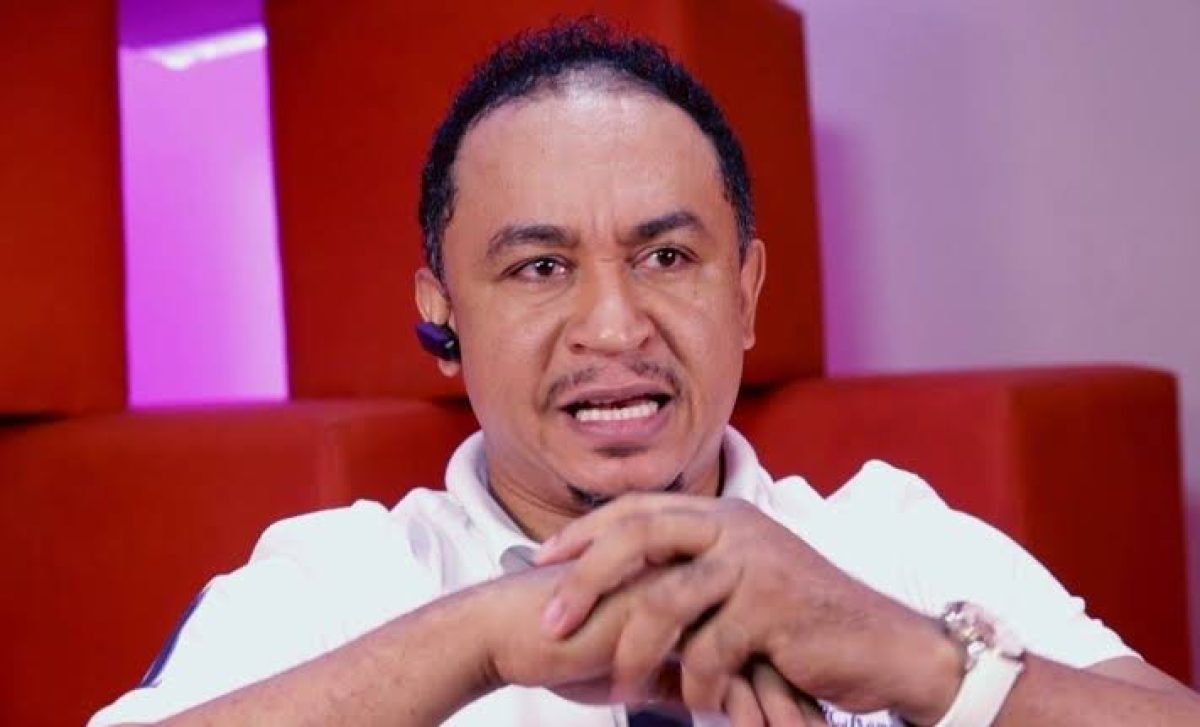
In Nigeria’s deeply religious society, publicly criticising influential pastors once carried serious risks. Many broadcasters, entertainers and public figures avoided those conversations completely because challenging church authority could instantly trigger backlash, public condemnation and even career damage.
Daddy Freeze walked directly into that space.
What began as controversial commentary from a radio personality eventually transformed him into one of Nigeria’s most influential and polarising media voices. Through social media debates, livestream discussions and relentless criticism of religious practices he considered exploitative, Daddy Freeze built a form of influence that exists outside politics, wealth or institutional authority.
To supporters, he represents boldness and independent thinking. To critics, he is confrontational and disrespectful toward religious institutions. Yet both groups continue engaging with his content, reacting to his statements and amplifying his visibility. That constant public engagement remains the foundation of his influence.
Read related news:
Daddy Freeze claim on prostate cancer sparks online debate
Daddy Freeze: Why I married my ex-wife
Daddy Freeze criticises 2Face’s public apology
Before social media made him a national debate figure, Daddy Freeze had already established himself through mainstream broadcasting, especially during his years at Cool FM. His style felt different from traditional radio personalities. He spoke directly, mixed humour with serious issues and connected easily with younger audiences dealing with everyday struggles in Nigeria.
But his influence expanded far beyond entertainment when he moved into religion, accountability and public criticism.
At a time when many Nigerians privately questioned prosperity preaching, tithing culture and the growing wealth of some religious leaders, Daddy Freeze openly challenged those issues publicly. He confronted topics many people discussed quietly among friends but avoided saying openly online or on television.
That decision permanently changed his public identity.
One of the strongest symbols of his rise became the “Free the Sheeple” movement, a phrase that quickly evolved into a digital campaign encouraging Nigerians to question blind loyalty, especially within religious spaces. Supporters embraced it as a call for independent thinking, while critics viewed it as an attack on Christianity and church leadership.
Either way, the movement expanded his reach dramatically.
Daddy Freeze understood something many public figures missed early in Nigeria’s digital era: influence increasingly belongs to people who can dominate conversations online. Through Instagram Live sessions, YouTube discussions, podcasts and social commentary, he built a loyal audience that consistently keeps him relevant in national debates.
His livestream sessions regularly generate arguments across social media because they combine religion, emotion, celebrity culture and everyday frustration in ways that feel personal to many Nigerians.
For younger audiences especially, Daddy Freeze became relatable because he spoke in a language that felt less formal and less controlled than traditional public commentators. He blended humour, street culture, emotional debate and blunt criticism into a communication style that fit social media behaviour perfectly.
Many followers saw him as someone willing to challenge authority openly at a time when distrust in institutions was growing among younger Nigerians facing economic hardship, unemployment and frustration with public systems.
His influence also became stronger because of controversy itself.
While many public personalities carefully protect their image by avoiding sensitive conversations, Daddy Freeze built relevance by stepping directly into difficult debates involving religion, celebrity culture, hypocrisy, relationships and public morality. Pastors responded to him publicly. Critics attacked him online. Supporters defended him aggressively. Every reaction kept him inside the national conversation.
Unlike many personalities whose visibility fades after controversy, Daddy Freeze converted criticism into sustained relevance.
Although religion remains central to his public image, his influence extends beyond church debates. He comments on relationships, class inequality, social behaviour, financial discipline, celebrity lifestyles and the everyday pressures facing ordinary Nigerians. That wider range gives him access to different audiences across digital platforms.
Some people follow him for religious debates. Others follow him for lifestyle discussions or social commentary. Many simply follow him because they disagree with him. Yet all of them contribute to his visibility.
Weighted Influence Scorecard
This scorecard measures Daddy Freeze’s influence across seven areas: formal power, visibility, cultural relevance, real-world impact, generational reach and national recognition. The score is an estimate, not an official ranking.
| Indicator | Assessment |
|---|---|
| Current Power & Institutional Control | Daddy Freeze does not hold political office or lead a major institution. His influence comes from media visibility and public engagement rather than executive authority. |
| Reach & Visibility | This is one of his strongest areas. Through radio, Instagram Live sessions, YouTube discussions and social media debates, he remains highly visible in Nigerian public conversations. |
| Impact & Tangible Results | Daddy Freeze helped push debates around tithing, prosperity preaching, church accountability and religious transparency into mainstream national discussions. |
| Soft Power & Cultural Influence | His influence extends beyond religion into lifestyle, relationships, social behaviour, class issues and public accountability. |
| Relevance to 2026 | His relevance remains strong as digital conversations continue shaping public opinion among younger Nigerians heading toward another major political cycle. |
| Generational Influence | Daddy Freeze connects strongly with younger Nigerians who consume political, religious and social discussions mainly through digital platforms. |
| National & International Recognition | He is recognised nationally as a broadcaster, social commentator and online personality, while his debates also attract attention from Nigerian diaspora audiences internationally. |
Weighted Influence Scorecard for Daddy Freeze
| Indicator | Weight | Score /100 | Points |
|---|---|---|---|
| Current Power & Institutional Control | 10% | 55 | 5.5 |
| Reach & Visibility | 20% | 92 | 18.4 |
| Impact & Tangible Results | 15% | 82 | 12.3 |
| Soft Power & Cultural Influence | 15% | 90 | 13.5 |
| Relevance to 2026 | 15% | 84 | 12.6 |
| Generational Influence | 15% | 91 | 13.7 |
| National & International Recognition | 10% | 75 | 7.5 |
| Total Weighted Influence Score | 100% | — | 83.5 / 100 |
Daddy Freeze’s influence remains significant because it is built on visibility, emotional connection and timing rather than formal institutional control. He does not lead a political party, command state power or control a religious organisation. His power is communicative.
He understands how to enter conversations people care deeply about and keep public attention fixed on them.
That ability has made him one of Nigeria’s most influential digital-era personalities.
Whether viewed as a truth-teller, provocateur or critic, Daddy Freeze has successfully built influence around one powerful reality of modern media culture: the people who shape conversations often become more influential than those who control institutions.

