


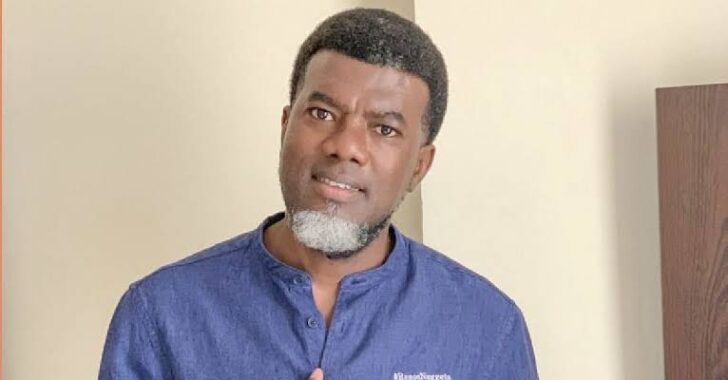
In Nigeria’s crowded public space, few names provoke quick reaction like Reno Omokri. To his supporters, he is a sharp political communicator, author and digital strategist. To his critics, he is controversial and often combative. But both sides agree on one point: when Omokri speaks, people listen, argue, share and respond. That is the foundation of his influence.
Read more breaking stories from our latest nigeria news
Omokri’s public profile did not begin on social media. He served as Special Assistant on Digital Media to former President Goodluck Jonathan, a role that placed him close to the centre of federal power between 2011 and 2015. That experience gave him access, political understanding and national visibility. In 2025, President Bola Tinubu nominated him as one of Nigeria’s non-career ambassador-designates, and in March 2026 he was posted to Mexico City, Mexico, according to the State House.
Weighted Influence Scorecard
This scorecard measures Reno Omokri’s influence across seven areas: formal power, visibility, real-world impact, cultural appeal, relevance to 2026, generational reach and recognition. The score is an estimate, not an official ranking.
| Indicator | Assessment |
|---|---|
| Current Power & Institutional Control | Reno Omokri has access to political power through his past role as Special Assistant on Digital Media to former President Goodluck Jonathan and his later ambassadorial nomination. However, he does not control a state, ministry, political party or major public institution. His power is influential, not executive. |
| Reach & Visibility | This is one of his strongest areas. He has a large online audience and remains highly visible in Nigerian political debate. His posts often attract reactions from supporters, critics, journalists and political actors. |
| Impact & Tangible Results | Omokri has used digital campaigns and public commentary to keep major national issues in the public eye, including governance, insecurity and accountability. His impact is strongest in shaping debate rather than directly changing policy. |
| Soft Power & Cultural Influence | He influences beyond politics by speaking on faith, money, discipline, family, education and identity. This gives him a wider audience than many strictly political commentators. |
| Relevance to 2026 | His relevance remains strong because Nigeria is moving closer to the 2027 election cycle, when political messaging and online influence will become more important. His ambassadorial posting also keeps him connected to national and international affairs. |
| Generational Influence | Omokri reaches younger Nigerians who follow politics mainly through social media. His direct, argumentative and motivational style fits the digital habits of a younger audience. |
| National & International Recognition | He is recognised nationally as a political commentator, author, former presidential aide and public campaigner. His international visibility is strengthened by his diaspora presence and diplomatic role. |
Weighted Influence Scorecard for Reno Omokri
| Indicator | Weight | Score /100 | Points |
|---|---|---|---|
| Current Power & Institutional Control | 20% | 74 | 14.8 |
| Reach & Visibility | 20% | 90 | 18.0 |
| Impact & Tangible Results | 15% | 78 | 11.7 |
| Soft Power & Cultural Influence | 15% | 85 | 12.8 |
| Relevance to 2026 | 15% | 88 | 13.2 |
| Generational Influence | 10% | 80 | 8.0 |
| National & International Recognition | 5% | 87 | 4.4 |
| Total Weighted Influence Score | 100% | — | 82.9 / 100 |
Why Reno Omokri Is Influential
Reno Omokri’s influence comes from his ability to turn attention into power. In modern Nigeria, influence is no longer measured only by office, wealth or traditional authority. It is also measured by the ability to shape conversations. Omokri understands that space well.
He knows how to frame an issue in a way that forces a reaction. A single post from him can become a national talking point. His words often attract praise, anger, debate and media coverage. In a country where political opinion moves quickly online, that is a powerful skill.
Read related news:
Reno Omokri slams Peter Obi over silence on Simon Ekpa’s conviction
Omokri blames ADC faction over crisis
Oshiomhole, Ndume clash in senate over Reno Omokri’s ambassadorial nomination
His second strength is consistency. Many public figures trend during elections and disappear afterwards. Omokri has remained visible through different political seasons: the Jonathan years, the Buhari years, the 2023 election cycle and now the Tinubu era. Whether people agree with him or not, he has stayed in the national conversation.
His third strength is range. He does not speak only about politics. He writes about faith, family, money, education, identity, travel and discipline. This gives him access to different audiences. Some follow him for politics. Others follow him for advice. Some follow him because they oppose him. All of them still expand his reach.
Omokri has also shown that online influence can move into real-world action. He promoted the #FreeLeahSharibu campaign to keep public attention on Leah Sharibu, the schoolgirl abducted in Dapchi in 2018. He also led the #HarassBuhariOutOfLondon protest in 2021, arguing that Nigerian leaders should fix the country’s health system instead of seeking treatment abroad.
But his influence has limits. He is not an elected official. He does not command a political party, control a state budget or lead a national institution. His power is mainly communicative. It rests on persuasion, visibility and access, not direct constitutional authority.
There is also a credibility challenge. Omokri’s style is polarising. His critics accuse him of being too aggressive and politically flexible, especially because he was once seen as a strong critic of President Tinubu before becoming an ambassadorial nominee under the same administration. That criticism does not erase his influence; in some ways, it proves it. A public figure who attracts both loyalty and anger still occupies space in the national mind.
Reno Omokri is not Nigeria’s most powerful personality. That title belongs to those who control government, security, finance, parties and policy. But he is one of Nigeria’s most influential public voices in the digital-political space.
His influence is built on visibility, timing, controversy, communication skill and political access. He understands Nigeria’s attention economy better than many public figures. He knows how to enter a debate, dominate it and keep his name relevant.
That is what makes Reno Omokri influential: he may not control the state, but he understands how to control a conversation. In today’s Nigeria, that is a serious form of power.

