


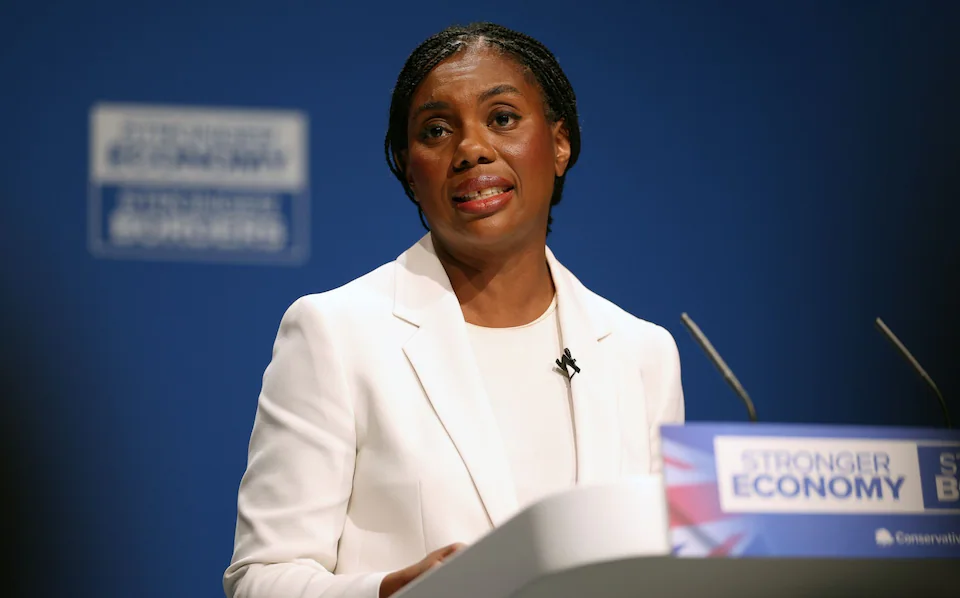
Comments by Conservative leader Kemi Badenoch that foreign nationals spreading anti-Semitic hatred should face deportation have triggered wider debate about how Britain protects all minority communities, including Africans facing discrimination.
Stay Updated with UK News
Mrs Badenoch said she would use existing immigration powers to revoke visas of individuals who “harass, intimidate or attack British Jews,” stressing that acts inciting violence must not be tolerated.
Her remarks came amid rising concern over anti-Semitic incidents in the UK. Authorities are investigating a suspected petrol bomb attack on a synagogue in north London, weeks after Jewish-owned ambulances were targeted in Golders Green.
Speaking on the MD Meets podcast, Mrs Badenoch described the situation as alarming.
“We need to be very clear that this is something we don’t stand for,” she said. “Anything that’s inciting violence against Jews has got to go.”
Data from the Community Security Trust shows that anti-Semitic incidents remain high, with around 3,700 cases recorded in the past year, reflecting growing tensions linked to global conflicts.
Wider Questions on Equality
While Mrs Badenoch’s stance has been welcomed by some as a strong response to hate crime, it has also raised questions about consistency in addressing discrimination affecting other communities.
Advocates argue that similar urgency should apply to all forms of prejudice, including racism experienced by Africans and other ethnic minorities in the UK.
Read related news:
Kemi Badenoch tops UK poll as most popular party leader
Badenoch pledge under-16 social media ban to protect children online
Starmer, Badenoch clash over digital ID u-turn
Starmer rejects caretaker PM claim amid Badenoch attacks
Across the country, many Africans report facing barriers that extend beyond isolated incidents of abuse. Research shows that 88% of Black people in the UK say they have experienced racial discrimination at work, while 98% say they have had to change how they behave or present themselves to fit in.
For many, discrimination affects access to employment, housing, and everyday opportunities.
“It’s not always obvious,” said one community organiser in Birmingham. “But the impact is real—from job applications to how people are treated in public spaces.”
Studies also indicate that ethnic minorities, including Africans, face higher unemployment rates and are more likely to be in low-paid or insecure work.
Reports of bias in housing and public services continue to surface, while campaign groups say underrepresentation in leadership positions remains a concern.
Experts warn that these patterns point to deeper structural inequalities that require long-term policy attention.
Social Impact and Public Debate
The discussion has also highlighted the broader challenge of balancing security, immigration policy, and civil rights.
Some analysts say Mrs Badenoch’s comments reflect growing political pressure to respond firmly to hate crimes, particularly those linked to international conflicts. Others argue that tackling discrimination effectively requires a broader approach that includes education, enforcement, and community engagement.
“There is no doubt that anti-Semitism is a serious issue,” said a London-based policy analyst. “But the conversation is also opening up a wider question—how do we ensure all communities feel equally protected?”
The UK has long positioned itself as a diverse and inclusive society, but recent developments suggest that tensions remain beneath the surface.
While the government and opposition continue to debate policy responses, community leaders are calling for a more unified approach that addresses discrimination in all its forms.
For many Africans living in the UK, the issue is not just about isolated incidents, but about equal treatment and opportunity.
As the debate continues, the challenge for policymakers will be to ensure that efforts to tackle hate crime are applied fairly and consistently—across all communities.
