


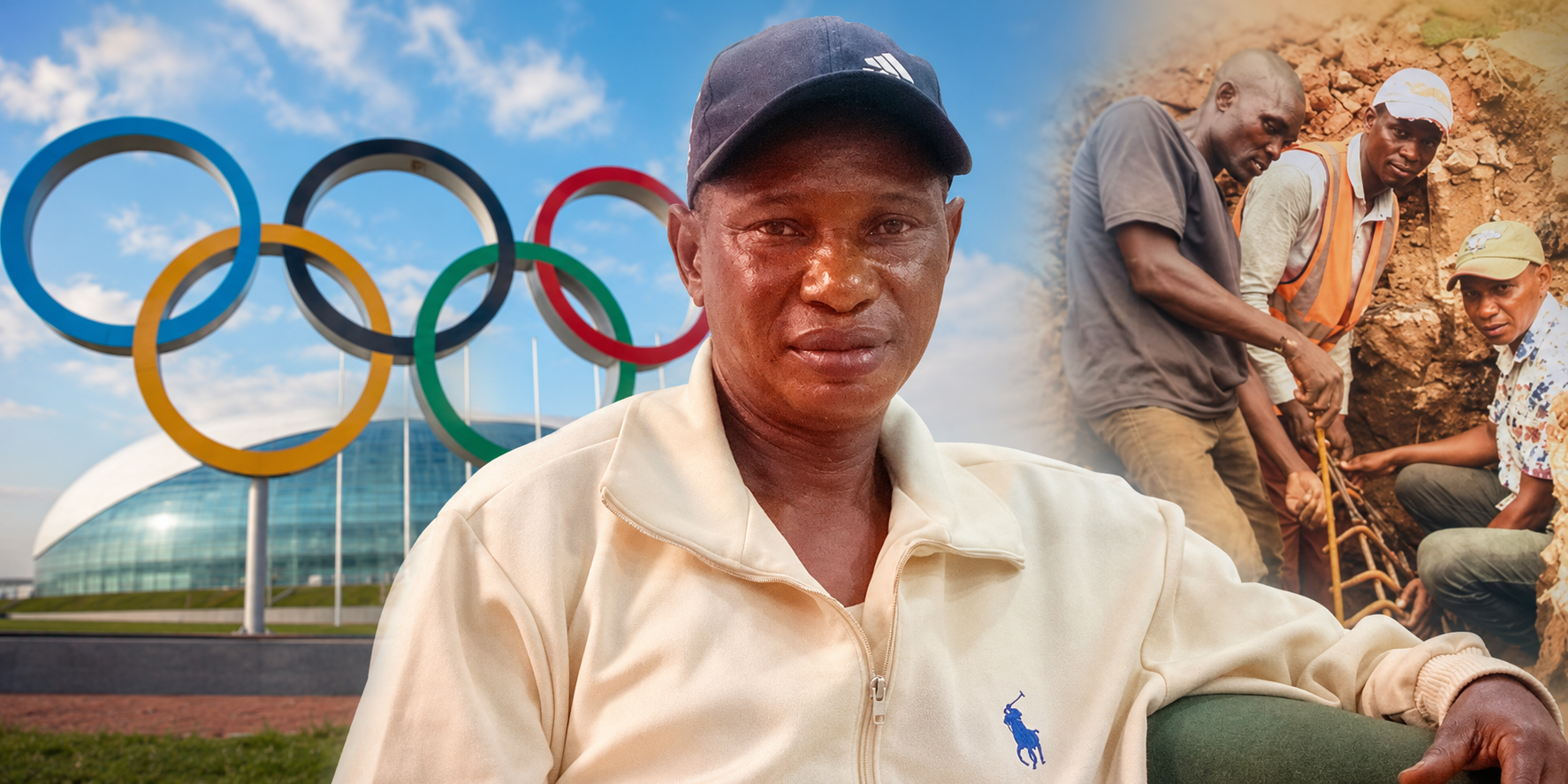
Rasheed Babatunde Liasu Osoba, the Nigerian Olympic torchbearer once honoured at the National Stadium in Lagos, is now working on building sites as a bricklayer after years of hardship, injury and failed appeals for support.
The former athlete, identified in some reports as Rashidi Oshoba, has become the latest example of how some Nigerian sports figures fall into poverty after their years of service are over. His story has drawn fresh attention because it links national honour with a painful daily struggle for survival.
Osoba was once celebrated for carrying the Olympic torch into the National Stadium, Surulere, Lagos. That moment placed him in the country’s sports history and led to a sculpture of him holding the torch being mounted at the stadium. For years, the statue stood as a public reminder of his role.
But the man behind that symbol says life has moved in a different direction. He now earns a living through construction work, laying blocks and taking on other site duties to feed himself and meet family needs.
Nigerian Olympic Torchbearer Says Honour Did Not Bring Security
Osoba’s journey began far from the hardship he now faces. He was born in Accra, Ghana, to Nigerian parents before the family returned to Nigeria. He grew up in Agege, Lagos, where his running ability was noticed during his school years.
What started as punishment for lateness at school later became the beginning of his athletic life. He went on to compete in local and national events, including marathon races, and later joined sports teams linked to major institutions.
Read related news:
Amusan soars to World No. 3 as Nigerian athletes shine in latest global rankings
World Athletics rejects Favour Ofili’s switch to Turkey in major setback for Nigerian sprinter
Anthony Joshua: from olympic gold to boxing star
Nigeria Fails to Secure Medals at Paris 2024 Olympics Amid Widespread Criticism
He was said to have taken part in the Union Bank Marathon in 1985, finishing third in a large field of runners. He also competed in Milo Marathon events and represented Nigeria in athletics competitions at home and abroad.
His career, however, was cut short by a leg injury sustained during a marathon in Lagos. According to his account, he was close to the finish line when he fell and suffered serious damage to his leg. Doctors later warned him to stop running or risk more severe injury.
That injury ended the career of a man who had built his life around movement, speed and national service. After leaving sport, he said the support he expected did not come in a lasting form.
From National Stadium Honour To Building Sites
Osoba said he received some medical support after the injury, but the help did not last. With bills mounting and no steady income, he trained as a construction worker and began working on building sites.
The irony is hard to miss. A man once turned into a national monument now carries blocks for survival. His case has raised questions about how Nigeria treats athletes after their prime years, especially those whose careers were ended by injury.
The former torchbearer also said he was invited to Abuja in 2021 after his plight reached former President Muhammadu Buhari. He claimed he was promised compensation and possible involvement in sports administration, but said the promise was never fully carried out.
His pain deepened after he later found that the statue made in his honour at the National Stadium had been removed. For him, the sculpture was more than a piece of metal or stone. It was the last public proof that his service had once mattered.
Osoba has also dismissed claims that he had died, saying he is alive but struggling. His message is simple: he wants recognition, support and answers over the promises he says were made to him.
Nigeria has produced great athletes and Olympic heroes for decades. The country’s sports story includes medals, records and moments that brought pride to millions. But Osoba’s case shows the other side of that story: the need to protect athletes after the applause has stopped.
For many observers, his condition is not only a personal tragedy. It is a warning that honour without welfare can leave national heroes forgotten, even while their names remain part of history.
