


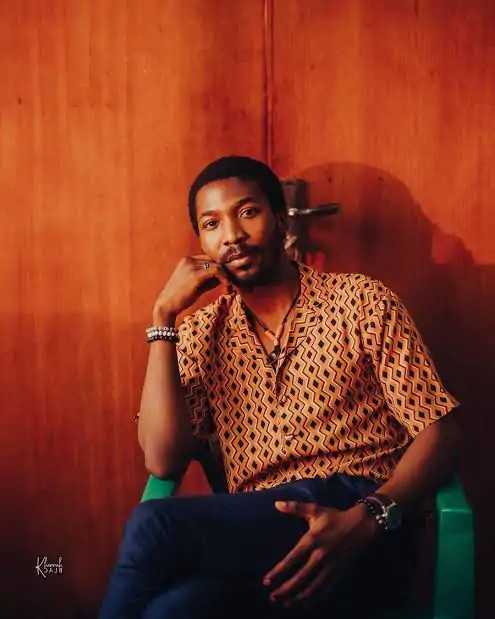
Afrobeat singer Made Kuti has shared his unconventional view on marriage proposals, revealing that he did not go down on one knee when proposing to his wife, Inedoye Onyenso, because he believes marriage should be based on mutual agreement rather than one person pleading to the other.
The Grammy-nominated artist made the revelation during a recent episode of the Timeless Podcast aired on Nix Network’s YouTube channel, where he spoke about relationships, marriage, and his personal beliefs regarding commitment.
Read Also: Made Kuti defends marriage against ethnic critics
According to Made Kuti, he does not subscribe to the traditional proposal style where a man kneels before a woman to ask for marriage.
“I did not go down on my knees when proposing to my wife because I told her it was a mutual decision,” he said during the interview.
The singer explained that he sees marriage as a partnership built on equality, understanding, and shared commitment rather than a situation where one person appears to be begging the other for acceptance.
“We are not begging each other to be with each other,” he added.
His comments have sparked conversations online, with many social media users debating modern relationship values, gender expectations, and traditional marriage customs.
While some people praised his perspective as progressive and realistic, others argued that kneeling during a proposal is simply a romantic gesture and not necessarily a sign of inferiority or begging.
Made Kuti, who is the son of legendary Afrobeat pioneer Fela Anikulapo-Kuti, has often spoken publicly about social issues and personal values, much like members of the famous Kuti family known for their outspoken nature.
The singer and his wife, Inedoye Onyenso, got married in a private ceremony held in Lagos in November 2023.
During the podcast conversation, Made also revealed that his wife was once his “school daughter,” a statement that generated reactions online because of the uncommon expression.
Although he did not go into extensive details about the phrase, it appeared to reference a relationship that began within an academic or mentorship environment before evolving into romance.
The artist has consistently maintained a relatively private personal life despite coming from one of Africa’s most famous musical families.
However, his marriage attracted attention in 2025 after some critics questioned his union with Inedoye because of their different ethnic backgrounds.
At the time, some social media users accused the couple of “mixing blood,” a phrase commonly used by ethnic extremists to oppose inter-ethnic marriages.
Reacting to the criticism, Made Kuti strongly condemned ethnic discrimination and described such thinking as backward.
The singer argued that ethnic bigotry reflects a “slave mentality” and stressed that tribal divisions should not restrict love and marriage.
His comments earned praise from many Nigerians who applauded his stance against tribalism and his support for unity beyond ethnic lines.
Nigeria, a country with over 250 ethnic groups, has often experienced tensions linked to tribal identity, and interethnic marriages sometimes become targets of criticism from conservative individuals.
Made Kuti’s latest remarks on marriage proposals have once again highlighted his willingness to challenge societal expectations and speak openly about issues many celebrities avoid discussing publicly.
The debate over proposal traditions has become increasingly popular globally, with many couples redefining relationship norms in line with their personal beliefs and values.
Some modern couples now prefer mutual discussions about marriage instead of elaborate surprise proposals, while others still embrace traditional romantic customs such as kneeling and public declarations.
For Made Kuti, however, the focus appears to be on equality and shared decision-making in relationships.
The singer continues to build his reputation as one of the leading voices of the younger Afrobeat generation, combining music with commentary on culture, identity, and social values.
As the grandson of activist and women’s rights campaigner Funmilayo Ransome-Kuti and son of Fela Kuti, Made has frequently spoken on issues relating to politics, society, and personal freedom.
His latest comments have added another layer to ongoing conversations about changing relationship dynamics among younger Nigerians and the evolving understanding of marriage in modern society.
