


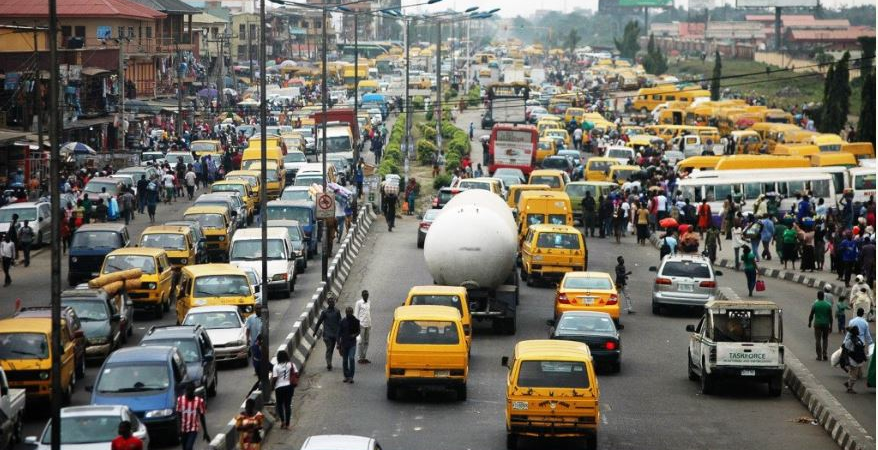
LAGOS, Nigeria, In Agege, one of Lagos’ busiest districts, life is changing fast, and not everyone is keeping up.
For more updates, follow the latest in economics
At a roadside stall, 28-year-old food vendor Sadiq watches customers argue over the price of a plate of rice. Just months ago, it was cheaper. Now, everything costs more.
“People complain,” he said. “But we are also buying at higher prices. We just have to survive.”
Across Agege, that struggle is becoming more common.
Read related news:
Sanwo-Olu swears in Abdul-Ganiyu Obasa as Agege LG Chairman
Nigeria, UK seal £746m deal to upgrade Lagos ports
Food inflation drives modest Christmas celebrations across cities in Nigeria
A Growing City, A Growing Pressure
Once a quiet residential area, Agege has transformed into a crowded commercial hub, where markets, street vendors and traffic compete for space.
Its population has surged from about 417,981 to roughly 683,600 in recent estimates — and could reach more than 710,000 by 2027 if current trends continue.
This growth reflects what is happening across Lagos, Nigeria’s economic centre, where the population is now estimated at about 17.8 million — and rising.
But as the city grows, so does the pressure.
Read more breaking stories from our latest nigeria news
The Cost of Living Is Rising
For many residents, daily life is becoming more expensive.
Nigeria’s inflation rate has stayed above 12. 9% in recent years, pushing up the cost of food, transport and rent.
In Agege, that means: Smaller portions, Fewer customers and Tougher choices
“You have to adjust every day,” Sadiq said. “If you don’t, you can’t survive.”
A City Powered by Informal Work
Despite the pressure, Agege is full of economic activity.
From roadside traders to mechanics and transport workers, most people rely on small, informal businesses to make a living.
There are no strict regulations, no guarantees — but the system works in its own way.
Experts say this is common in fast-growing African cities, where formal jobs are not enough to meet demand.
“Places like Agege survive on micro-economies,” said a Lagos-based analyst. “They are strong, but they also show the gaps in planning.”
Infrastructure Struggling to Keep Up
As more people move into Agege, infrastructure is under strain.
Residents point to: Flooded streets during heavy rain, Traffic congestion and Waste management challenges
“When it rains, everywhere floods,” said Kemi Adeyemi, a shop owner. “Customers can’t come out. Business stops.”
Authorities say improvements are being made, including road repairs, sanitation efforts and public lighting. But for many residents, progress feels slow.
Young People Driving the Economy
Agege’s population is young — like much of Nigeria, where the median age is about 18.
Young people dominate daily economic life, working in: retail, transport, entertainment and digital services
Some are finding new opportunities in creative industries and small businesses, but many still face limited options.
Living Between Struggle and Opportunity
Agege is a place of contrast.
It is crowded, noisy and under pressure — but also full of energy, ambition and movement.
People are building businesses, supporting families and finding ways to adapt, even when conditions are difficult.
“There are problems,” Adeyemi said. “But we are managing.”
A Glimpse Into the Future
As Nigeria’s population continues to grow rapidly, districts like Agege offer a glimpse into what lies ahead.
More people.
More pressure.
More opportunity — if managed well. For now, residents are focused on the present.
“We just keep working,” Sadiq said. “There is no other choice.”

