



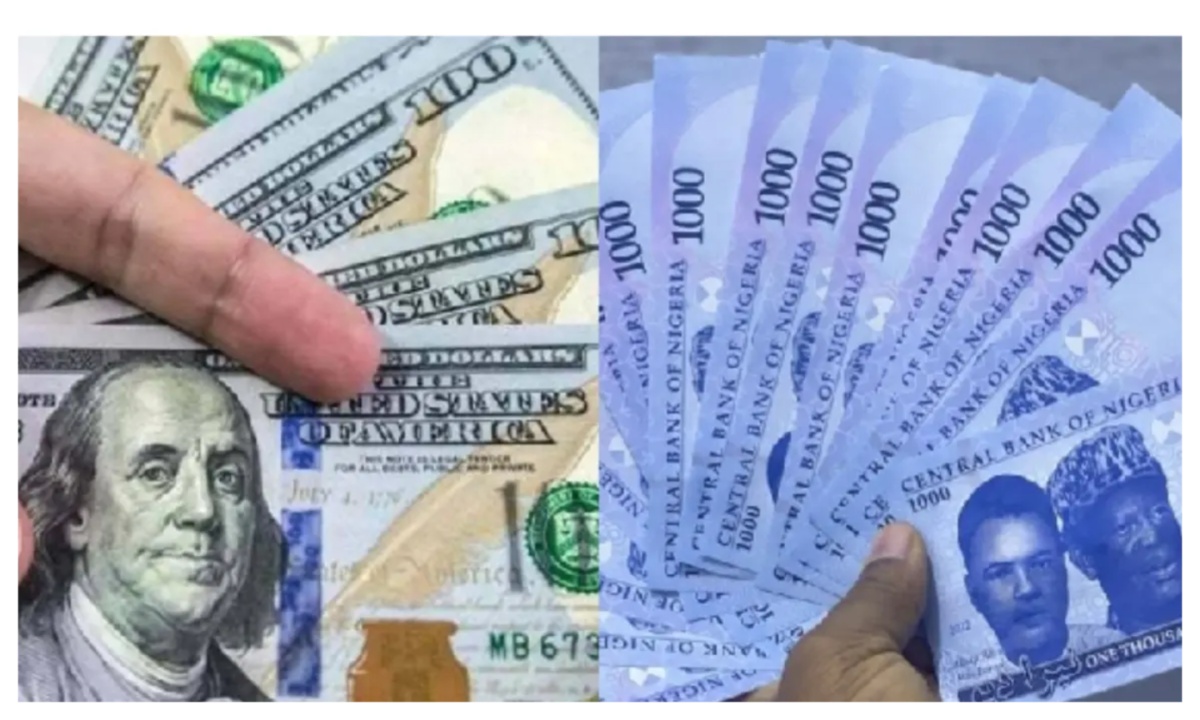
The Nigerian Naira weakened sharply against the United States dollar on Monday, marking a notable decline in both the parallel and official foreign exchange markets.
At the black market in Abuja, a Bureau de Change operator in Wuse Zone 4, Abubakar Hassan, told DAILY POST that the Naira fell by N40 to N1,370 per dollar, up from between N1,317 and N1,333 recorded on Friday last week. This represents the first major drop in the local currency since the Central Bank of Nigeria (CBN) limited banks to selling a maximum of $150,000 weekly to Bureaux de Change operators on 10 February 2026.
Meanwhile, at the official foreign exchange market, CBN data showed the Naira slipped to N1,349.24 per dollar, down from N1,346.32, representing a further N2.92 depreciation against the greenback.
Market analysts noted that the decline comes despite Nigeria’s sustained accumulation of external reserves, which stood at $48.77 billion as of 19 February 2026, according to CBN figures. The apex bank’s robust reserve position has so far not prevented the Naira from losing value at both parallel and official rates.
The drop has raised concerns among traders and importers about rising costs of imported goods and potential inflationary pressures. Experts say that the recent downward trend reflects market anxieties over liquidity constraints in the Bureau de Change segment and broader foreign exchange demand pressures in the economy.
The development comes as the CBN’s Monetary Policy Committee convenes to review and potentially roll out fresh monetary measures to stabilise the Naira. Analysts expect policy interventions could include adjustments in FX supply, interest rates, or other market instruments aimed at easing volatility in both official and parallel markets.
The depreciation also underscores the challenges facing the Naira amid increasing global demand for dollars, rising import bills, and market sentiment reacting to government FX policies. While external reserves remain relatively strong, sustaining the Naira’s value will require careful coordination between the CBN, commercial banks, and market operators.
Investors and market watchers will be closely monitoring the outcome of the ongoing MPC meeting, which could signal new measures to curb further Naira depreciation and support economic stability.

