


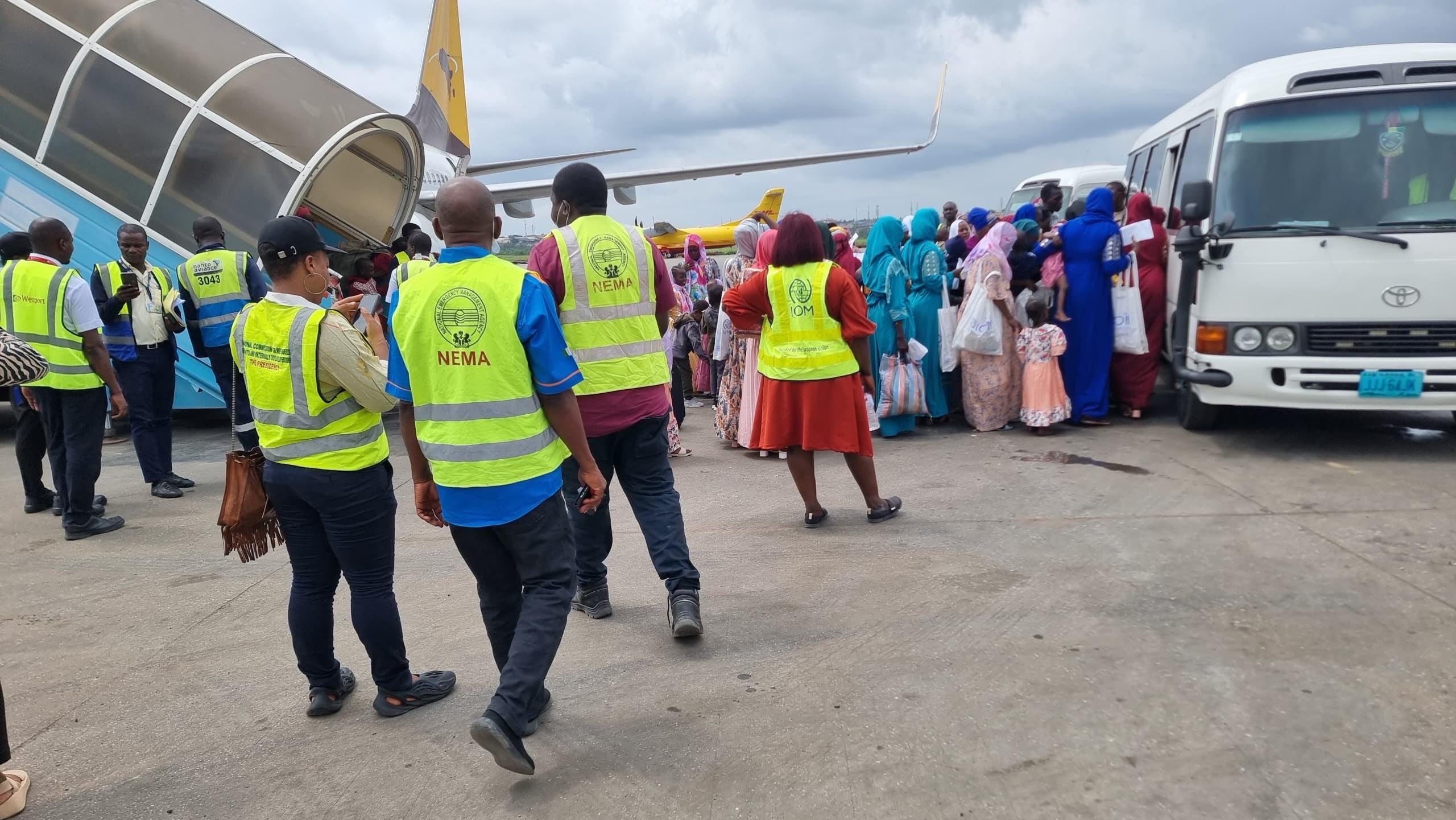
The first batch of Nigerians evacuated from South Africa amid renewed xenophobic attacks and anti-immigration violence arrived in Lagos on Thursday, marking the beginning of a major government-led repatriation exercise aimed at protecting citizens affected by growing hostility toward foreign nationals in Africa’s most industrialized economy.
According to the Federal Government, a total of 262 Nigerian nationals and three government officials arrived at the Murtala Muhammed International Airport in Lagos aboard a chartered Air Peace flight fully funded by the government. The evacuation followed weeks of anti-foreigner protests and violent attacks in parts of South Africa, particularly in Johannesburg, Pretoria, and Durban, where migrants have reported intimidation, assaults, and threats.
Nigeria’s Minister of Foreign Affairs, Bianca Odumegwu-Ojukwu, said the evacuation was ordered by President Bola Ahmed Tinubu to safeguard Nigerians who feared for their lives amid the worsening security situation. She described the returnees as citizens who had endured traumatic experiences and assured them of government support upon arrival.
In a message to the evacuees, the minister urged them to prioritize their safety over material possessions, noting that no asset is worth risking one’s life in a hostile environment. She emphasized that Nigeria remained committed to protecting its citizens wherever they reside and would continue to monitor developments in South Africa closely.
READ RELATED STORY
Morocco becomes Africa’s industrial leader as South Africa faces Xenophobic violence
Two Nigerians killed in South Africa as xenophobic tensions rise
The latest evacuation comes after a sharp rise in anti-immigration demonstrations across South Africa. Protest groups have accused foreign nationals of taking jobs, increasing crime, and putting pressure on public services. Some groups reportedly issued ultimatums demanding that undocumented migrants leave the country by the end of June, leading to fears among many African migrants living in the country.
The Nigerian Ministry of Foreign Affairs disclosed that more than 1,000 Nigerians registered for voluntary repatriation following the outbreak of violence. Officials said the number of people seeking assistance increased significantly as reports of attacks and intimidation spread across affected communities. A joint screening exercise involving Nigerian and South African authorities was conducted to verify and process those eligible for evacuation.
Government spokesperson Kimiebi Ebienfa stated that the Federal Government fully funded the evacuation exercise, ensuring that none of the returnees incurred any costs. Relevant ministries, departments, and agencies were mobilized to provide documentation, profiling, and reintegration support for the evacuees upon their arrival in Nigeria.
The returnees were received by officials from the Ministry of Foreign Affairs, the Nigerians in Diaspora Commission (NIDCOM), and other government agencies. Authorities said arrangements had been made to offer temporary assistance and facilitate reunification with family members across the country.
Nigeria is not the only African nation responding to the unrest. Ghana has already repatriated approximately 1,000 of its citizens from South Africa, while Liberia and several other African governments have expressed concern over the safety of their nationals and indicated readiness to undertake similar evacuation efforts if necessary.
The tensions have drawn widespread condemnation from African governments and migrant-rights organizations, which argue that foreign nationals are often unfairly blamed for South Africa’s economic challenges. Analysts point to the country’s unemployment rate, which exceeds 30 percent, as a major factor fueling anti-immigrant sentiment.
South African authorities have repeatedly condemned xenophobic violence and pledged to take action against those responsible for attacks on migrants. However, incidents of anti-foreigner violence have occurred periodically since 2008, resulting in deaths, injuries, and the displacement of thousands of people over the years.
As the first batch of evacuees settles back into Nigeria, the Federal Government says additional flights may follow as more Nigerians seek to return home. Officials maintain that the safety and welfare of citizens remain the government’s top priority, while diplomatic engagements with South Africa continue in an effort to address the crisis and ensure the protection of Nigerians still residing in the country.

