


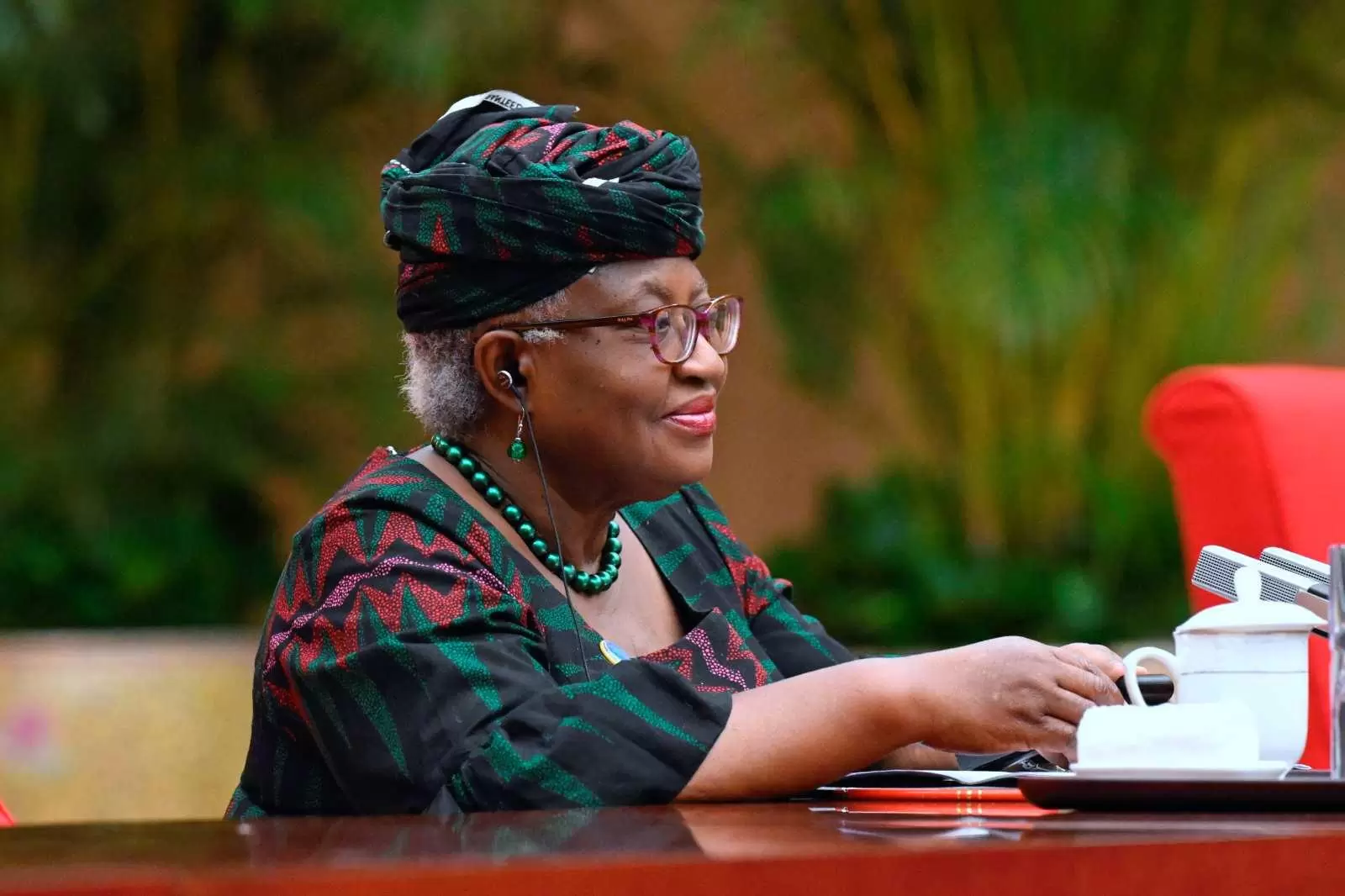
Ngozi Okonjo-Iweala remains one of Nigeria’s most influential figures because her power reaches beyond national politics. As Director-General of the World Trade Organization, she sits at the centre of economic diplomacy at a time when tariffs, supply chains, food security, digital trade and rivalry among major economies are reshaping the world economy.
Read more breaking stories from our latest nigeria news
New Daily Prime estimates her weighted influence score at 95.0/100, placing her among Nigeria’s highest-ranking global figures. Her score is justified because she combines global institutional authority, proven reform experience, international recognition, gender symbolism, Nigerian public-sector legacy and long-term relevance in trade and development.
New Daily Prime Key Influence Metrics for Ngozi Okonjo-Iweala
| Indicator | Assessment |
|---|---|
| Current Power & Institutional Control | Ngozi Okonjo-Iweala has strong institutional influence as Director-General of the World Trade Organization, one of the world’s most important trade institutions. |
| Reach & Visibility | She has global visibility through her WTO leadership, international speeches, media coverage, economic forums and policy engagements. |
| Impact & Tangible Results | Her record includes Nigeria’s Paris Club debt relief, public finance reforms, World Bank leadership and ongoing work on global trade reform. |
| Soft Power & Cultural Influence | She represents Nigerian excellence, female leadership, African achievement and credibility built on expertise rather than political noise. |
| Relevance to 2026 | Her role remains highly relevant as the world faces tariff disputes, supply-chain pressure, food security concerns and calls for WTO reform. |
| Generational Influence | She inspires young Nigerians, women, economists, civil servants and professionals who want to build careers in public service and global institutions. |
| National & International Recognition | She is recognised in Nigeria and globally as a former Finance Minister, former World Bank Managing Director and the first woman and first African to lead the WTO. |
Weighted Influence Scorecard for Ngozi Okonjo-Iweala
| Indicator | Weight | Score | Points |
|---|---|---|---|
| Current Power & Institutional Control | 15% | 10/10 | 15 |
| Reach & Visibility | 15% | 9.3/10 | 14 |
| Impact & Tangible Results | 15% | 9.3/10 | 14 |
| Soft Power & Cultural Influence | 15% | 9.3/10 | 14 |
| Relevance to 2026 | 15% | 10/10 | 15 |
| Generational Influence | 15% | 8.7/10 | 13 |
| National & International Recognition | 10% | 10/10 | 10 |
| Total Weighted Influence Score | 100% | — | 95/100 |
Okonjo-Iweala’s strongest source of influence is her current office. The WTO says she took office as Director-General on March 1, 2021, became the first woman and first African to lead the organisation, and began her second four-year term on September 1, 2025, after her reappointment in November 2024. That places her in charge of a major global institution at a difficult moment for international trade.
Read related news:
Okonjo-Iweala backs Tinubu’s economic reforms, calls for stronger social safety nets
Africa can be global mineral powerhouse – Okonjo-Iweala
World leaders, Nigerian politicians bid Buhari farewell at 82
Her relevance in 2026 is clear. At the WTO’s ministerial meeting in Yaounde, Cameroon, she called for an overhaul of global trade rules, warning that the old multilateral order had changed. Reuters reported that she pointed to problems such as the paralysis of the WTO dispute-settlement mechanism, tariff pressure and wider geopolitical tension.
This is why her influence matters now. The WTO is not just a debating platform. Its rules affect how countries trade, how businesses move goods, how tariffs are applied, and how disputes are handled. When the system comes under pressure, the person leading the institution becomes more important.
Her Nigerian influence is not direct political control. She does not command the presidency, the National Assembly or state governments. But she gives Nigeria a visible seat at the highest level of global economic decision-making. At a time when Nigeria needs investment, trade access, fiscal discipline and stronger credibility abroad, her global profile strengthens the country’s image.
Her record in Nigeria remains one of the strongest parts of her influence. She served twice as Finance Minister and briefly as Foreign Minister, becoming the first woman to hold both positions in Nigeria. The WTO says her work covered macroeconomic policy, trade, finance and public-sector reform.
One of her most important achievements was Nigeria’s debt relief deal. As Finance Minister, she led negotiations with the Paris Club of creditors that wiped out $30 billion of Nigeria’s debt, including $18 billion in outright cancellation. That achievement remains a major reference point in Nigeria’s public finance history.
Her reform record also includes work on transparency and anti-corruption systems. During her second term as Finance Minister, she helped strengthen government accounts through the Government Integrated Financial Management System, the Integrated Personnel and Payroll Management System, and the Treasury Single Account. These reforms were designed to reduce leakages and improve control over public funds.
Before the WTO, Okonjo-Iweala spent 25 years at the World Bank and rose to the position of Managing Director, Operations. The WTO says she had oversight responsibility for an $81 billion operational portfolio covering Africa, South Asia, Europe and Central Asia. That experience gave her influence across development finance, poverty reduction, infrastructure, agriculture and economic policy.
Her work has also reached health and crisis response. She chaired the Board of Gavi, the Vaccine Alliance, and was appointed as an African Union Special Envoy to mobilise financial support for the fight against COVID-19. The WTO also says she served as a WHO Special Envoy for the Access to COVID-19 Tools Accelerator.
Her soft power is built on credibility. She represents a type of Nigerian influence based on results, discipline and technical competence. For young Nigerians, women, economists, civil servants and professionals seeking global careers, her story shows that expertise can open doors at the highest level.
Her African significance is also strong. As the first African to lead the WTO, she gives the continent a stronger voice in discussions on market access, subsidies, food security, trade finance, vaccine equity and rules affecting developing economies.
Her influence has limits. The WTO works through member states, and its decisions often require consensus. Reuters reported that WTO decision-making has frequently stalled because of objections from individual countries. That means Okonjo-Iweala can lead, negotiate and build consensus, but she cannot force countries to agree.
Still, few Nigerians have carried the country’s name into global decision-making with the same consistency. Okonjo-Iweala’s influence is not built on noise or party machinery. It is built on knowledge, reform, trust and access to the highest levels of economic diplomacy.
At 95.0/100, Ngozi Okonjo-Iweala stands among Nigeria’s most influential personalities because she has turned competence into authority. Her power is the power to shape conversations that affect nations, markets and institutions across the world.

