


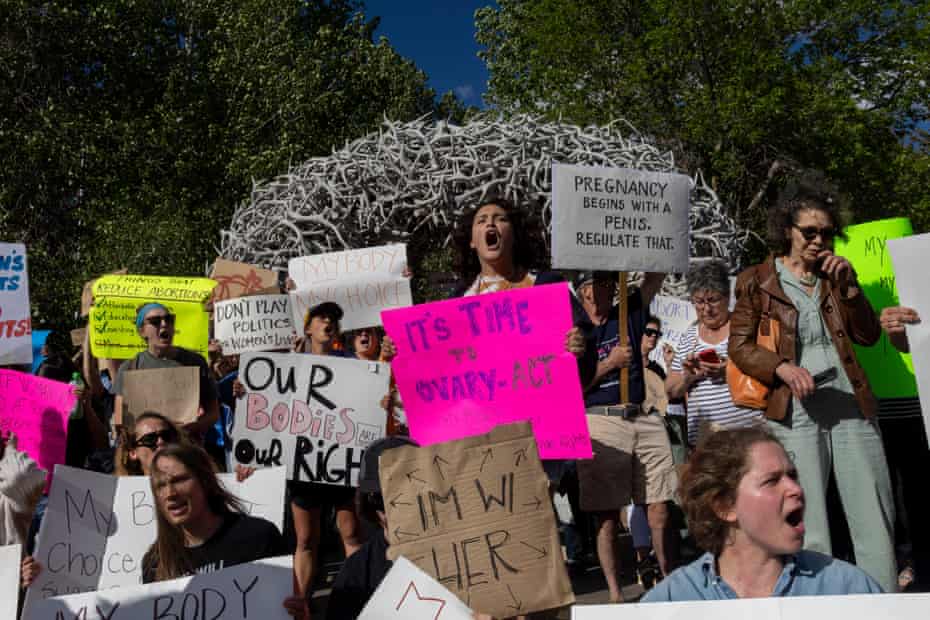
Abortion will remain legal in Wyoming after the state’s Supreme Court struck down two near-total abortion bans on Tuesday. The court ruled that the bans violated the state’s constitution, which affirms the right of competent adults to make their own healthcare decisions.
In a 4-1 decision, the justices found that the laws, which included the nation’s first ban on abortion pills, breached a 2012 state constitutional amendment. The amendment had been introduced in response to the Affordable Care Act and specifically guaranteed the right to make healthcare choices.
Julie Burkhart, president of the Wellspring Health Access clinic in Wyoming, welcomed the decision, calling it a victory for the right to make personal health decisions. “Abortion is essential healthcare, and the government should not interfere in personal decisions about our health,” she said in a statement.
The two laws overturned by the court included one that sought to ban abortion except when the mother’s life is at risk, or in cases of rape or incest. The second law aimed to make Wyoming the only state to explicitly ban abortion pills, which have become increasingly popular since the US Supreme Court overturned Roe v. Wade in 2022. Although other states have implemented de facto bans on abortion medication, Wyoming sought to be the first to explicitly prohibit it.
The state’s only abortion clinic, Wellspring Health Access, filed a lawsuit against the bans, along with Chelsea’s Fund and four women, including two obstetricians. Wyoming’s attorneys argued that the bans did not violate the state constitution, as the state did not recognise abortion as part of its healthcare provision.
In its majority opinion, the court emphasised that it was not its place to alter the constitution but suggested that the Wyoming Legislature could consider a constitutional amendment to clarify the issue. “The Legislature, however, could put the question to the people of Wyoming,” the justices wrote.
Governor Mark Gordon, a Republican, called the ruling “profoundly unfortunate” and urged state legislators to propose a constitutional amendment on abortion. He argued that such an amendment could override the court’s decision. “Every year that we delay the proper resolution of this issue results in more deaths of unborn children,” he said in a statement.
The proposed amendment would need a two-thirds vote in the state legislature before being put to a vote by the people in a future election. Given the Republican-majority statehouse, the amendment is likely to gain support.
Wyoming is not alone in considering constitutional amendments on abortion. Advocates are working to place abortion-related measures on the ballot in several other states, including Idaho, Montana, Nebraska, Oregon, and Virginia, while Nevada and Missouri have already set such measures for voters in 2026.
Abortion has remained legal in Wyoming since District Judge Melissa Owens blocked the bans in 2024 while a lawsuit challenged their constitutionality. Last year, Wyoming passed additional laws requiring abortion clinics to be licensed as surgical centres and mandating ultrasounds before medication abortions. However, a judge has also blocked these restrictions from taking effect pending further legal proceedings.
Meanwhile, anti-abortion advocates faced a setback in Washington D.C. on Tuesday, when Donald Trump suggested that Republicans should be more flexible on the Hyde Amendment. The policy, which has prohibited federal funds from being used for abortion, has been a key plank in Republican opposition to abortion funding for decades.
Trump’s remarks, made during a meeting with Republicans about healthcare and the Affordable Care Act, were met with frustration from pro-life groups. Marjorie Dannenfelser, president of Susan B. Anthony Pro-Life America, accused Trump of abandoning the long-standing Republican commitment to opposing taxpayer-funded abortion. “To suggest Republicans should be ‘flexible’ is an abandonment of this decades-long commitment,” she said.

