


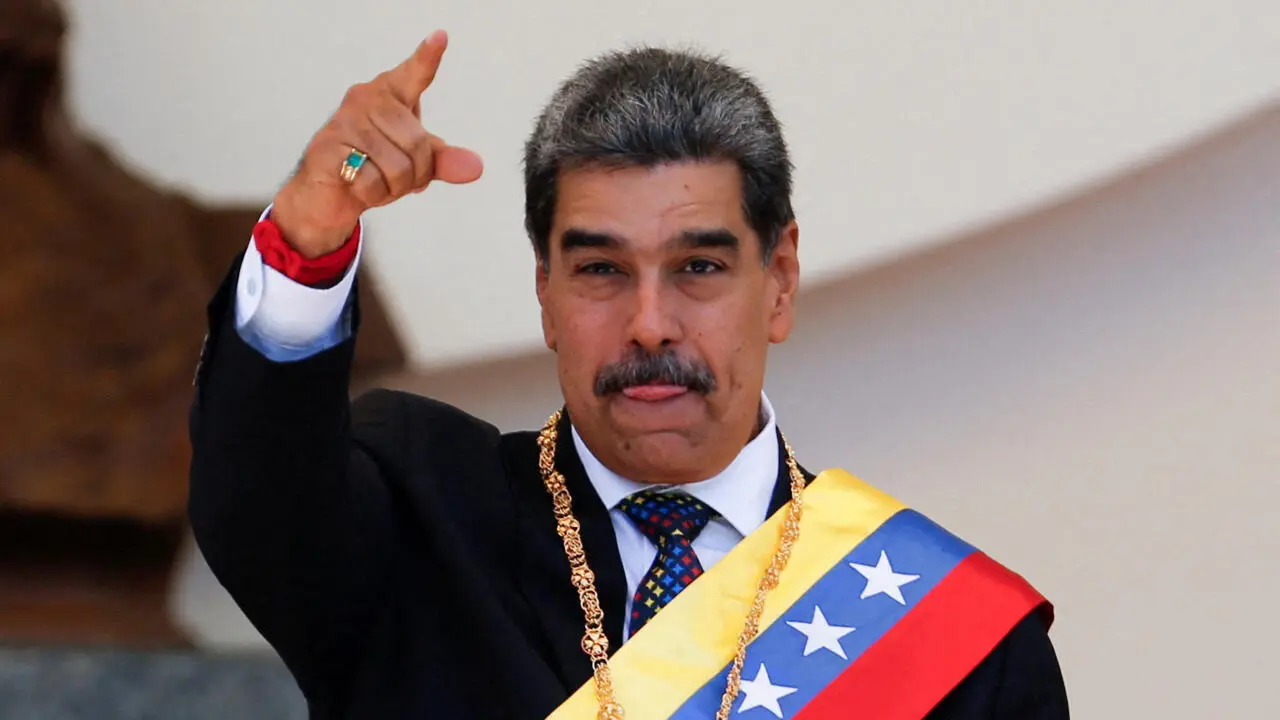
Venezuela has confirmed it has begun discussions with the United States on re-establishing diplomatic relations, just days after US forces removed Nicolas Maduro from power.
The move signals a shift toward cooperation following Maduro’s capture and US President Donald Trump’s declaration that he was now effectively “in charge” of the oil-rich South American nation.
Officials in Caracas said American diplomats had arrived in the Venezuelan capital to explore reopening the US embassy, while Trump in Washington held talks with oil executives on gaining access to Venezuela’s vast crude reserves.
Foreign Minister Yvan Gil said the government of interim President Delcy Rodriguez “has decided to initiate an exploratory diplomatic process with the government of the United States of America, aimed at re-establishing diplomatic missions in both countries.”
A US official, speaking on condition of anonymity, confirmed that John McNamara, the top US diplomat in Colombia, and other personnel “travelled to Caracas to conduct an initial assessment for a potential phased resumption of operations.” Venezuela said it would send its own delegation to Washington in response.
Even as talks began, Rodriguez criticised the US military action that led to Maduro’s removal, describing it as “the serious, criminal, illegal and illegitimate attack” by Washington. She added: “Venezuela will continue to confront this aggression through the diplomatic route.”
Trump said on Friday that he had cancelled plans for a second wave of strikes after Venezuelan authorities began releasing political prisoners. He has repeatedly suggested force could still be used to shape events in Venezuela, which holds the world’s largest proven oil reserves.
At a White House meeting with oil executives, Trump urged companies to invest in Venezuelan crude production, arguing that conditions had fundamentally changed. “But now you have total security. It’s a whole different Venezuela,” he said, adding that firms would deal only with Washington, not Caracas.
The proposal drew a guarded response. ExxonMobil chief executive Darren Woods reportedly described Venezuela as “uninvestable” without sweeping reforms. Trump nevertheless claimed oil companies had pledged up to $100 billion in investments, despite decades of underinvestment, sanctions and infrastructure decay.
Trump has also outlined plans for the US to sell between 30 million and 50 million barrels of Venezuelan oil, saying the proceeds would be spent at his discretion. Any funds transferred to Caracas, he said, would be used exclusively to purchase US-made goods.
Meanwhile, the US has continued to intercept Venezuelan oil shipments in the Caribbean, seizing a fifth tanker in recent days. Venezuela’s state oil firm, PDVSA, confirmed that one vessel had turned back, calling it the “first successful joint operation” with Washington.
Inside Venezuela, families gathered outside prisons as authorities began freeing political detainees — a move the US administration claimed credit for. “When I heard the news, I broke down,” said Dilsia Caro, 50, who was waiting for her husband, Noel Flores, jailed for criticising Maduro.
The releases began on Thursday, marking the first such step since US forces detained Maduro during a deadly January 3 operation that Caracas says killed about 100 people. Maduro and his wife, Cilia Flores, were flown to New York to face drug-trafficking and other charges.
Trump has said he plans to meet Venezuelan opposition figure Maria Corina Machado next week, despite earlier dismissing her as lacking the “respect” needed to lead the country. Another opposition leader, Edmundo Gonzalez Urrutia, said any democratic transition must recognise his claim to victory in the disputed 2024 election, which Maduro was declared to have won.
Gonzalez also expressed hope for the release of his son-in-law, detained in Caracas a year ago.
Despite the diplomatic overtures, tensions remain high on the streets. Protesters again took to Caracas on Friday, demanding Maduro’s release. “We don’t have to give one little drop of oil to Trump after all that he has done to us,” said Josefina Castro, 70. “Our Venezuelan brothers died (in the attack), and that hurts.”
Read more news on www.newdailyprime.news

